

In 2010, Lovinah Igbani gave birth to her second daughter. Three weeks later, Lovinah was charged with manufacturing illegal opioids and she ended up being sentenced to eight years in prison. After ten months of trying to care for their daughters by himself, Lovinah’s husband sent them to live with friends and relatives.
Prison is a grave restriction on one’s freedom as a consequence for crimes committed. You cannot do what you want, where you want, when you want in prison. Your range of movement is restricted by your prison cell, or the exercise yard if you get to go there. You must follow the rules others impose on you and opportunities for activity, recreation or entertainment are very limited.
Yet it was in prision where Lovinah began experiencing freedom like she never had before. In an interview for an online article she said, “[In prison] … I rededicated my life to Christ. I began to read my Bible for the first time. This relationship I allowed Christ to begin with me is something I [had] never experienced. I had been set free … and was no longer consumed [with getting out of prison].”
Ironically, when Lovinah was paroled after four years in prison, the thought of life on the outside terrified her. She feared not being able to get a job because now she was a convicted felon. There were a lot of doors that were not open to her because of her record and, in one case, she got a job only to lose it a day later when her employer found out about the felony. Eventually, she was able to get a job at the Houston Aquarium.
Her sister took her to a Bible study at a church. Lovinah joined that church and became part of the church’s ministry to help prisoners re-enter society. She began taking discipleship classes through Free Indeed Ministries and eventually began serving as the volunteer coordinator of the ministry. She has completed her undergraduate and master’s degrees in social work and now works as a counselor with a specialty in helping people overcome drug addictions.
About serving in prison ministry, Lovinah remarked, “I know I’m in the right field…. I go and try to help them and give them hope but I come out blessed beyond measure in a way that I can’t even describe. Every time [I go do ministry inside prison] I say ‘This was the best weekend of my life.’”
Life in this world can feel like a prison sometimes, even when we are not incarcerated. We think to ourselves, “If only I had ________ (fill in the blank) then I could do whatever I want.” Sometimes, especially when the challenges we face feel onerous—like when our mortgage payments triple because of high interest rates, or when physical restrictions increase because our body is breaking down due to age or disease, or when we are enveloped by crippling loneliness—our craving for freedom becomes paramount and we use to try to grab whatever we desire. We take shortcuts with our finances or invest in things that promise a big payday. We use illegal drugs, alcohol, food, or endless entertainment to try to make the physical pain we feel go away. Or we use our body, our mind and our relationships to try to get a counterfeit love, thinking that it will satisfy our hungry heart.
We strive for freedom, and we end up falling deeper and deeper into bondage. Clearly, there is something more to freedom than being able to do what we want whenever and wherever we want to do it.
So what is freedom? There are a couple of different ways layers to consider as we answer this question. The first, or surface level, involves two basic questions:
- When we are free, what are we free from?
- What is our freedom for?
But then there is a deeper level to freedom.
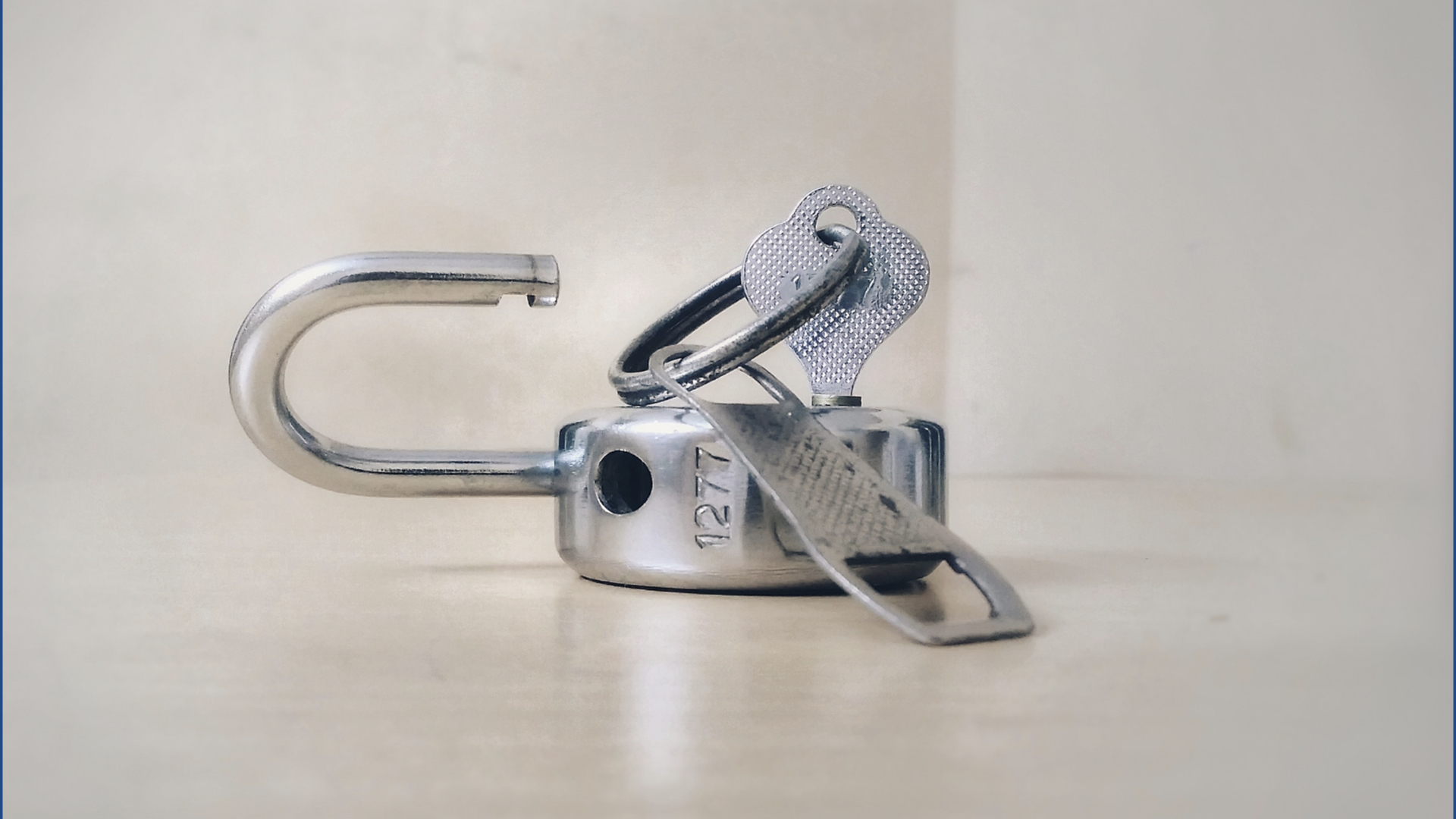
I have a key ring with all my work keys on it. Together with my vehicle keys, I likely have more keys than anyone else in my family. What this means is that I can open more doors than anybody else in my family.
But I am very blessed. Everyone in the world does not have all the keys that I have. There’s some people that don’t have a key to a workspace because they don’t have a job. There’s some people that don’t have a key to a vehicle because they don’t own one. There are some people that don’t have a key to a home because they have no home and they’re sleeping on a median in the middle of the street, like I saw in Vancouver a few nights ago.
And so we can think of freedom in terms of keys. Our keys are like rights and privileges that open doors for us. Thinking about freedom in terms of keys can help us consider the deeper level to freedom. Some people think that freedom is all about getting more keys into the hands of those people who have very few, or perhaps none, of them. Other people think that freedom is all about protecting and keeping all the keys that we have. Those are two very different ways of understanding freedom, but they both understand freedom in terms of rights and privileges that we possess.
I believe that God has a greater freedom in mind for us, and it is based not on what we have, but who we are, not on what we possess, but what we have been given.
When you think of freedom, what things come to your mind? Please respond in the comment section.

 Farewell to Shadowlands