

About 2,000 years, a man by the name of Paul was dealing with a very sticky issue. There was division in the Christian Church inn Corinth over this question: Was it a sin to eat meat that had been offered to idols? Back in ancient Corinth, they didn’t have big grocery stores and refrigeration like we do today. That means that if an animal was slaughtered in the morning, it was in the marketplace by noon, and somebody took it home for dinner that night.
Now the main source of the meat that was being offered for sale in the marketplace in Corinth came from the pagan temples where people would bring animals and offer them as sacrifices to the Greek gods. People who had come into the Christian church from Greek paganism had been present in temples when people offered animal sacrifices, and they knew that that meat would show up later on in the marketplace. In their mind, it was sinful for anyone to eat that meat because it had been offered to an idol. If anyone did that around them, it violated their conscience.
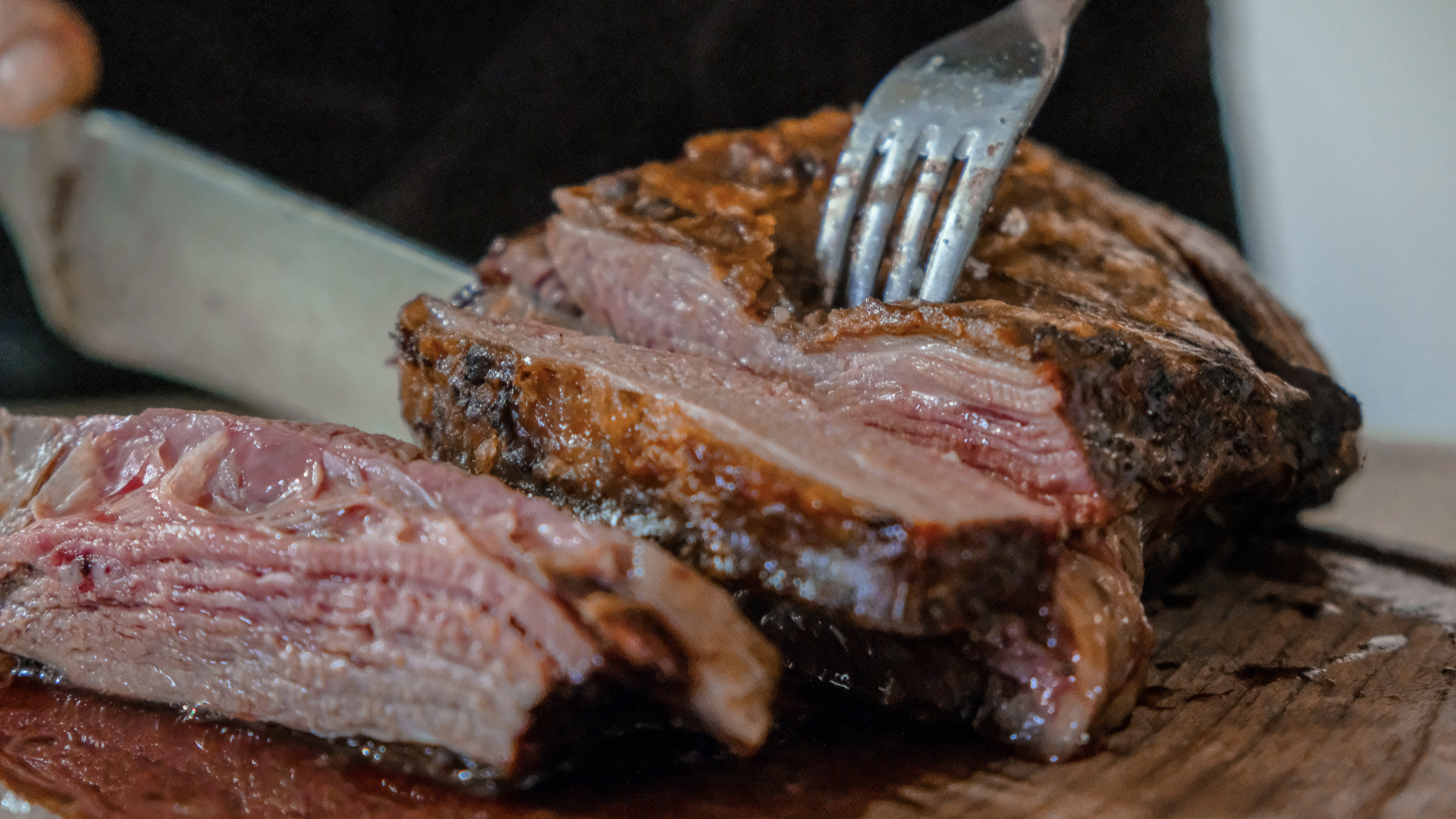
There was another group in the Corinthian church with a different perspective. Perhaps they were Jewish Christians who didn’t have any background in paganism. Therefore, they did not have the same associations between the meat in the marketplace and paganism. They were used to going to the marketplace and getting their meat, and was no concern for them where it came from. In their mind, the freedom they had in Christ meant that they could the meat that was being offered for sale in the marketplace.
In the early church, Paul was one of the main leaders and the Christians in Corinth were asking him to help resolve this conflict. How was Paul going to deal with this dilemma? Going back to the metaphor of keys as freedom, if Paul believed that the main thing was to give more keys to those who did not have many, he would have made a rule in favor of those who believed that eat meat offered to idols was a sin and said that no Christians in Corinth could eat meat that had been offered to idols. But he didn’t do that.
Or if Paul’s main focus was to protect the keys of freedom for those who had them, then he would have come down on the side of those who believed that it was okay to eat meat that had been offered to idols and make a rule that said every Christian can eat meat that hadd been offered to idols. that we had the freedom in Jesus Christ to eat that meat. And he would have said anybody can eat meat that’s been offered to us. But he didn’t do that, either.
Paul’s answer to the Corinthian dilemma is is that, first of all, there are deeper realities involved here and we need to be aware of them.
Because on the one hand, those Greek gods are nothing. There’s only one true God— Yahweh, the God of Abraham, Isaac and Jacob, God the Father, Son and Holy Spirit—and he’s the only God there is. Those Greek gods are only bits of marble that somebody has fashioned.
But on the other hand—and this is very, very important—behind those Greek gods are demonic powers. And Paul tells us that when people offer their sacrifices to those Greek gods, they’re actually offering them to the demons that are behind the gods, and you don’t want to get mixed up in that either.
In essence, Paul is saying that both sides have a valid point and both would be right in using their freedom in the ways they intend. But the consequences of each side using their freedom are not the same. Because if those who believe it’s okay to eat meat offered to idols exercise their freedom in front of those who believe it’s a sin to eat that meat, they will violate their fellow Christian’s conscience and they could shatter that person’s faith because they see someone who is further down the road of faith doing something that they believe is morally wrong. And if that is what a mature Christian does, who can there be any hope for God’s goodness in the Christian faith?
This is how Paul responds:
No one should seek their own good, but the good of others.
Eat anything sold in the meat market without raising questions of conscience, for, “The earth is the Lord’s, and everything in it.” [Here Paul is quoting Psalm 21:1.]
If an unbeliever invites you to a meal and you want to go, eat whatever is put before you without raising questions of conscience. But if someone says to you, “This has been offered in sacrifice,” then do not eat it, both for the sake of the one who told you and for the sake of conscience. I am referring to the other person’s conscience, not yours. For why is my freedom being judged by another’s conscience? (1 Corinthians 10:24-29)
In other words, Paul is telling us that our focus should not be on our own personal freedom, but on what is best for others. If a person thought and prayed about this matter and realized that those Greek gods meant nothing to them, then they were free to eat the meat that they bought in the marketplace in their home and thank God for it. Or if an unbeliever invited them to their home and served some meat that had bought in the marketplace and had been offered to idols, the believer was free to eat that meat without raising any questions or concerns.
But if that Christian was at a banquet where a plate of meat was being passed around, and the person next to them doesn’t take any meat but passes the plate to them and says, “This meat was offered to idols” then that Christian should not take any meat either. The principle is that those who have the broadest understanding of the freedom that we have in Jesus Christ should voluntarily narrow it up in the presence of those who have a narrow view so that their actions don’t violate the conscience of the other person.
What would compel a person to voluntarily narrow up their freedom for the sake of another person, perhaps someone they don’t even know very well? Love. That’s what motivates us to restrict our personal freedom for the sake of another. Love does this all the time. This is what parents do for their children. This is what a husband and a wife do for each other. But to do that for someone that we may not know very well is a different kind of love. It is love that is rooted, not in the affection we may have for another person, but in the undeserved love that God has shown to us.
Has there ever been a time when someone voluntarily restricted their freedom for you? What was that like for you? Please respond in the comment section.

 Farewell to Shadowlands