

On July 21, 2012, a date forever etched in my heart, Susan and I were in Alberta with some of our kids, celebrating my dad’s 75th birthday. That afternoon, we began our drive back to British Columbia. Along the way, we received devastating news—our son, Logan, had been seriously injured in a water accident.
We drove straight to Kelowna. By the time we arrived at the hospital, Logan was unconscious. They had begun cooling his body in an effort to reduce the risk of further brain damage. His skin was cold to the touch. Tubes and sensors were attached to him in every direction. He was motionless.

But God, in His mercy, gave us a miracle. Two weeks later, Logan walked out of that hospital with no lasting effects.
That same day, July 21st, was the last time I saw my dad alive. We had just celebrated his 75th. After battling colon cancer the previous December, he had rallied for a while. That summer, he seemed okay. But by fall, he grew weak, and in November, we received the news that the cancer had returned. He passed away on Christmas Eve.
We had planned to visit him after Christmas. We did go—only it was for his funeral. At the family viewing the day before, I touched his skin one last time in farewell. It was cold. He was motionless. This time, there was no miracle.
Two cold, motionless bodies. One miraculous recovery. One final farewell.
How do we hold onto hope when death feels so final?
Nearly 2,000 years ago, three women walked through a garden outside Jerusalem, grief-stricken. Just days earlier, they had watched someone they loved—Jesus—arrested, falsely accused, beaten, stripped, and nailed to a cross. He died. He was buried. A stone sealed the tomb.
That morning, they weren’t expecting resurrection. They were expecting to anoint a corpse.
Their only question? “Who will roll the stone away?”
But when they arrived, the stone was already moved. Their first thought: grave robbers. They stepped into the tomb—and found it empty. Instead of Jesus’ body, they saw a young man in a white robe. An angel.
He said, “Don’t be alarmed. You’re looking for Jesus of Nazareth, who was crucified. He isn’t here! He is risen from the dead!”
And yet—this is so human—their response was not joy. It was fear. They fled, trembling and bewildered. They said nothing to anyone, because they were too afraid.
Why fear in the face of good news?
Because their interpretive frame—what they expected, what made sense to them—did not include resurrection. Even though Jesus had told them this would happen, it was so far outside their experience that their minds couldn’t process it. And so they responded with shock, confusion, and fear.
But they didn’t stay afraid.
In John’s gospel, Mary Magdalene remained outside the tomb, weeping. When asked why she was crying, she said, “They’ve taken my Lord, and I don’t know where they put Him.” Then she saw someone she thought was the gardener. But when He spoke her name—“Mary”—everything changed. She turned and cried out, “Rabboni!” (which means Teacher).
In that moment, her frame was transformed. Jesus was alive.
And now everything she would see, think, and feel for the rest of her life would be shaped by this one glorious truth: Jesus lives.

Dear friends, we all live with interpretive frames—mental lenses that help us make sense of events. But those frames are often shaped by fear, loss, or the way the world presents things to us.
Let me give you an example. Two psychologists, Amos Tversky and Daniel Kahneman, did a study (long before COVID) involving a hypothetical disease threatening 600 people. Group one was told: “Treatment A will save 200 lives. Treatment B has a 33% chance of saving all 600 and a 66% chance of saving no one.” Most chose Treatment A—the “safe” option.
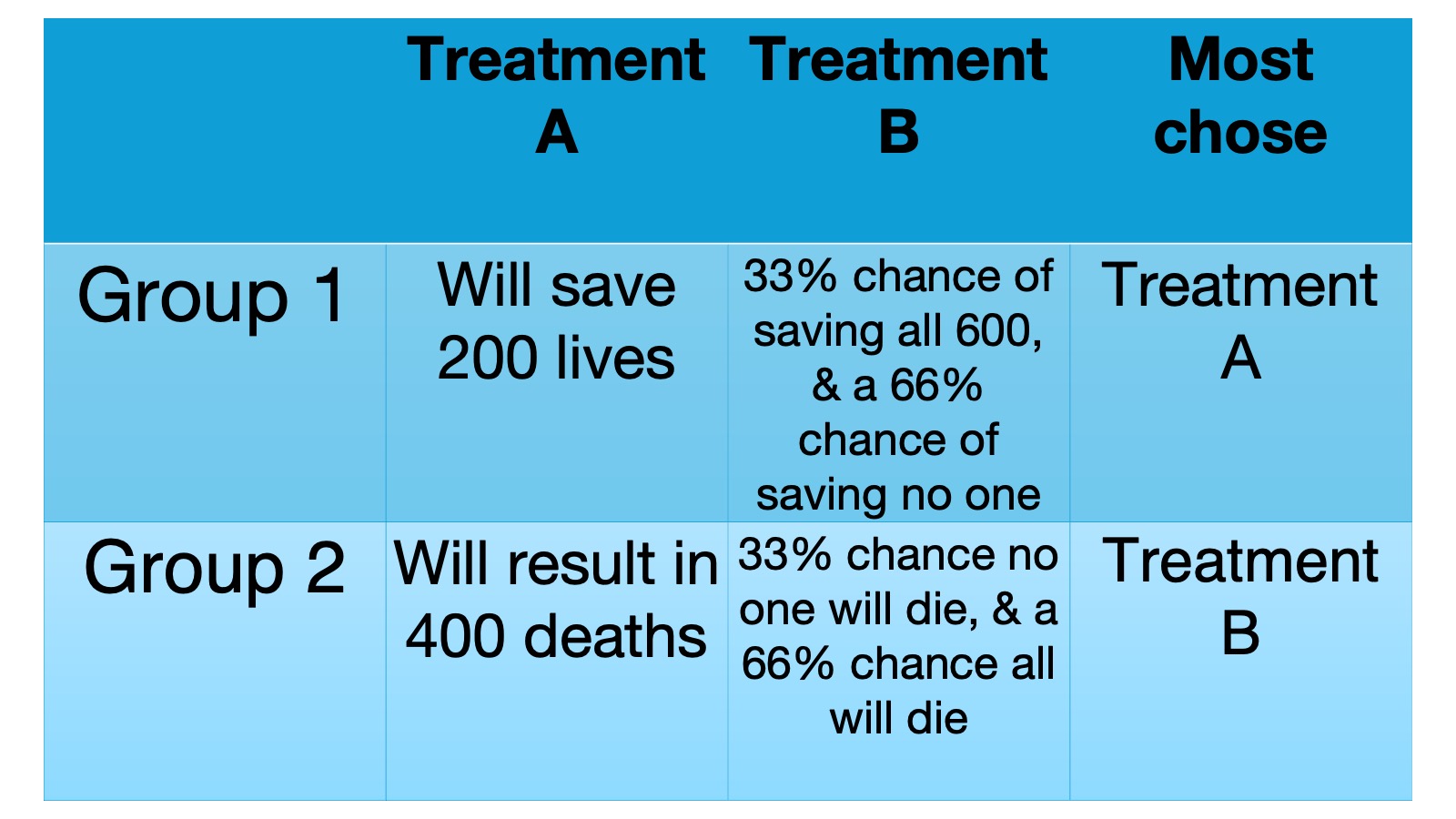
Group two heard: “Treatment A will result in 400 deaths. Treatment B has a 33% chance that no one will die, and a 66% chance that everyone will die.” This time, most chose the riskier option.
The math is identical. The only difference? How the options were framed.
The women at the tomb had the right information—an empty tomb, an angel’s message, a reminder of Jesus’ promise—but their frame didn’t allow for resurrection. At least not yet.
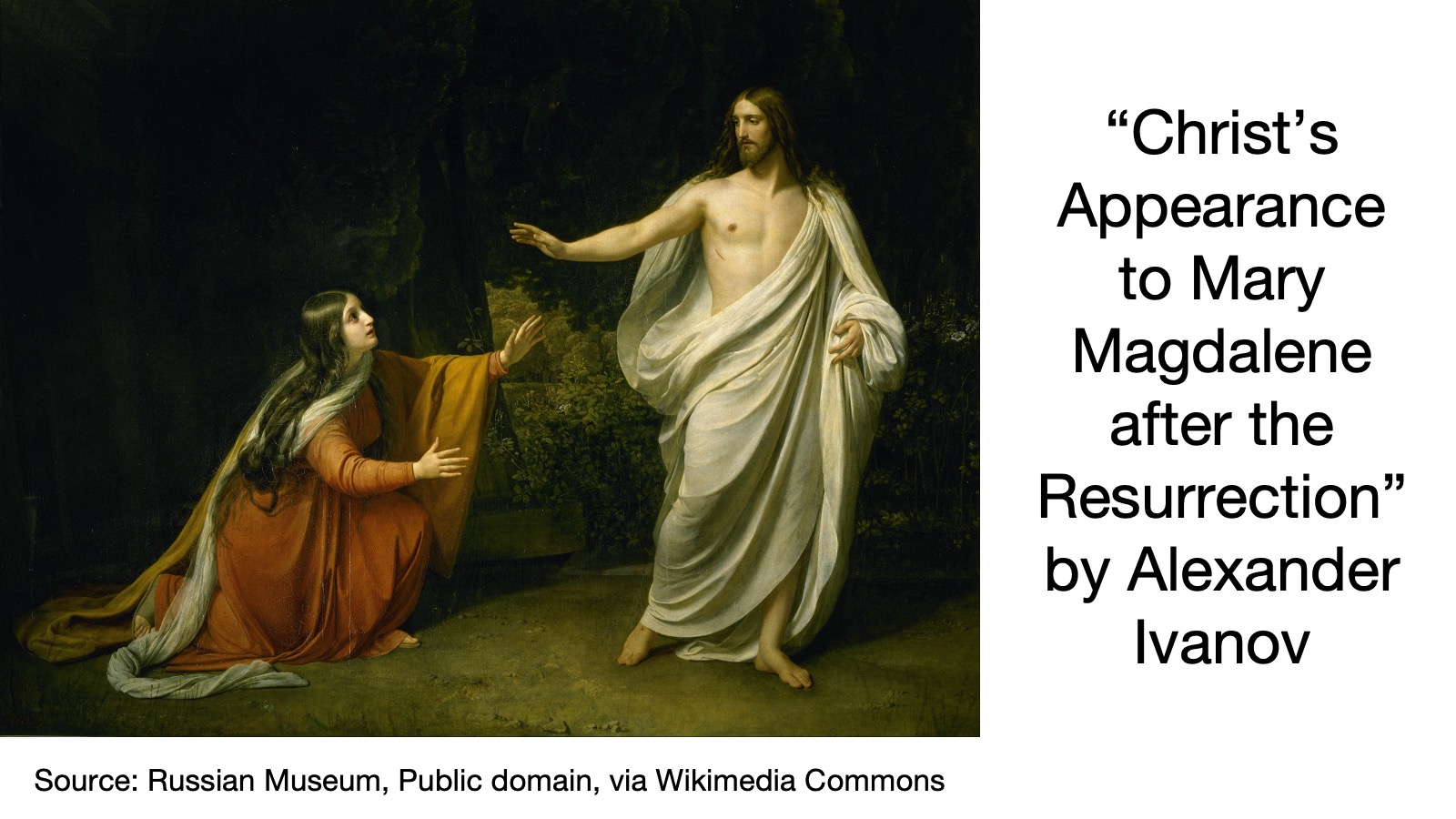
But Mary’s frame changed when she heard her name from the lips of the risen Christ. And that changed everything.
Friends, we live in a world full of fear, loss, and confusion. The news, advertising, social media—all of it shapes our interpretive frames. And it’s natural to feel grief when a loved one dies or fear when a child is hurt.
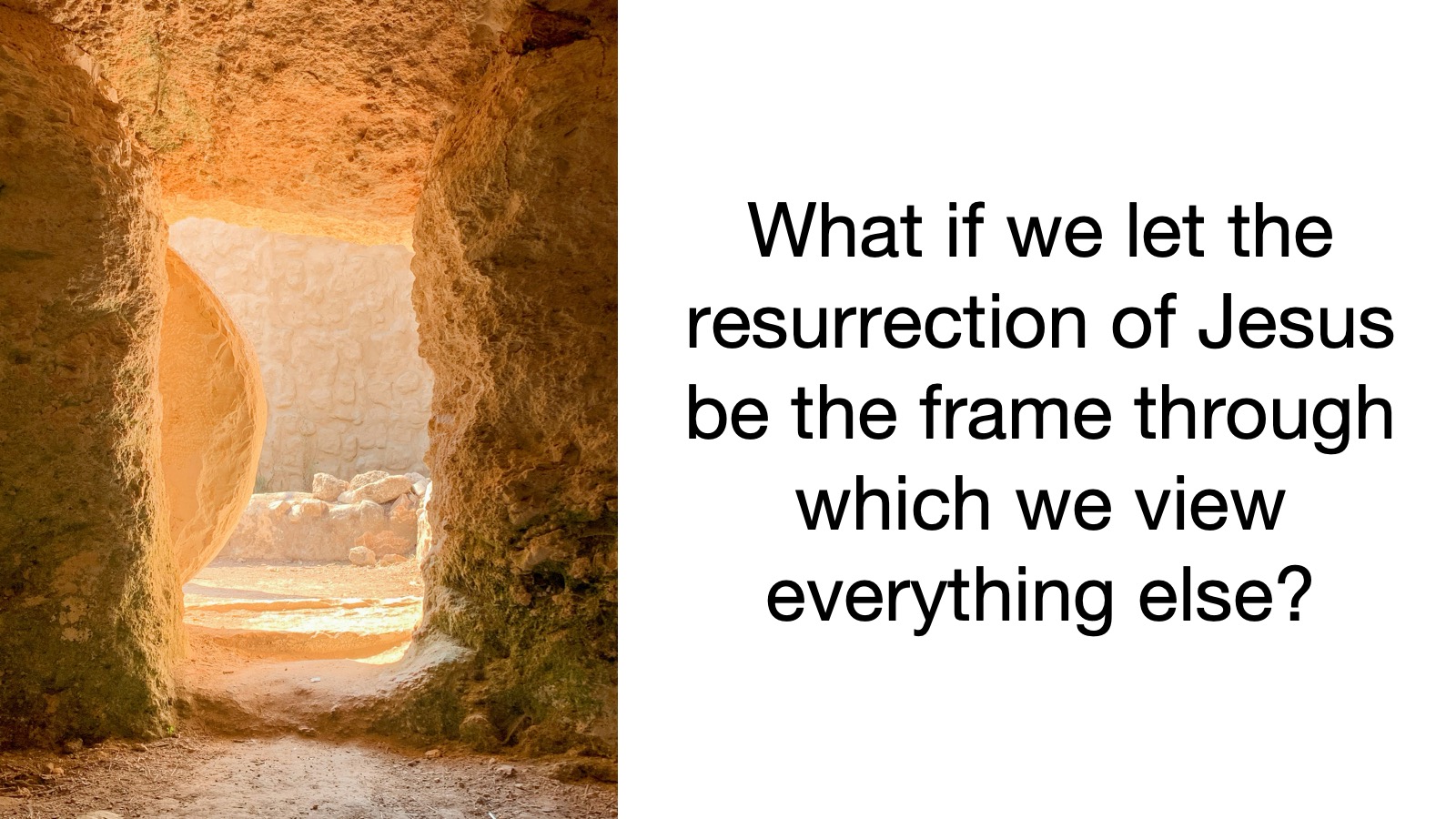
But what if the resurrection of Jesus became our interpretive frame?
On March 8, 2009, Pastor Fred Winters was preaching at First Baptist Church in Maryville, Illinois. A young man approached the pulpit, exchanged a few words with Pastor Fred, then pulled out a gun and shot him. He died that morning. His wife Cindy was left a widow. Their two daughters lost their father.
There are countless ways Cindy could have interpreted that tragedy. But she chose to view it through the lens of Jesus. Just days later, on national television, she forgave the man who shot her husband. She said, “We’ve been praying for him. We firmly believe that he can find hope, forgiveness, and peace through this—by coming to know Jesus.”
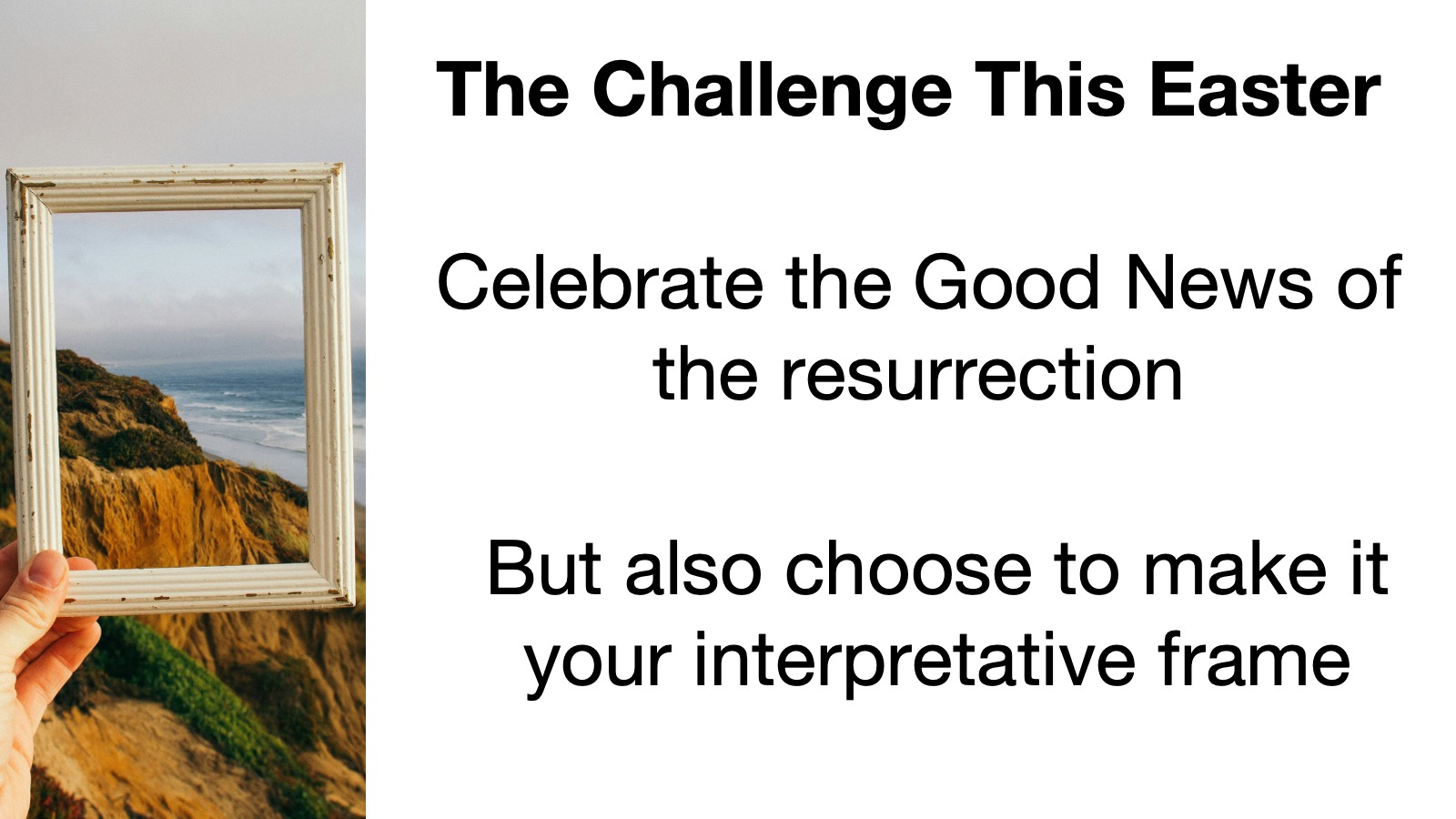
So this Easter, here’s the challenge—for you and for me: Celebrate the good news of the resurrection, yes. But more than that, let it be your interpretive frame.
Let every sorrow and every joy, every heartbreak and every hope, be seen through the lens of our risen Savior. When we do, we will radiate His hope, His forgiveness, and His peace. And we will shine His light into the lives of those around us.

 Farewell to Shadowlands