

A Deception that Worked
In the lead‑up to D‑Day in 1944, the Allied Forces wanted to maintain the element of surprise. So they created an entirely fabricated army—the First U.S. Army Group—and made dummy tanks and inflatable trucks. They even appointed a real‑life general, George Patton, to lead this fictitious army. They took pictures of him making speeches to imaginary soldiers and leaked them to the press so the Nazis would think the Allies were going to attack at Calais, only 30 miles across the water from England.
And it worked. On June 6, 1944, when the Allied Forces attacked at Normandy, 100 miles from the English coast, the Nazis were completely surprised. While they quickly poured reinforcements into that area, they still kept 150,000 German soldiers at Calais because they believed a second wave was sure to come ashore there.[i]

We might think to ourselves that with the technology and resources we have today, we could never fall for something like this. But the truth is that human beings always use our senses, reasoning, and instincts to try to sort out what is real and what is not—what we should trust and what we should disregard.
But what if our human methods of assessment are flawed, and the thing we have decided to trust is false? Then the results will be catastrophic, because our life will be shattered as the thing in which we trust fails—as it inevitably will.
So the question before us today is this: Where will we find the trustworthy foundation we need for life? To help us think about this, we continue our series Streams in the Desert and dig into Isaiah 31:1–32:8.
Judah’s Crisis of Trust
You may remember that the background to the first 39 chapters of Isaiah is a time of great geopolitical turmoil in the Middle East. The aggressive superpower of Assyria was threatening Judah, and the king had to decide: Who would they trust to protect and preserve the kingdom? Would it be God, or would they make an alliance with another nation?
Many argued for an alliance with Egypt. Using the best data available and the soundest human reasoning, Egypt made sense. They had the best military technology—chariots and cavalry—and were the only regional power that could possibly fend off Assyria.
But in chapters 30 and 31, God’s prophet Isaiah warns that this was the wrong direction. “Woe to those who go down to Egypt for help, who rely on horses, who trust in the multitude of their chariots and in the great strength of their horsemen, but do not look to the Holy One of Israel or seek help from the Lord.” (Isaiah 31:1)
Making an earthly alliance is not inherently wrong. It is the absence of faith in God while making such decisions that makes them wrong.
God had already shown Egypt was not to be trusted—He had defeated the demonic powers of Egypt through the ten plagues and brought His people out of slavery. You cannot align yourself with those who have shown themselves to be God’s enemies. And there was Someone infinitely more powerful who was ready to intervene for Judah—and that was God Himself.
God’s Protection and the Call to Return
Isaiah describes God like a lion standing over its prey, unmoved by the shepherds’ shouts. He also describes God like an eagle hovering over her nest, ready to defend her young. “Like birds hovering overhead, the Lord Almighty will shield Jerusalem… He will pass over it and rescue it.” (Isaiah 31:5)
Then Isaiah issues a call to repent. Because God is faithful, because He will rescue His people, the natural response is to turn away from false trusts: “Return, you Israelites, to the one you have so greatly revolted against.” (Isaiah 31:6)
God also promises that the threat of Assyria will be taken away—and it was. In Isaiah 36–37, when the Assyrians laid siege to Jerusalem, King Hezekiah brought their demand for surrender into the temple, laid it before the Lord, and prayed. God struck down 185,000 Assyrian troops, and Sennacherib returned to Nineveh, never to threaten Jerusalem again.
A Righteous King Worthy of Trust
Then in chapter 32, Isaiah introduces a new leader worthy of trust: “See, a king will reign in righteousness…” (Isaiah 32:1)
This could point to Hezekiah, who did the right thing in that moment. But Hezekiah later stumbled in pride. The king Isaiah describes can do far greater things. This righteous King is Jesus.
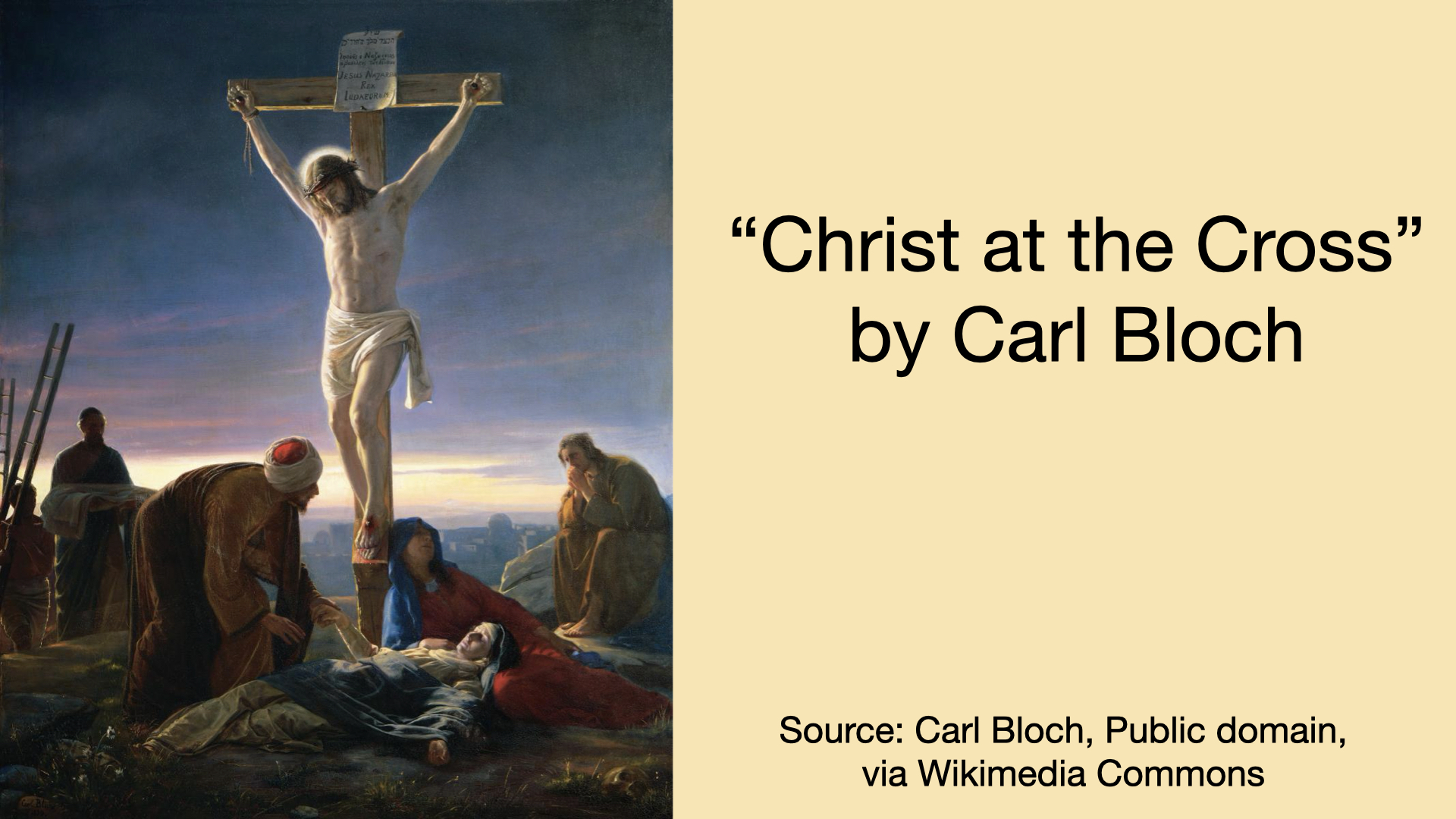
Isaiah says the eyes of those who see will no longer be closed—Jesus healed the blind. He says the ears of those who hear will listen—Jesus healed the deaf. He says the stammering tongue will be fluent—Jesus sent His Spirit at Pentecost. He says this King will calm storms—Jesus did exactly that. He says this King will be streams of water in the desert—Jesus promised living water to all who believe.
Our righteous King not only saves us—He transforms us. He enables us to discern truth from deception. He forgives us when we fail and, by His Spirit, makes us noble.
Trusting God in Our Decisions
So what does this mean for us today? We will all face moments when we must choose between human wisdom and God’s wisdom.
A star employee fudges their numbers—do you confront it or let it slide? A date pressures you to compromise your faith—whose voice do you trust? You’re raising a child in an anxious digital age—do you follow the crowd or God’s way? You’re nearing retirement—do you choose a purpose centered on yourself or something bigger?
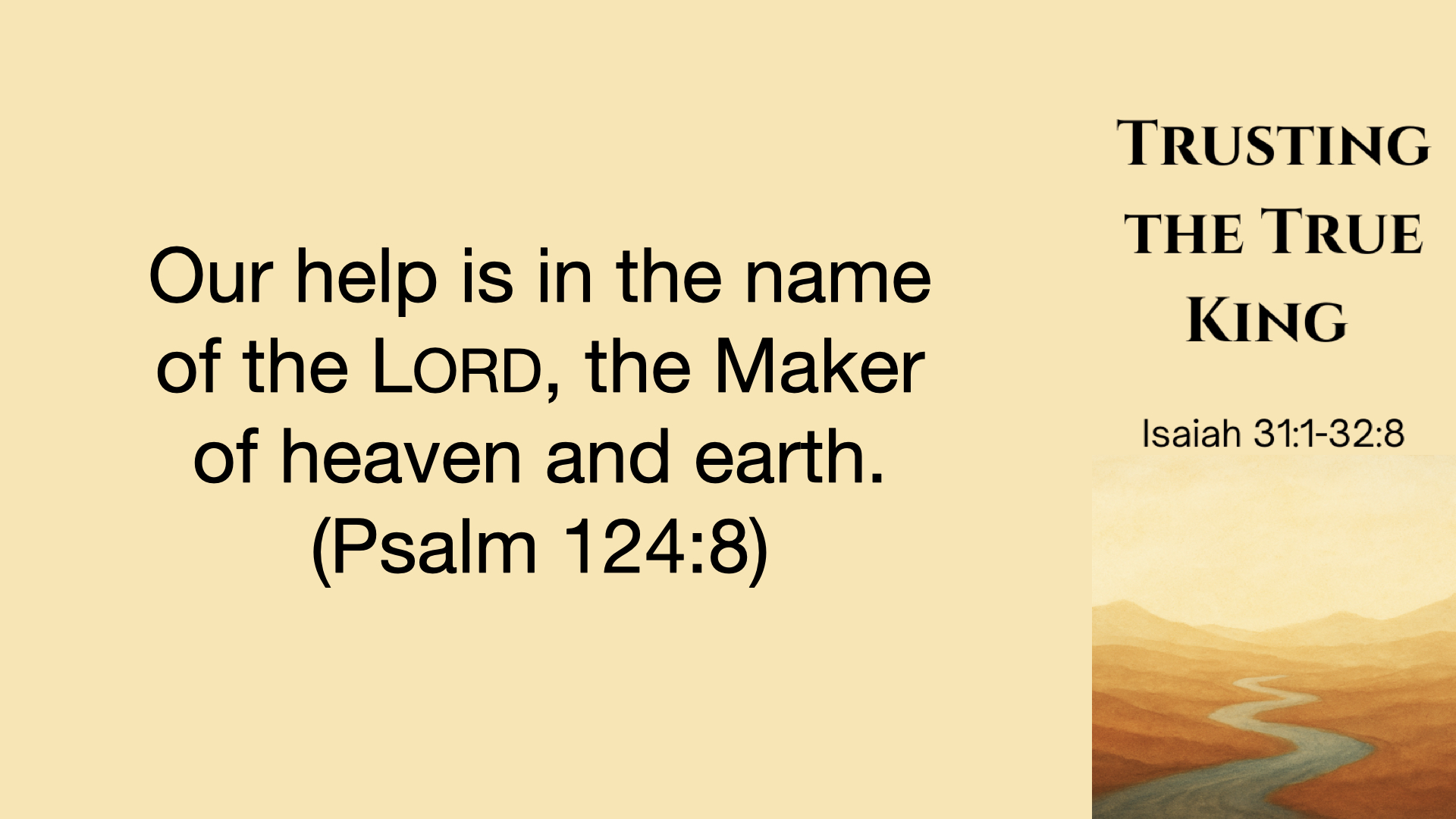
These are difficult dilemmas. But what changes everything is God. “Our help is in the name of the Lord, the Maker of heaven and earth.” (Psalm 124:8)
The same God who hovered over Jerusalem hovers over you. Jesus—God the Son wrapped in human flesh—lived, died, and rose again to give you forgiveness, righteousness, and a place in God’s family. The Holy Spirit has made His home in your heart.
A Personal Reflection
There is a thought experiment I conduct with myself when I start getting down in the dumps because of problems I am facing. What I do is I ask myself, “If I had a choice, what would I choose?” First, I think about my life as it. Then, I think about how it could be. Yes, like anyone else, I could come up with a list of problems. Our car needed expensive repairs this week. I have people in my family looking for work and it is tough to find a job. There are members of our family that work on a seasonal basis but they don’t know if they will have a job this year.
But then I very quickly think about the good things I have in my life. I have a wife who loves me. I have children who love each other and still like to hang out together. And when I think of the good things in my life I quickly realize two things: First, I don’t deserve any of the good things in my life. They are all blessings from God. Second, a lot, if not all, of those good things are in my life are a direct result of the problems in my life. For example, I believe the reason everyone in my family loves each other is because of the tough times we have gone through together.
Every time I do this thought experiment, I decided that if I had a choice, I would choose the life that God chose for me. And I am reminded once again of the wisdom and goodness of God.
The Challenge and the Promise
So here is the challenge I leave with you: Do not be deceived by worldly promises or human wisdom. Look at all God has already given you. Through Jesus, you are a beloved, forgiven child of God. He is your hiding place from the wind, your shelter from the storm, your stream of water in a dry place.
Jesus is noble—and by His Spirit, He makes us noble.
Remember, dear friends: In Jesus, you have God, and there is nothing greater than that.
My prayer for you is this: as you go through life and make your choices, do so with faith in Jesus. Life with Him will always be greater than any life without Him, and you will never face a moment where Jesus is not enough for you.
Amen.
[i] Taylor Downing, “D-Day deception Operation Fortitude: The World War Two army that didn’t exist,” BBC.com (Internet; available at: https://www.bbc.com/culture/article/20240531-d-day-deception-operation-fortitude-the-world-war-two-army-that-didnt-exist; accessed January 29, 2026); and Elinor Florence, “D-Day: Decoys and Dummies,” ElinorFlorence.com (Internet; available at: https://www.elinorflorence.com/blog/d-day-decoys/; accessed January 29. 2026).

 Farewell to Shadowlands