

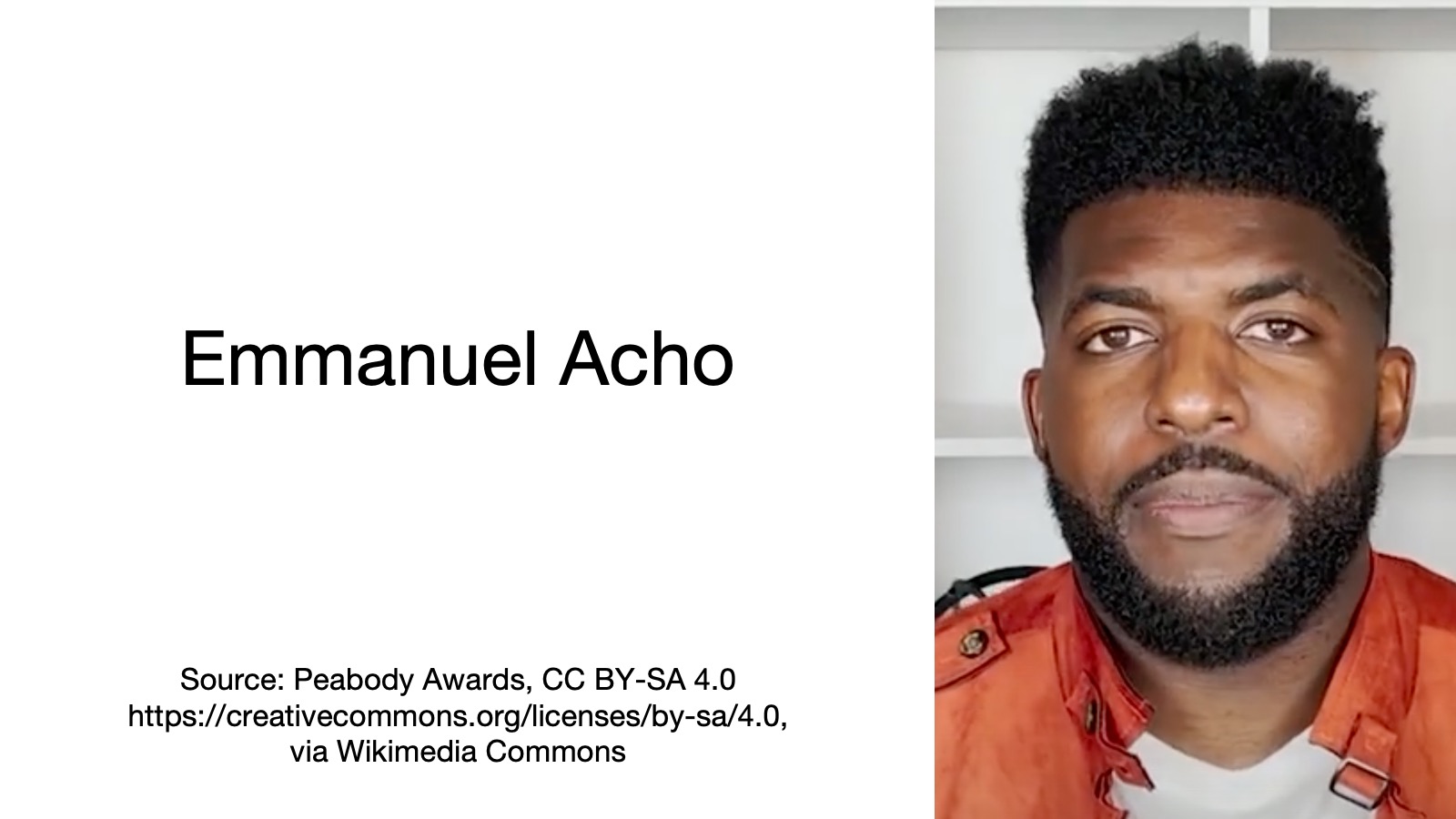
On May 25, 2020, a black man named George Floyd died when a white police officer knelt on his neck for 8 minutes and 15 seconds even though Floyd protested, “I can’t breathe.” Within days, large protests began throughout the United States and around the world. In response to the outpouring of concern around the world in the aftermath of Floyd’s death, former NFL linebacker, Emmanuel Acho, who is black, began creating a digital series called Uncomfortable Conversations with a Black Man to help white people understand what was going on so that they could respond in helpful ways. At the start of the first video in the series, Emmanuel said, “I created this for you because in order to stand with us, and people who look like me, you have to be educated on issues that pertain to me, and fully educated so that you can feel the full level of pain, so that you can have full understanding.” Emmanuel was trying to help people to understand how to break down the racial barriers that exist in the world.[i]
This is a challenging time to be a Christian in the western part of the world. Over the past several centuries, the West has been profoundly shaped by Christianity in ways that have benefitted the entire world in the areas of education, science, medicine, philosophy, politics, and human freedom. But in more recent times, the Christian Church has a diminished presence in the West.
From a human perspective, it would be natural for us Christians to feel sorry for ourselves, push back against this secularization and marginalization process, and strive to regain our former prestige and power. But whenever the Christian Church weds herself to power, she loses her mission. Ours is a crucified king who laid down his life to seek and to save all that is lost. And he is inviting us to join him in his mission of redeeming and restoring the world. The world needs us to be like Jesus, not like Caesar. So how do we break down the barriers that are making it hard for us to reach people with the Gospel? To help us as we reflect on that question, we are going to dig into Acts 10:23-35. If you have a Bible or a Bible app with you, I invite you to turn there now.
God’s Grand Story of Salvation
There we meet Peter, one of Jesus’ followers, and Cornelius, a Gentile centurion. Please keep in mind that this passage is only a fraction of the entire story of Peter and Cornelius. Their complete story is larger than any of the other stories in the Book of Acts, it is prominently featured in the center of the Book, and this God-ordained encounter serves as a major turning point in the Grand Story of God’s salvation of the world. This is a very important story in the Bible.

From the very moment when God’s good creation became corrupted by sin and stained with death, God promised that he would send a Messiah who would reverse the damage done by sin and restore and renew all things. And the way that God ensured that this promise would be preserved is by choosing for himself the family of Abraham, Isaac, and Jacob to be his chosen people in the world. This chosen people would be a light to the surrounding nations, reflecting God’s love and character into the world around them. They would faithfully pass God’s promise of a Messiah down through the generations. And one day, when the time was just right, God brought the Messiah into the world through his chosen people. God the Son became human and was born to a young Jewess named Mary. He was given the name Jesus, and he lived a perfect human life that counts as goodness for all people. Then he died a sinner’s death on a cross to pay the full cost of forgiveness for all the sins of everyone everywhere throughout all time. On the third day after his death, Jesus rose from the dead to defeat death for all humanity. Forty days later, he ascended into heaven to become the Crown Prince of all creation, ruling at the right hand of his Father until the day when he will return to this world to restore and renew all things.
God Grants Salvation to Gentiles
Now, up until the point when Peter and Cornelius meet each other, Christianity was primarily a Jewish movement. The apostles, including Paul, were all Jewish and they tended to focus their efforts on sharing the Good News of Jesus with other Jews.
That all changed when God spoke to Cornelius through a vision and told him to send for Peter. While three men sent by Cornelius were on their way to Joppa to get Peter. Peter also had a vision from God in which a sheet fill with animals that the Jews considered to be unclean was lowered before him while a voice said, “Get up, Peter. Kill and eat.” Peter refused, and the voice responded, “Do not call anything impure that God has made clean.” (Acts 10:15)Three times this happened, and then the three men from Cornelius arrived at the home where Peter was staying. The Spirit said to Peter, using his other name, “Simon, three men are looking for you. 20 So get up and go downstairs. Do not hesitate to go with them, for I have sent them.” (Acts 10:19-20) So Peter went with them to Cornelius’ home in Caesarea.
When they arrived, Cornelius graciously invited Peter into his home, and even though it was against Jewish law for him to do so, Peter accepted the invitation, saying, “God has shown me that I should not call anyone impure or unclean.” (Acts 10:28) Cornelius told Peter about the vision in which God told him to send for Peter. Peter responded by saying, “I now realize how true it is that God does not show favoritism but accepts from every nation the one who fears him and does what is right. (Acts 10:34-35). Peter then shared the Gospel with Cornelius and all his household, and as he did that, the Holy Spirit came upon them, and they begin speaking in tongues and praising God. The Jews who came with Peter from Joffa were amazed that the gift of the Holy Spirit had been given to Gentiles! Then Peter said, “Surely no one can stand in the way of their being baptized with water. They have received the Holy Spirit just as we have.” So he ordered that they be baptized in the name of Jesus Christ. (Acts 10:47-48)
News of what happened spread rapidly throughout the fledgling Christian community, and when Peter returned to Jerusalem, he encountered opposition from the Jewish Christians there for associating with Gentiles.
So he told them about all that had happened and concluded by saying, 16 Then I remembered what the Lord had said: ‘John baptized with water, but you will be baptized with the Holy Spirit.’ 17 So if God gave them the same gift he gave us who believed in the Lord Jesus Christ, who was I to think that I could stand in God’s way?”
18 When they heard this, they had no further objections and praised God, saying, “So then, even to Gentiles God has granted repentance that leads to life.” (Acts 11:16-18)
Key Takeaways That We Can Apply to Our Lives
So what can we take from this story and apply to our lives today? First, our desire to break down barriers for the Gospel is motivated by the way Jesus broke down barriers for us. In our lost and broken state, without Jesus, there was no hope for us. But Jesus suffered and died on the cross to remove the barrier of sin between us and him. On the third day after his death, Jesus rose from the dead to remove the barrier of death between us and the life he has for us. We have been given the gift of life with Jesus and we want others to have that same gift too. That’s why we want to reach across and break down all barriers to the Gospel.
Therefore, in response to the great love Jesus has shown us, we willingly chose to make, with God’s help, some key shifts in our inner being so the barriers in the world are not barriers to us. The first shift we make to break down barriers is We grow in loving people who are different from us. Like Peter, we learn that we should not look down on others or despise them. They, like us, were created by God and he loves them just as much as he loves us. So we love others like God loves them.
The second internal shift we make to break down barriers is We grow our faith in the power of God to change lives. If you are like me, you may at times have put God in a box and limited who you think he can reach and what you think he can do. Now God is not in any way limited by our thoughts of him, but we are. So it is important for us to believe that God can change the life of anyone regardless of how far they are from him so that we can step into the opportunities that God wants to give us to be part of what he is doing in the lives of others.
The third internal shift that we make to break down barriers is We fully rely on the Holy Spirit. Our personal faith in Jesus, along with the Christian faith in a global sense and its spread from one person to another throughout the world, is a Spirit-led process from start to finish. It is not us who breaks down the barriers to people believing in Jesus. That’s the Holy Spirit’s job. Our job is to be jars of clay that carry the treasure of the Gospel to others so that they may believe in Jesus and become part of God’s family.
Objectives Instead of Goals
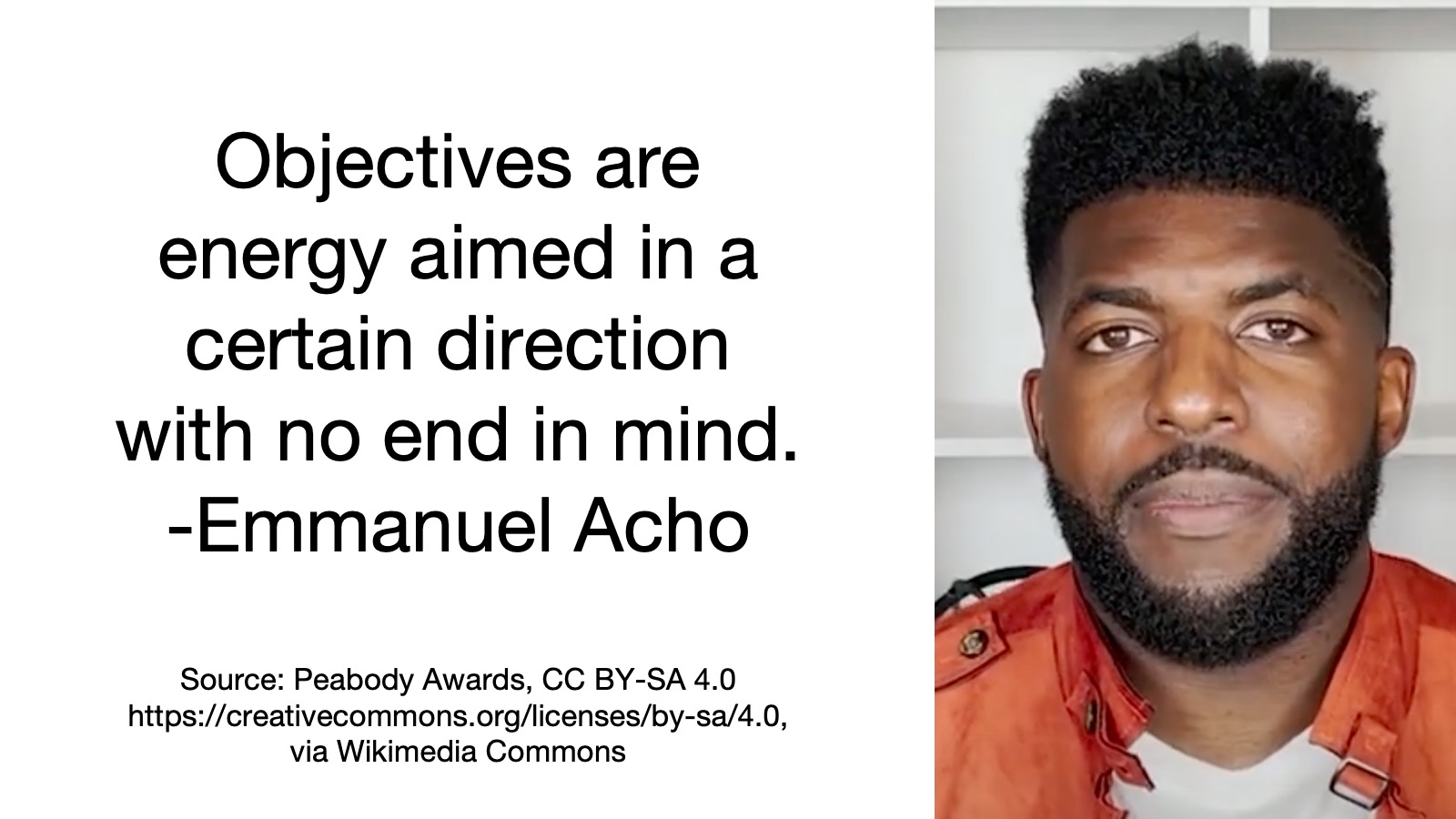
In 2022, Emmanuel Acho gave the commencement speech at his alma mater, the University of Texas in Austin. In that speech, he referred to a paper he wrote while at university, a paper which was based on his personal experience of failing at so many of his goals, like having a career in the NFL. In the paper, he wrote that he believes that goals are dumb because, at best, they limit our achievements and, at worst, destroy our self-esteem and effectiveness. A goal, he said, is energy aimed in a certain direction with an end in mind. Instead of having goals, he advocates for having objectives, which are energy aimed in a certain direction with no end in mind.[ii]
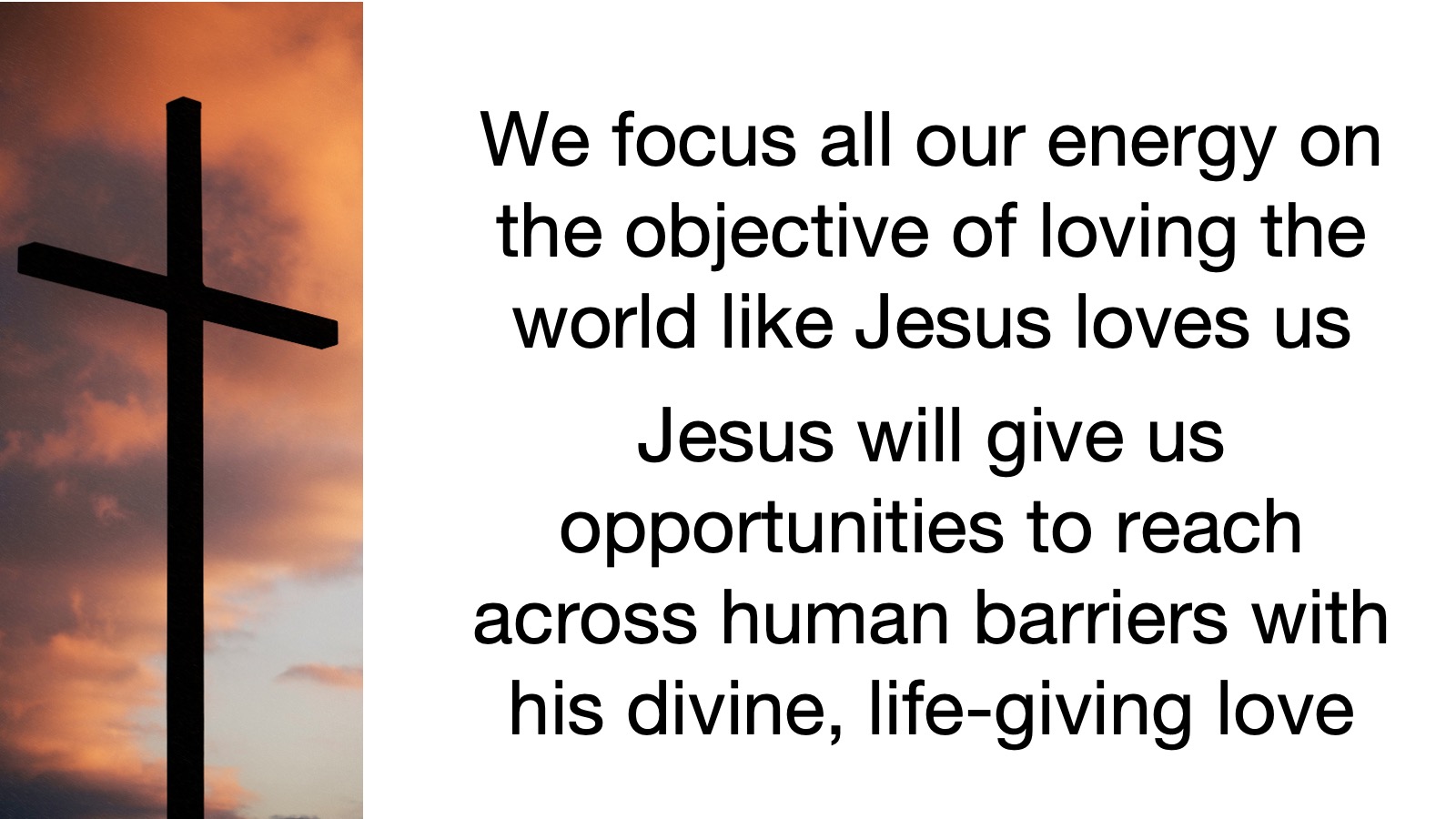
I suggest to you that this is how we best partner with God’s Spirit in breaching the barriers in our world to faith. We have no goals in mind to limit us, no prejudice to hold us back. Instead, we focus all our energy on the objective of loving the world like Jesus loves us. And when we do that, Jesus will give us opportunities to reach across human barriers with his divine, life-giving love. Amen.
[i] Emmanuel Acho, “The Inaugural Episode – Uncomfortable Conversations with a Black Man,” YouTube (Internet; available at: https://www.youtube.com/watch?v=h8jUA7JBkF4; accessed August 20, 2024); “Emmanuel Acho,” Wikipedia: The Free Encyclopedia (Internet; available at: https://en.wikipedia.org/wiki/Emmanuel_Acho; accessed August 20, 2024); “George Floyd,” Wikipedia: The Free Encyclopedia (Internet; available at: https://en.wikipedia.org/wiki/George_Floyd; accessed August 20, 2024); and “How George Floyd was Killed in Police Custody,” The New York Times (Internet; available at: https://www.nytimes.com/2020/05/31/us/george-floyd-investigation.html; accessed August 20, 2024).
[ii] Emmanuel Acho, “Emmanuel Acho’s UT Austin 2022 Commencement Address – Life Advice for College Graduates,” YouTube (Internet; available at: https://www.youtube.com/watch?v=4AOmafhBCEY; accessed August 27, 2024).
(This message was shared on September 8, 2024 at Walnut Grove Lutheran Church in Langley and St. Luke Lutheran Church in Surrey. For more info about our churches, please go to wglc.org and sllc.ca.)
 Farewell to Shadowlands