

Last month, I had a conversation with a worship visitor after the service. He shared with me that during the tornado on July 1 that swept through the south of Didsbury, Alberta, his family’s farm was completely destroyed.
A week or two later, we camped at Fintry on the west side of Lake Okanagan. When our holiday was over, we drove south along the west shore of Lake Okanagan to West Kelowna on a Monday. On Thursday of that same week many of the buildings we passed by were completely destroyed by wildfires. As you may know, interest rates have been on the rise. Recently, while I was listening to the radio, a man shared how he had purchased an investment property two years ago, and his mortgage payments had skyrocketed from around $3,500 to $5,500 per month. To make ends meet, he had to take on a second job. Just a few days ago, an earthquake struck Morocco, and at this point, the death toll has exceeded 2,000 people.
I share all these events with you not to discourage you but to make the point that life is filled with uncertainty. This is a challenge for us because if this life is all we know, then it is the only source of hope for our lives. However, if the foundation of hope for our life is based solely in this world, then that hope is fragile and vulnerable and could be completely taken away from us.
And when our hope is anchored in something that can be taken from us, anxiety becomes our constant companion, even if it is only lurking in the background, and it reminds us that we could lose the people and things we hold dear, which are our source of hope.
What we need is a greater hope, a hope that will sustain us amidst the challenges we face in the world today and in our personal lives. So, the question that I am inviting you to reflect upon with me is this: How can we live life now with confidence and boldness? To help as we reflect on this question, we are going to be looking at 1 Corinthians 15:1-20. The passage we’ll explore in the Bible, as we reflect on this question, is 1 Corinthians 15, verses 1 to 20. If you have a Bible app or a physical Bible nearby, I invite you to turn to there now.
In the course of our reflections, let us start by considering the type of hope that we need. Right away, we can realize that we need a hope that will encompass our entire being. This is why, if our hope is based on our soul going to heaven when we die, that hope is inadequate. Now, you might be thinking to yourself, “I thought that this writer was a Christian and he writes this stuff? What is going on?” Let me assure you that I am a Christian and I want to also say that the belief that our soul will go to heaven when we die is part of the Christian hope, but it is not all of the Christian hope, and it is not the ultimate Christian hope. If the only hope we have is that our soul will go to heaven when we die, that hope is inadequate, despite its importance because, if you think about it, that belief only offers hope for our soul, but not our body. We require hope for our entire being.
Not only that, the only way that we humans know how to live is in a body. So if our only hope is that our soul goes to heaven when we die, what hope is there for the life we are living in our bodies right now? And what hope is there for this entire physical world and for all the things that we do in our body each and every day? And having a hope that our soul will go to heaven when we die means that our hope only begins… when we die. We need hope for right now as well. So we need a hope for our entire life.
Not only that, consider this: The only way we know how to love other human beings is through our physical bodies. While we can love God without our bodies – hypothetically speaking – by loving God from our spirit to His Spirit, the only way we know how to love another human beings is through our physical body. Therefore, if there is to be love that exists after we die, then we are going to need bodies to love the other people that are there with us.
That is the type of hope we need.
Now, we’re going to turn from the hope we need to the hope that Jesus has given us. That hope is centered in the Gospel, the Good Message of Jesus, and we will reflect on three different aspects of the Gospel: the content of the gospel, the significance of the gospel, and the grace of the gospel.
First and foremost, let’s explore the content of the gospel. Paul provides guidance on this in his letter to the Corinthians. He states, “For what I have received, I passed on to you as of first importance: that Christ died for our sins according to the Scriptures, that He was buried, and that He was raised on the third day according to the Scriptures, and that he appeared to Cephas, then to the twelve. After that, he appeared to more than five hundred of the brothers and sisters at the same time, most of whom are still alive, though some have fallen asleep. Then he appeared to James, then to all the apostles.” (1 Corinthians 15:3-7)
Paul is telling us that the content of the Gospel is that Jesus died for our sins and then rose from the dead. To provide you with a framework for understanding the Gospel, let’s look at the four stages of salvation history as God has revealed them to us in the Bible. Salvation history is the story of God’s interactions with humanity on Earth and how he is engaged in the process of saving us.
It all starts with creation.
The Bible tells us that God created everything and said that it good. So we have God’s goodness baked into creation, and the handiwork of his beautiful design is everywhere for anyone to see. In the first couple of chapters of Genesis, we see that there is peace and harmony in relationship, both in the relationship between God and humans, and the relationship that human beings have with each other.
That’s how things start off but very quickly we encounter something that is referred to as “The Fall”. This is the point when sin entered the world through the disobedience of our first parents. As a result, all of creation was corrupted by sin, and death became “the new normal” – it was not normal to God, but it was normal as humans experienced life in this world.
Yet, in the midst of this, God made a promise to send a Messiah who would reverse the devastating effects of sin. This promise was fulfilled when Jesus Christ entered the world, which marks the redemption stage. This stage is miraculous in many different ways. The first of the great miracles of redemption is that God became a human being, one of us. This God-human, Jesus, lived a perfect human life that counts as goodness for all of us. Then he went to the cross, where, as Paul tells us, he died for our sins, was buried, and on the third day, he rose from the dead.
Jesus’ resurrection is the second great miracle of redemption event it carries profound meaning for us. Not only does it prove that Jesus has defeated death for us and fully paid for all our sins, forty days later, Jesus ascended into heaven and he now rules as the Crown Prince over all creation. His ascension was like a coronation. Consider this: the one who is ruling over all creation is not only God, he is also a human being, just like you and me.
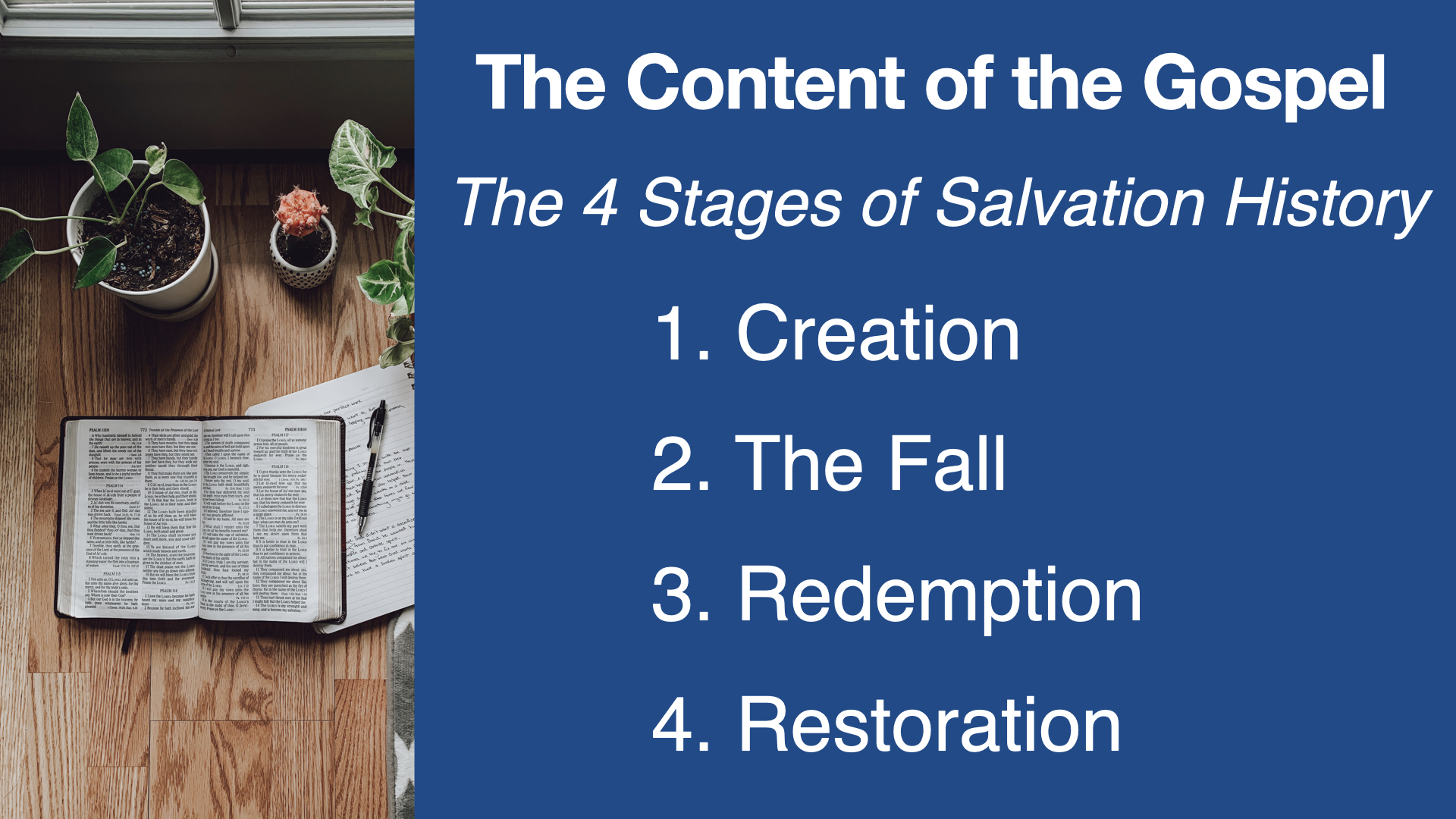
Then there is the stage which has not yet happened: restoration. In this stage, the God-human, Jesus. will return to this world in a visible way, and he will make visible what is presently invisible: his New Creation. He is going to banish all evil, he will defeat death once and for all, and he will restore and renew all things.
Everything will be full of life, like it was in the beginning. The harmony and peace that was present in the beginning will be restored. Furthermore, Jesus will raise our dusty, dead, old bodies from the ground and recreate them into new resurrection bodies that he will give to us. These new resurrection bodies will never grow old, never get sick, and never die. We will get to live with Jesus forever in the new heaven and earth to come.
Those are the four stages of salvation history: creation, the fall, redemption, and restoration.
Now, let’s turn now to the significance of the gospel.
Paul also writes, “Now, brothers and sisters, I want to remind you of the gospel I preached to you, which you received and on which you have taken your stand. By this gospel, you are saved if you hold firmly to the word I preached to you; otherwise, you have believed in vain.” (1 Corinthians 15:1-2)

Paul is saying, “Hang on to the content of the Gospel because the significance of it is that God will save you through this message!” Here’s why this is important: If you choose not to believe in the Gospel, those four stages of salvation history still stand. You would still be part of God’s creation, beautifully and wonderfully made by Him. However, you would also bear the consequences of The Fall, with sin residing within you, corrupting your thoughts, words, and deeds. And you would carry the burden of sin’s consequences.
And to reject the Gospel is to leave God’s plan of salvation for humanity and essentially say, “I’m going to make my own plan for my salvation.” And those plans usually involve being a “good person”, doing “good things”, or believing “the right information”.
Here’s the critical point: If you decide to pursue leave God’s plan for your salvation and try to make your own plan for saving yourself, you will find, in the end, that it doesn’t work. In the Bible, when it speaks of the destiny of those who reject God, it often uses the phrase “weeping and gnashing of teeth.” This phrase symbolizes immense regret because there will be people who will be thinking, “I thought that my plan would work, and now I realize that it doesn’t.”
That is the significance of the Gospel, and that is why we don’t want to step out of God’s plan for our salvation and miss his steps of redeeming and restoring us.
Then Paul talks about the grace of the Gospel. He writes, “And last of all,” [speaking of Jesus’s resurrection appearances,] “he appeared to me also, as to one abnormally born. For I am the least of the apostles and do not even deserve to be called an apostle, because I persecuted the church of God. But by the grace of God, I am what I am, and his grace to me was not without effect. No, I worked harder than all of them—yet not I, but the grace of God that was with me.” (1 Corinthians 15:8-10)
Paul is asserting that he did not deserve the gifts of the gospel. He did not deserve forgiveness for all his sins or eternal life from God. None of us do. But in Paul’s case, he was an enemy of God and was actively trying to destroy the Christian Church in its infancy.
In Paul’s unique case, he was once an enemy of God. He sought to dismantle the Christian church in its infancy. Though he believed he was on God’s side, Paul was actually fighting against God and what God was trying to do in the world.
Yet, Jesus graciously appeared to Paul on the road to Damascus, and in doing so proved both the content and significance of the gospel. This encounter with Jesus transformed Paul’s life through the grace of the gospel. He transformed from being a person who was filled with hatred and murderous thoughts to someone motivated by love, even for those who persecuted him. His primary mission in life became sharing the Gospel message with as many people as he could in the time and opportunities that God gave him.
The Gospel profoundly transformed Paul’s life.
You may be thinking, “Well, that’s great for Paul, but what does it mean for me?” Again, let’s consider those words: grace, significance, and content. First of all, grace.
Grace means for you is that the gospel is meant for you. That message of forgiveness for all your sins and the promise of eternal life – it’s for you. Jesus is for you. And it doesn’t matter what bad things you may have done in the past. It doesn’t matter what bad things you might do in the future. You see, dear friend, the Gospel message does not depend on you at all.
The Gospel message relies on God, his goodness, his love, and his actions for us. And you can trust that this is true because Jesus rose from the dead. The only part that is yours is the question of whether you will receive the Gospel, believe it, and live by it. Grace means that the Gospel is for you.
The significance for you is that the gospel will profoundly alter the course of your life forever. As it says in verses 19 and 20, “If only for this life we have hope in Christ, we are of all people most to be pitied. But Christ has indeed been raised from the dead, the first fruits of those who have fallen asleep.” (1 Corinthians 15:19-20)
Now, the term “first fruits” is significant. To draw a parallel, think of those sample booths at a place like Costco. Have you ever helped yourself to some of those samples? Those samples are like first fruits. It’s as if the person handing them out is saying, “Here, have a taste of this. And you know what? There’s a whole lot more just like it right behind me, and this sample that you are enjoying represents all the rest of them. Would you like to pick some up?” It’s that kind of idea, but on a much grander scale. First fruits are the first and representative sample of all the rest that will follow. And Jesus Christ is the first fruits of all those who have fallen asleep, who have died. He’s the first to be resurrected, and he represents all the rest of us who will follow Him and be raised from the dead as well on the last day. Jesus represents all of us.
So, the significance of the Gospel is that it will dramatically alter the trajectory of our lives.
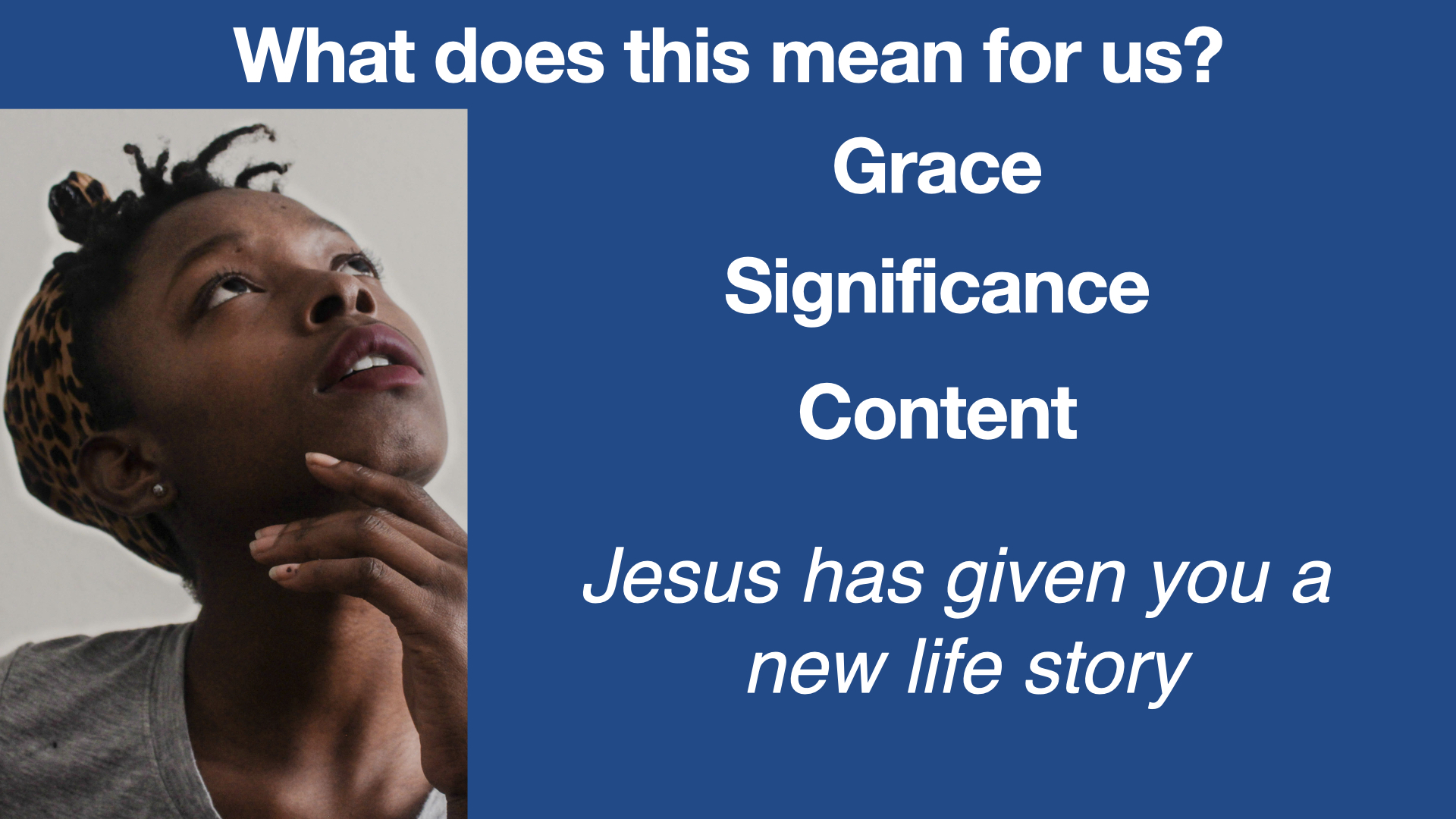
And the Gospel will also transform the content of our lives, for Jesus Christ has given you a new life story. The resurrection hope that you have through Jesus means that you can stop striving to make something wonderful, good, or lasting in your life because Jesus will do that for you. You no longer need to try prove yourself, or to be accepted and loved. The Gospel means that you already are infinitely accepted and loved by God through Jesus Christ.
And the Gospel also means that you can entrust all the things and people that were once the source of your hope in the past into Jesus’ care. You can release these things into His love because He loves those things and those people even more than you do, and he knows better than you do what is best for them. So we can enjoy the things of this world and thank God for them, while holding them loosely before Jesus.
You can rest in the resurrection hope that Jesus gives you, knowing that you have a God who loves you and he is with you in all aspects of your life. And the things that are happening now in this world, in your body and in your soul, can change the course of history for yourself or someone else for all eternity. Because of the grace of Jesus Christ, the good things that we do now in his name will show up in the new heaven and earth to come.
About a year and a half ago, during Lent, our church went through the Red Letter Challenge. The pastor who designed that program was Zach Zehnder. Last summer, Zach spoke at the Lutheran Church Missouri Synod National Youth Gathering. The theme of his message was that sin is only God’s middle word to humanity, but his final word is grace.
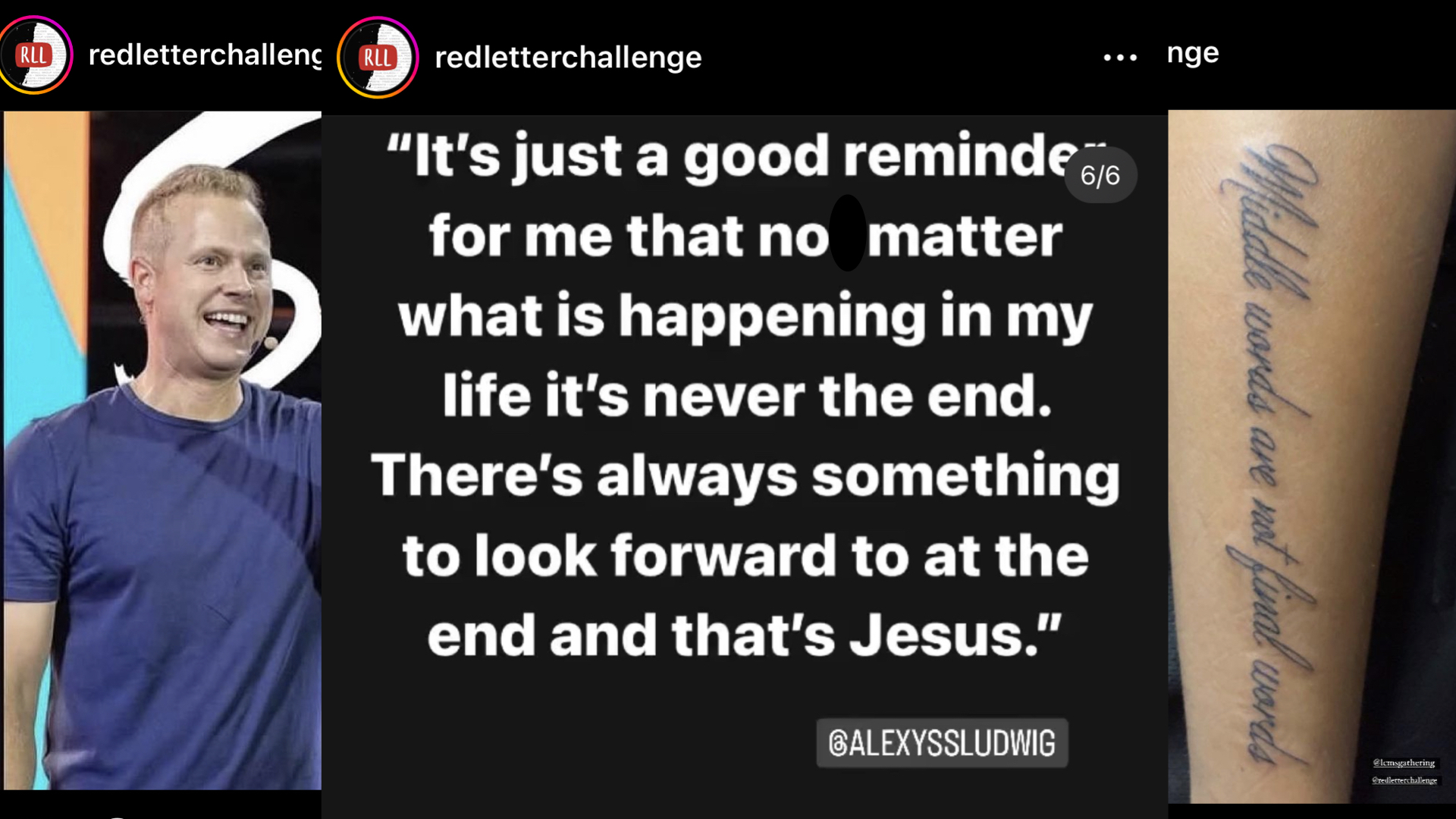
A young woman who was at that National Youth Gathering was so impacted by Zach’s message that her life was transformed. To mark that transformative experience, she got a tattoo that says, “Middle words are not final words.” This summer, she wrote to Zach and told him how her life had been changed and what she had done. In the message that she wrote to Zach, she said, “It’s [the tattoo] a good reminder for me that no matter what is happening in my life, it’s never the end. There’s always something to look forward to at the end. And that’s Jesus.”

And so, dear friend, I want to encourage you to remember that God’s final word to you is grace. Jesus died for you and rose again and, in him, you have hope for all aspects of your life, both now and forever. You even have hope for your loved ones who have gone before you. And it’s all because of Jesus. Amen.
(This message was shared at Walnut Grove Lutheran Church in Langley BC on September 10, 2023. For more info about WGLC, please go to wglc.org.)

 Farewell to Shadowlands