

Years ago, when I was farming with my dad and brothers on the family farm in Alberta, I got stuck with one of the large four-wheel drive tractors that we used to pull equipment to plant our crops. Now, there are two stages to one’s thought process when you find yourself in a situation like that. First, you realize that you are stuck. That’s a pretty obvious realization when the tractor gets bogged down and stops moving forward. The second stage is, in many ways, much more important because that’s when we think about what we are going to do next.
In the second stage of my thought process, I decided that I was going to try to get that big tractor unstuck all by myself. I tried backing up and going ahead again, but the air seeder hooked on the back of the tractor made backing up practically impossible, and my efforts at going ahead only succeeded in digging the tractor deeper and deeper into the mud. When I finally realized that my efforts were hopeless, I called for help on the two-way radios we had at the time. It took two other four wheel drive tractors, some very thick cables, and a lot of time and effort to get my tractor unstuck.
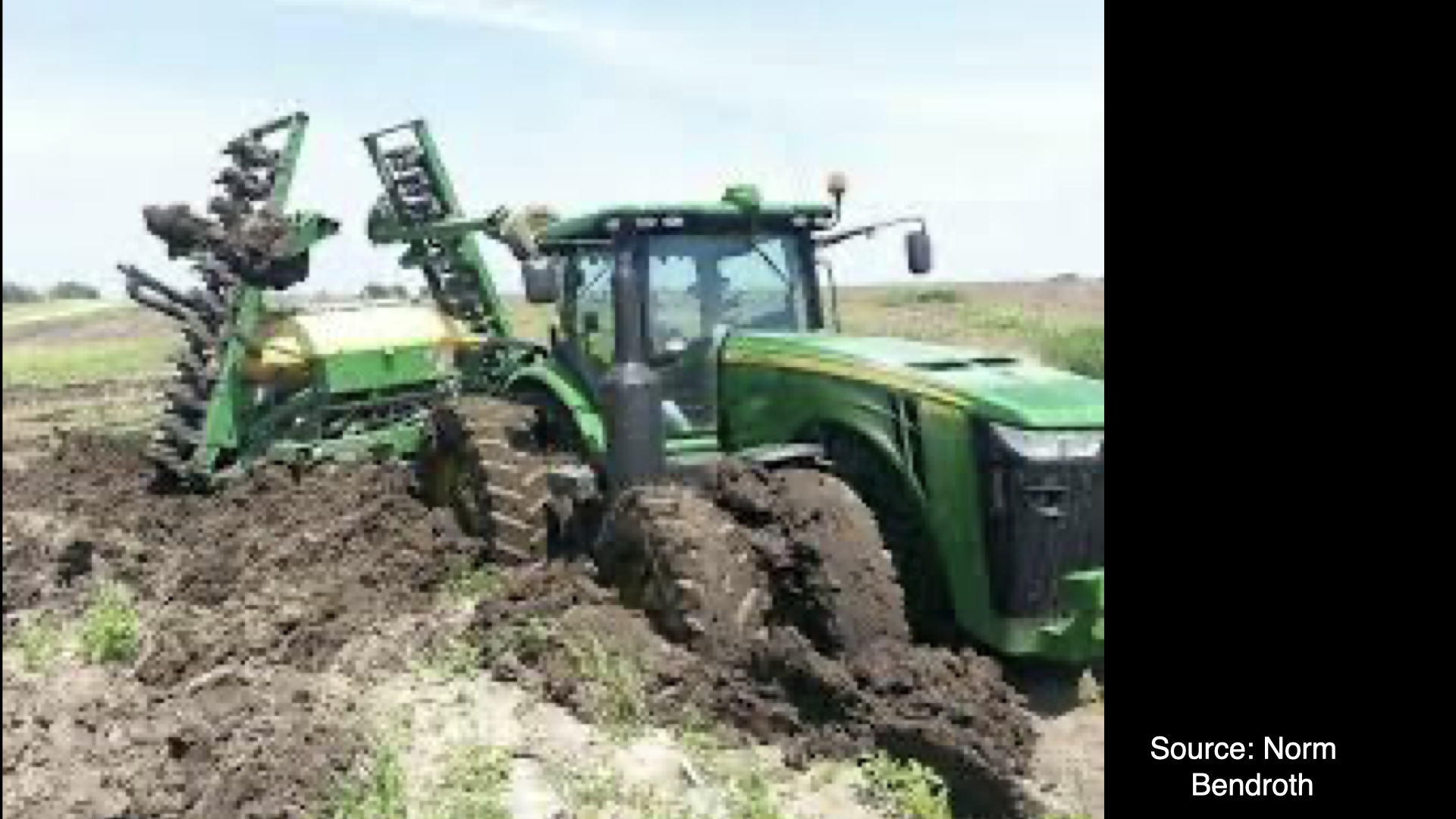
When all was said and done, my dad took me aside and said to me, “The next time you get stuck, just stop right away, and call for help. It will be much, much easier to pull your tractor out if you do that.”
It was a wet spring that year with lots of places for a tractor could get stuck, and within a few days I found another one. Or it found me. But this time, as soon the tractor started spinning and getting bogged down, I stopped it and called for help. One of the other tractors came over to me, we were hooked together with a cable, and as we both started moving forward, my tractor easily rolled out of the mud. Pulling my tractor out the second time was a piece of cake when I stopped right away and called for help.

In the years since that event happened, I have realized that there are parallel situations in other areas of my life, and perhaps there are in yours too. From time to time, I get bogged down in a situation and I try to manage it on my own, but I only succeed in getting more and more frustrated. Usually, it is because I thought that things would head in a certain direction and unfold in a certain way, but neither are happening. So, I tend to double down and work even harder at making my expectations become reality, but I only succeed in digging myself deeper and deeper into a pit of frustration and, eventually, despair. For me, despair is the darkest place I can be in because that is when I give up hope. I am stuck in a pit and I don’t know how to get out. So what do we do when we find ourselves stuck in a pit of despair? That’s the question that I am inviting you to think about with me and to guide us in our reflections, we are going to be looking at a passage in the Bible, Exodus 5:22-6:12. If you have a Bible or a Bible app nearby, I invite you to turn there now.
Doing the Right Thing & Things Go Wrong
When we do that, we encounter Moses, and he is in a heap of trouble. Last week, our focus was on a Bible passage where Moses encountered God in a burning bush. In that encounter, God commanded Moses to go Pharaoh, the king of Egypt, and tell him to release his Israelite slaves and let them go.
Now let’s pause for a moment here and think about this question: If God commands you to do something, and you do it, is it reasonable to expect a good outcome? It is easy for us to think this way, but there is a flaw in our logic because actions are considered good or bad regardless of the outcome. If you cheat on your income taxes and you end up with enough money to put a down payment on a house, does that mean that your action of cheating on your taxes was good? No. And if you blow the whistle on some unethical activity that is going on in your workplace and it results in you losing your job and never being able to get another one in your field again, does that mean that what you did was bad? No, it doesn’t. Sometimes it costs us to do the right thing.
The Valley of Despair
However, we can be aware that good actions can have bad results and still find what happened to Moses to be very jarring. Because Moses did exactly what God told him to do. He went to Egypt and met with the elders of the Israelites. He told them that the Lord was concerned about them and was going to set them free and bring them into a land of their own. The Israelites believed Moses and worshipped God. Now, that’s a great start!

But then Moses and Aaron go to the Pharaoh and tell him that the Lord, the God of Israel, has said, “Let my people go!” And Pharaoh responds by giving an order the very same day that the Egyptians were no longer to supply straw for the Israelite slaves to use in making bricks. From that moment on, the Israelites had to go and gather their own straw, but they still had to meet the same quota of bricks they produced as before. The leaders of the Israelite slaves went to Pharaoh and appealed to him, but he called them “Lazy!” and said “Now get to work. You will not be given any straw, yet you must produce your full quota of bricks.” (Exodus 5:18)
Pharaoh’s order had an impact on the relationship between the Israelites and Moses.
The Israelite overseers realized they were in trouble when they were told, “You are not to reduce the number of bricks required of you for each day.” When they left Pharaoh, they found Moses and Aaron waiting to meet them, and they said, “May the Lord look on you and judge you! You have made us obnoxious to Pharaoh and his officials and have put a sword in their hand to kill us.” (Exodus 5:19-21) Moses was faithfully following God, he came to Egypt to serve and save God’s people, and now those very same people had turned on him.
Moses went to God and asked him the “Why?” question, and he added, “Ever since I went to Pharaoh to speak in your name, he has brought trouble on this people, and you have not rescued your people at all.” (Exodus 5:23)
Note that God does not give Moses the reason why he is doing what he is doing. All he says is, “Now you will see what I will do to Pharaoh: Because of my mighty hand he will let them go; because of my mighty hand he will drive them out of his country.” (Exodus 6:1) The phrase “my mighty hand” that is repeated here refers to God’s great power which he was going to now unleash to accomplish the redemption of his people. God had allowed Moses, and then Pharaoh, to address matters working in their own power. But now God was going to show Pharaoh what happens when ordinary people like Moses work in God’s power.

God told Moses to go and tell the Israelites that he was going to redeem them with his great power and with mighty acts of judgment and bring them to the land he had promised to give to them. But when Moses did that, the Israelites were so discouraged because of their harsh labor that they did not listen to him. God again tells Moses to go to Pharaoh and tell him to let the Israelites go free and Moses responds by saying, “If the Israelites will not listen to me, why would Pharaoh listen to me, since I speak with faltering lips?” (Exodus 6:12) In other words, Moses is saying, “My human support from the Israelites is gone, I talked to Pharaoh before and it didn’t work then. God, what you are asking me to do is pointless!”
When Things Don’t Turn Out Like We Thought They Would
How often have we done what we thought God called us to do and things didn’t turn out like we thought? We pursue a relationship in a God-honoring way and the other person ends up kicking us to the curb. We go into business, and we tithe all our profits, but we have to wind things up in less than five years. We take good care of our health, we pray and eat right, and the next time we see the doctor they tell us our life is on the verge of coming to an end. It’s easy for us to think that we have done all the right things and God is not holding up his end of the deal. Sometime people even abandon their faith at low points like this.

But let’s go back to Moses. If he would have stepped out of the story that God was writing at that point and said, “I am going back to my sheep in Midian,” think of what he would have missed! He would have missed witnessing God’s awesome power as he unleashed the Ten Plagues that brought Pharaoh and the nation of Egypt to their knees. He would have missed the holy anticipation as God’s people at the Passover Meal in haste, safe in their homes with a lamb’s blood protecting them, ready to leave slavery in Egypt at a moment’s notice. Moses would have missed the miraculous parting of the Red Sea that allowed the Israelites to journey to safety and destroyed the threat of the Egyptian army when the water came together again. And decades later, with his life on this earth nearing its end, Moses would have missed standing on a mountaintop and seeing with his own eyes the abundant land that God’s people would inhabit.
Our lowest points, our pits of frustration and our valley of despair, those moments when we feel most like throwing our hands in the air and giving up, can be the moments when we finally fully turn the situation over to God. And then he steps in and starts to make things work out for good with his mighty power.
We Don’t Know the Future But We Do Know God
You and I do not know what specific things God has for us in the future. But we do know God. And we know that he is compassionate, he is powerful, and that he will make all things turn out for good in the end. We know that because of the compassion that God had on the Israelites in Egypt and how he worked in miraculous ways to redeem them and bring them into a bountiful land he promised to give to them. We also know that because of the compassion that God has on us and how he sent his Son, Jesus, to redeem us and bring us into a bountiful life he promised to give to us.
The low points you, I and Moses experience are nothing compared to the low point Jesus went through as he hung on the cross bearing all of our sin, guilt and shame. Jesus did that so our life and mine would no longer be defined by our sin or limited by death. Jesus’ resurrection is what proves the success of Jesus’ mission to redeem and restore all lost things. And one day he will return to this world in a visible way to make us and all things right.
Letting God Pull Us Out
So when we realize that we stuck in a pit of frustration, let’s use let’s use the second stage of our thought process to stop doing what we have been doing, look up, and call out to God for help. Then we faithfully wait for him to come and pull us out. He knows the facts of reality better than we do. He knows what is best in the long run better than we do, and he knows the right time for things to happen better than we do. So let’s trust him to make all things work out for good.

And here are three lessons to remember from Moses’ life that will help you move from frustration to freedom.
- We are part of God’s plan
- But we are not the power in God’s plan,
- And God’s plan is not yet complete.
And as we place our expectations for the future into God’s loving care, we will have freedom in the present with him. Amen.
(This message was shared at Walnut Grove Lutheran Church in Langley BC on February 4, 2024. For more info about WGLC, please go to wglc.org.)

 Farewell to Shadowlands