

In the early part of the twentieth century, plans were made to build a bridge across the St. Lawrence River near Quebec City. The bridge was designed by American engineer Theodore Cooper, who had previously designed several prestigious projects, including the Second Avenue Bridge in New York. Cooper chose a cantilever design, declaring it to be the “best and cheapest plan” to span the St. Lawrence. To reduce the cost of putting the bridge piers further out into the river, he increased the length of the middle span. Cooper was a proud and arrogant man. When a Canadian government engineer criticized his design, Cooper was outraged and refused to make changes. He would not even supervise construction of the bridge in person, delegating that role to less qualified people. A young engineer named Norman McLure was the first to notice that there were problems. Some of the metal in the bridge was bending, and the deflection was getting worse over time. Cooper was notified and he wired back, “Place no more load on the Quebec bridge until all facts considered.” Cooper then assumed that all work on the bridge had stopped, but the Chief Engineer on site, John Deans, ordered that construction continue.
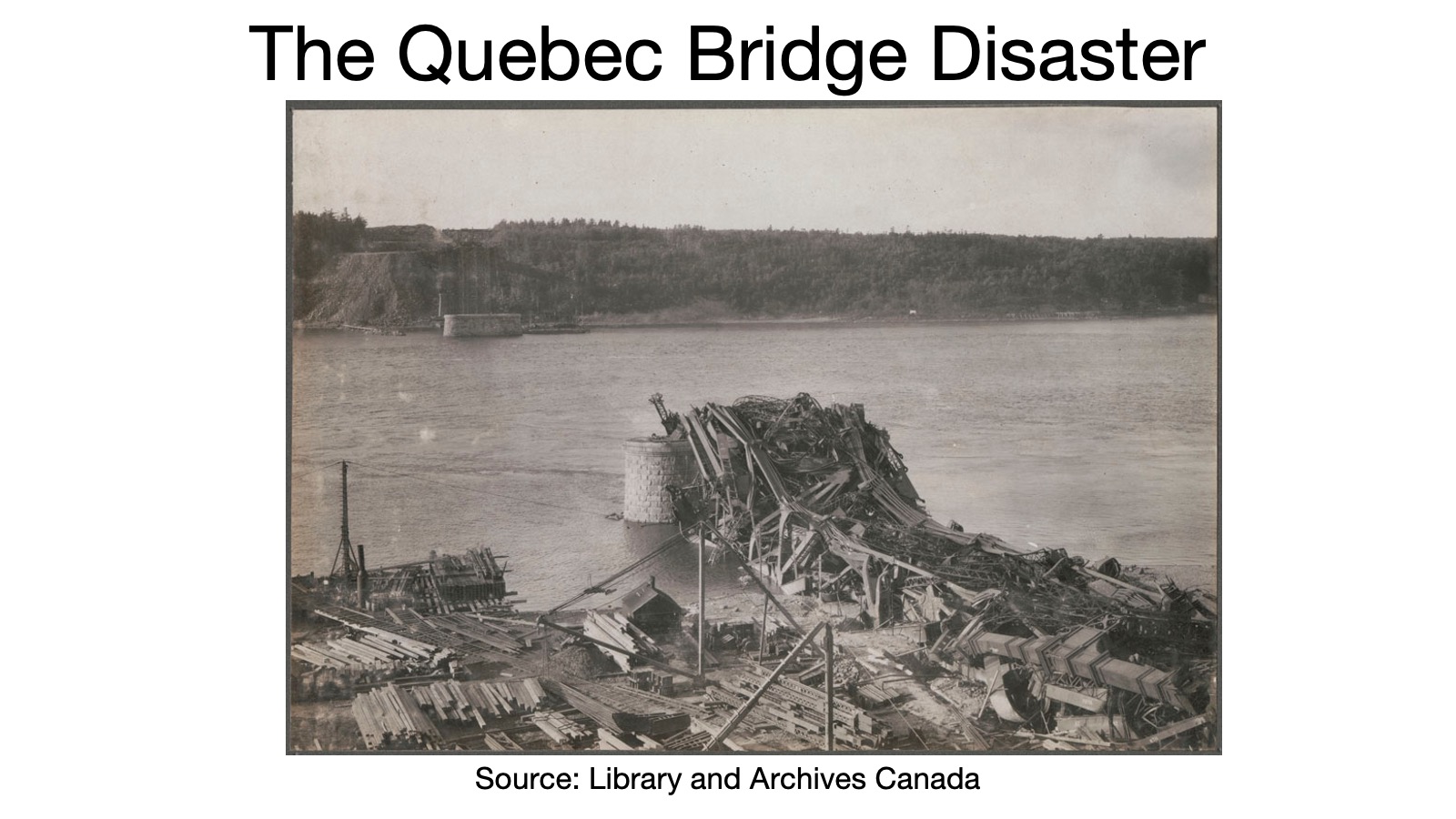
Near the end of the day on August 29, 1907, the bridge collapsed with such force that people in Quebec City 10 kilometres away thought that there had been an earthquake. Of the 86 workers on the bridge at the time, 75 died. The Royal Commission that investigated the Quebec Bridge disaster placed blame on the construction company for putting profits ahead of safety, John Deans for his poor judgement in going ahead with construction when he should have stopped, and Theodore Cooper for his inadequate design.[i] This disaster became a poignant reminder to engineers of the professional and moral duties that come with the work that they do. As a tangible reminder of the high standards they must uphold, when they graduate, engineers are given an iron ring.[ii]
The Bridge We Need but Cannot Build
We all know that we need bridges to get us across rivers, canyons and other impassable barriers. But have you ever considered the connection between bridges and faith? Whenever we cross a bridge, whether we are walking across it or riding in a vehicle or train, we are doing so in faith. We are trusting that the people who designed and built the bridge knew what they were doing and built it strong and sturdy enough to carry the loads it bears.
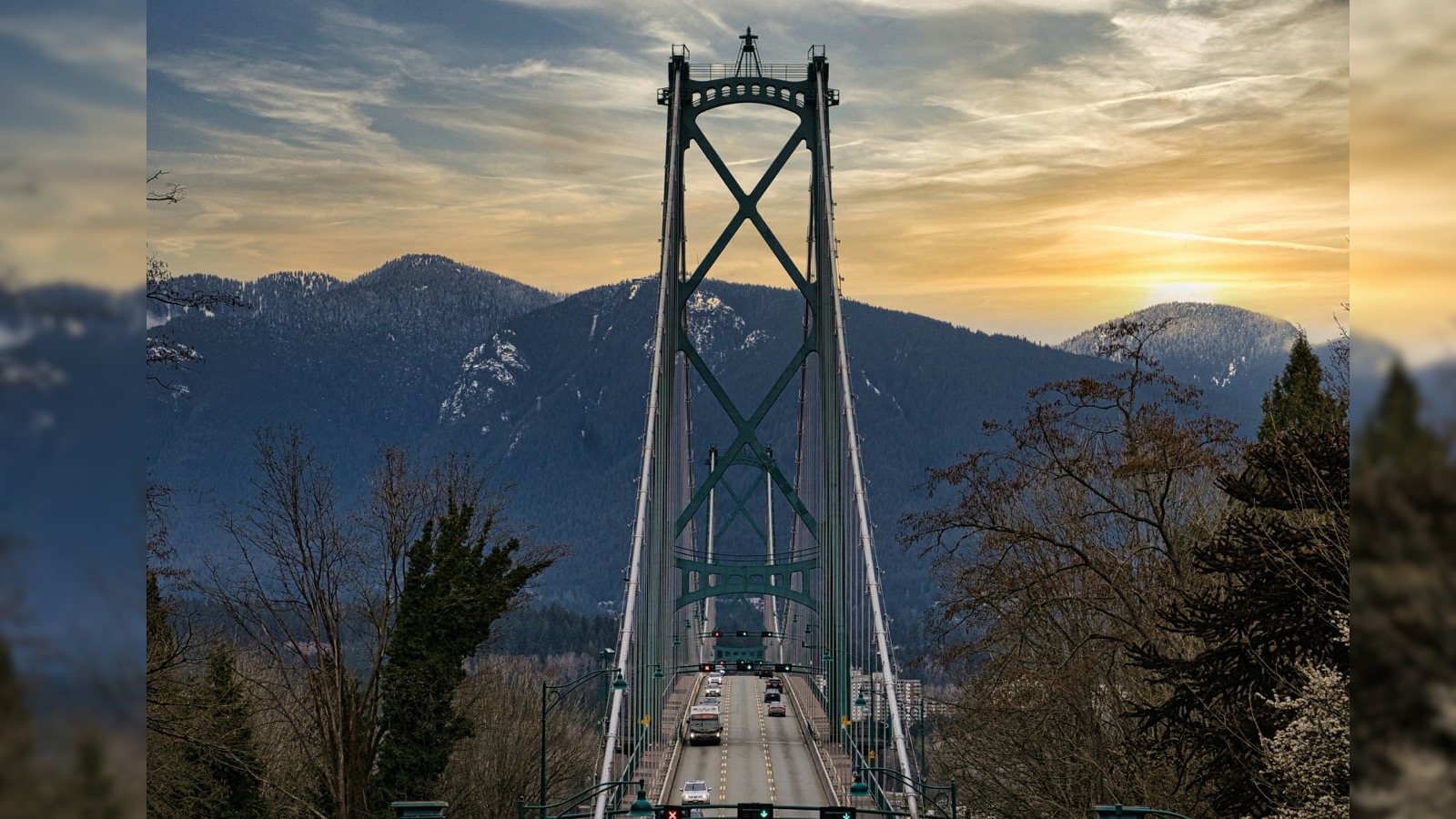
Canyons and rivers are not the only impassable barriers we face in life. Sin has created an impassable barrier between every human being and God, and that barrier reveals itself in the fear, guilt, shame and hatred we carry around in our hearts. We don’t want to be this way. We want to be people of courage, confidence, peace and love. How do we get from where we are to where we want to be? To answer this question, over the next several weeks, we are going to dig into the book of Romans over the next several weeks. Today our focus will be on Romans 1:8-17. If you have a Bible or a Bible app with you, I invite you to turn there now.
Bridging the Gap between Jews and Gentiles
Romans is a letter that the apostle Paul wrote to Christians in Rome, likely during a three-month stay in Corinth in AD 55 or 56. Paul really wanted to go to Rome in the future and he was preparing the Christians there for his visit by giving them a rich summary of what he taught about Jesus and the Christian faith. He wanted them to know in advance that the Gospel message he proclaimed was solid and true.
We don’t know exactly how the Christian church in Rome began, but we do know, from Acts 2, that there were Jewish pilgrims from Rome in Jerusalem on the day of Pentecost. We also know that the Jews in Rome had very strong relational connections with Jerusalem, so they would likely have learned through those connections about Jesus and the birth of the Christian church in Jerusalem. Also, Rome was the capital city of the Empire and located on the crossroads of the ancient world. Therefore, Christian travellers likely carried the Good News of Jesus to Rome and shared it there, causing gatherings of believers to spring up in people’s homes.
Even though Paul did not plant the house churches of Rome, he was aware of a serious challenge they faced, and he addressed that challenge in his letter. Jews had been living in Rome for more than a century and they were likely the first Christians there. As they rubbed shoulders with the large Gentile, that is non-Jewish, population around them, those Gentiles would have experienced the love and message of Jesus and joined those predominately Jewish-Christian house churches.

Those harmonious Jewish-Gentile relationships were shattered when the Jews were expelled from Rome in AD 49 or 50. The Roman historian Suetonius tells us “since the Jews constantly made disturbances at the instigation of Chrestus,” Emperor Claudius issued the expulsion order.[iii] Suetonius is likely misspelling “Christ” and could be referring to disturbances in Rome like those that happened in other cities when Paul shared the Gospel in Jewish synagogues.
The edict of Claudius forcing Jews to leave Rome would made the house churches in the city Gentile-only. By the time Paul is writing his letter six years later, Christian Jews have returned to Rome, but things had changed while they were gone, and re-integration was not going smoothly. There was friction between the Jewish and Gentile Christians. How do these two groups fit together in the family of God? It’s a question that is still being asked today, so it is important for us to see and understand that Jewish-Gentile thread that Paul has weaved throughout his letter.
The Bridge of Righteousness God Provided
Paul addresses the Jewish-Gentile question in various parts of his letter, including the passage we are looking at today, which also contains Paul’s theme for his entire letter:
For I am not ashamed of the gospel, because it is the power of God that brings salvation to everyone who believes: first to the Jew, then to the Gentile. For in the gospel the righteousness of God is revealed—a righteousness that is by faith from first to last, just as it is written: “The righteous will live by faith.” (Romans 1:16-17) Paul’s message is one of inclusion and it is for Jews and Gentiles, the wise and the foolish, the rich and the poor. In God’s eyes, all the human systems we use to classify people as worthy or unworthy, up or down, in or out, mean nothing. We tend to measure people by what you have, what you do, what you know, or how you look. By God’s standard of perfection, no one is worthy.
Continuing, we read: For the wrath of God is revealed from heaven against all ungodliness and unrighteousness of people who suppress the truth in unrighteousness, because that which is known about God is evident within them; for God made it evident to them. (Romans 1:18-19) Because of the wickedness we inherited from our first parents, we humans have suppressed the truth that we already know about God and given ourselves over to worshipping created things like power, money and sex, instead of worshipping the Creator who meant those gifts to be received and used as blessings for all humanity. And God is revealing his wrath against this godless and wicked way thinking and being. He is not going to stand by unmoved and let human beings destroy themselves, others, and the rest of his creation.

We see an example of what this looks like in the life of Martin Luther. Though he was an exemplary monk, Luther hated God because it felt like his hard work was never enough to please God. he felt as though all his hard work was never enough. It was through meditating day and night on this phrase “For in the gospel the righteousness of God is revealed…” (Romans 1:17) that everything changed for Luther. He described his transformational experience with these words:
There I began to understand that … this is the meaning: the righteousness of God is revealed by the gospel, namely, the passive righteousness with which merciful God justifies us by faith, as it is written, “He who through faith is righteous shall live.” Here I felt that I was altogether born again and had entered paradise itself through open gates.[iv]
The Bridge We Need is Jesus
Dear reader, God the Son, Jesus Christ, came into this world and became one of us to give us all of God’s righteousness, goodness, wholeness, and purity as a totally free gift. By living a perfect human life for us, offering up that perfect human life on a cross to suffer and die, and then rising from the dead on the third day that followed, Jesus took all our guilt and shame from us and gave us all of God’s righteousness in exchange.
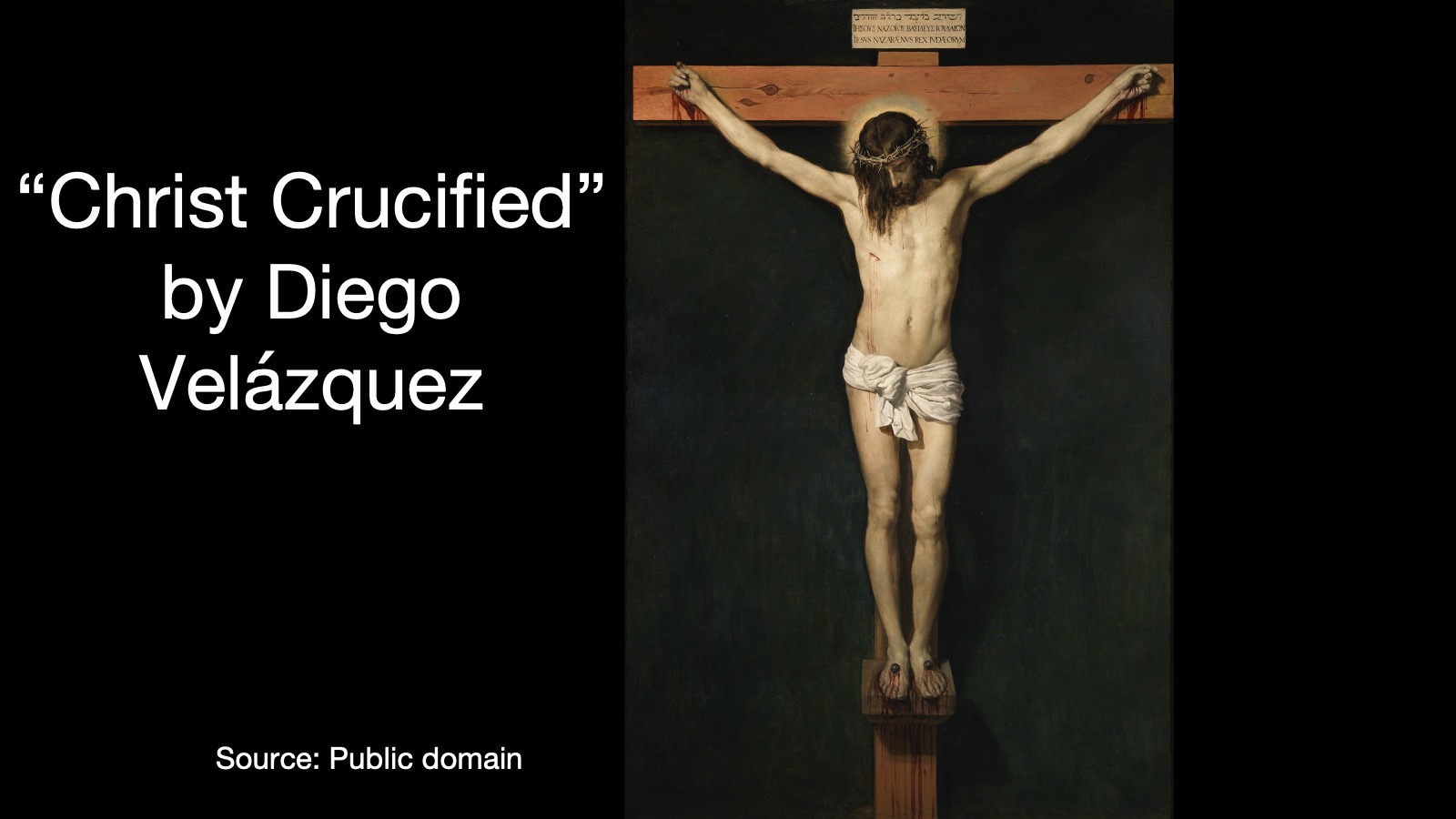
Because the infinite worth of Jesus’ suffering and death on our behalf vastly exceeds the debt we owe for our sin, God the Father looks at us and makes the only just decision he could. He declares that we are righteous, in other words, that we are completely and totally innocent of all our sin, and he sets us free. God no longer holds anything against us. The Father loves us and accepts us and invites us to live the same kind of life with him that his Son, Jesus, enjoys. Through Jesus, all of you are beloved, forgiven children of God.
Crossing the Bridge by Faith
What does this mean for us? In his book Living Fearlessly, author Jamie Winship makes this important point:
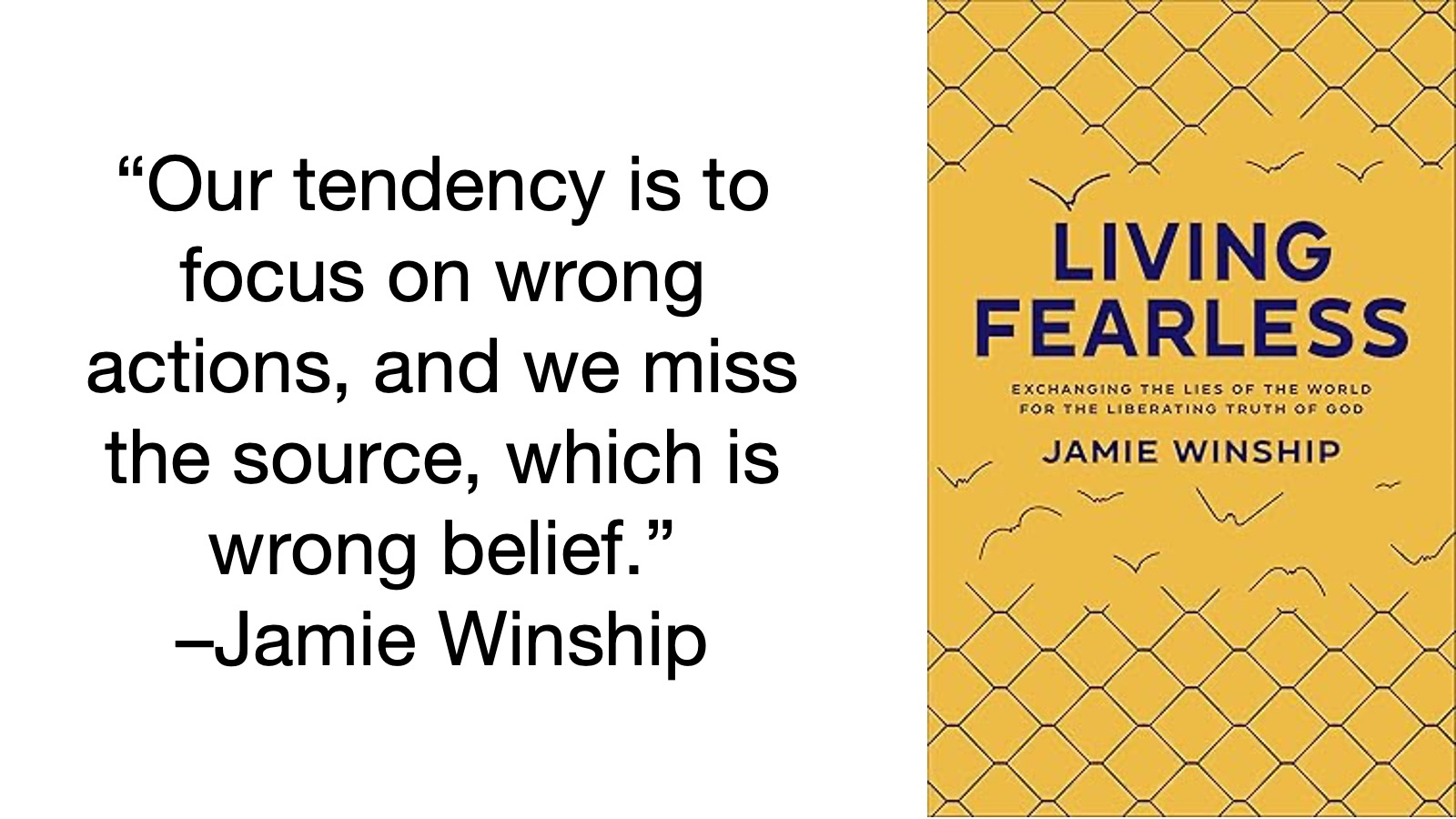
“… Most of us were told that our problem is that we do wrong things. But that’s not really the issue. The issue is wrong belief or believing what is not true. This wrong or false belief leads us to separate or deviate from God, ourselves, and others. The result of this separation, this sin, is wrong action.
Our tendency is to focus on wrong actions, and we miss the source, which is wrong belief.”[v]
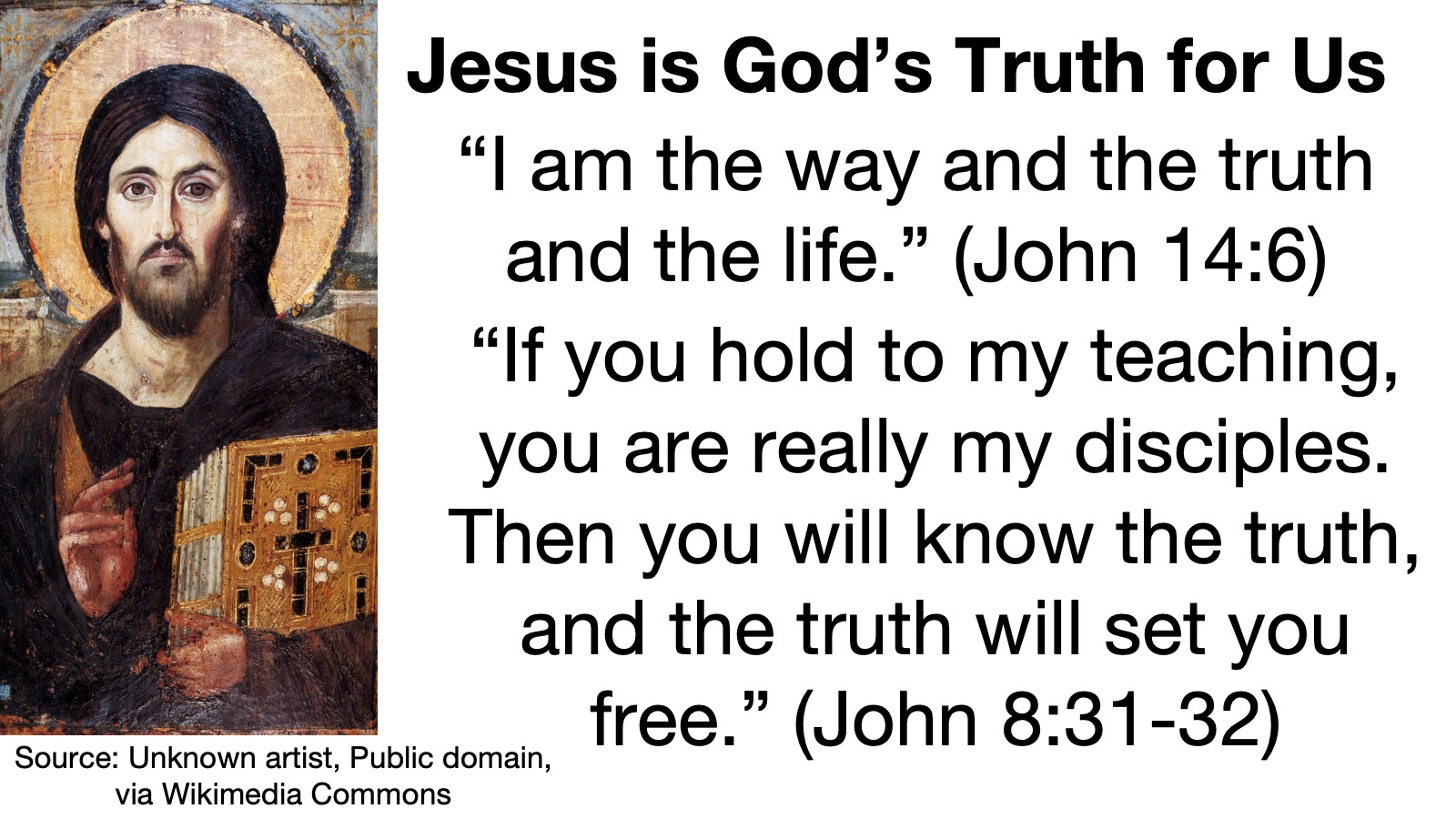
We can say we believe in Jesus and go to church every Sunday and still suppress God’s truth by believing things about God, ourselves, or others that are not true. But let us remember that Jesus is God’s truth for us. In John 14, Jesus tells us, “I am the way and the truth and the life.” (John 14:6). In John 8, he says, “If you hold to my teaching, you are really my disciples. Then you will know the truth, and the truth will set you free.” (John 8:31-32)
Dear friend, the challenge that I want to set before you today is to Stop living in the lies you are believing about God, yourself and others. Instead, Ask Jesus to show you what is true. And then live in his truth. For, as God tells us in his Word, “The righteous will live by faith.” (Romans 1:17). Amen.
[i] James H. Marsh, “Quebec Bridge Disaster,” The Canadian Encyclopedia (Internet; available at: https://www.thecanadianencyclopedia.ca/en/article/quebec-bridge-disaster-feature; accessed April 22, 2025).
[ii] “The Story of the Iron Ring in Engineering,” Randstad.ca (Internet; available at: https://www.randstad.ca/job-seeker/career-resources/career-development/the-story-behind-the-iron-ring-in-engineering/; accessed April 22, 2025).
[iii] Michael P. Middendorf, Romans 1-8, Concordia Commentary series (St. Louis: Concordia Publishing House, 2013), 10.
[iv] Middendorf, 40-41.
[v] Jamie Winship, Living Fearlessly: Exchanging the Lies of the World for the Liberating Truth of God (Grand Rapids MI: Baker, 2022), 57.

 Farewell to Shadowlands
Very good challenge, I copied it for my journal! Thank you, James!
LikeLike