

When Susan and I got married, we, as is the custom, exchanged wedding rings. And prior to that, when we got engaged, I gave Susan a very beautiful engagement ring with a sapphire in the center and small diamonds set around it. However, one of the many things I learned over the course of our marriage is that everyday life can take a toll on a wedding ring. Some of the settings that the diamonds were in became loose, and one or more of those diamonds were lost. So, Susan decided to stop wearing her rings in order to preserve them.
Now, at that point in our marriage—we’d been married about 13 or 14 years—the tangible symbol of a wedding ring was important to me, and I wanted her to wear one. So we went to a jeweler and got a plain band for her to wear, and she’s worn it all the years since.

Now, a few months ago, she came to me—perhaps because she remembered that time long ago when I was sensitive about her wearing a wedding ring—and she said that since she started going back to work and wearing gloves, her ring was really irritating the skin on her ring finger. And she asked if it was okay if she took it off. I said, “Sure.” We put her in my desk, and there it remained.
You see, initially some of my hope was based on that ring. But then, over the years, my hope shifted so that it was entirely on our relationship and the symbol of the ring wasn’t important to me anymore. I fully realized that it’s the relationship that I have with Susan that’s really important, not the ring.
Because of the relationship that I have with Susan, I have wonderful memories of our life together, I have the blessings of a family that God put together through us, and I have the blessings of the relationship with her right now.
But I also have hope of wonderful things for us in the future. When one of us dies, the survivor will have the memories of our life together and the comfort of our family to carry them through to the end of their life. And then, because of Jesus, in the life to come, we will get to see each other in the wonderful, beautiful way in which Jesus always envisioned us to be. I’m a little disappointed about that Bible passage where Jesus said there’s no marriage in heaven, but I trust that he’s got something better in mind for humanity, and the lack of marriage in heaven is not going to be an issue. But even without being married, Susan and I will see each other in the life to come, we will recognize each other, and we will be amazed at the transformation God has done in us.
We Need Unshakeable Hope
Every person, I believe, needs to have hope in order to live. I know in my life, when I am in the midst of a dark time, it’s because I’m losing or have lost hope, and I have to find a way to regain it. But the hope that we need to have for life has to be something more than any human relationship can provide. It has to be something more than what possessions or symbols can sustain. It has to be more than human performance can support, because, you see, all of those things will, at some time, fail us. It’s a guarantee. And so, when our ultimate hope is built on those things, we have a shaky hope, a tentative hope, and we’ll likely have a little bit of low-level anxiety that’s always there.

We need something stronger. We need something that will carry us through the hard times that always come with life, something that will sustain us through all of the ups and downs—even death. And so, are two questions I’m asking you to think: Where is the foundation of your hope? And where can we find an unshakable hope? And to help us as we think about these two questions, we’re going to eventually get to Romans 5:1–11. But before we get there, we’re going to pause for a moment in Romans 4.
Abraham Unites Us
Now, you might remember from our previous Sundays, as we’ve gone on this journey through the book of Romans, that we started out in Romans chapter 1, where Paul told us his theme—that the righteous will live by faith. And so it was all about how important God’s righteousness is, and how he gives that to us. And then in Romans 3, we saw how we’re all on the same level starting point. We’re all sinners. We’ve all fallen short of the glory of God. But yet, we’re all lifted up by the Good News message of Jesus Christ and what he’s done for us.
And now, in chapter 4 of Paul’s letter to the church in Rome, he starts talking about Abraham. Abraham is a very, very important person to the Jewish people, and Paul brings him up because one of the issues in the church in Rome that Paul was seeking to address was this divide between Jewish Christians and Gentile—or non-Jewish—Christians. And so Paul turns to the example of Abraham, and he specifically refers to passages in Genesis, chapter 15.
In Genesis 12, God chose Abraham to be the forefather of his people in the world—his chosen people who would display His character and His compassion for the world and carry His promise of a Messiah to save the world. God also promised Abraham that he would have many, many descendants, and that He would give his descendants would a land of their own, A Promised Land, that they would live in.
Now, at the time these promises were given, Abraham is an old man—around 75—and his wife, Sarah, and he had no children and Sarah’s childbearing years were over. So when, in Genesis 15, God promises Abraham that He will be his great reward, Abraham wonders, “How can this be? My servant is going to be the one who inherits all I have. I have no children.” And God took Abraham outside and told him to look at all the stars in the night sky.. And then God said, “You will have as many descendants as there are stars in the sky.”
Abram believed the Lord, and he credited it to him as righteousness. (Genesis 15:6)
Now we, on the future side of Abraham, might think that this was an easy promise to trust because we can see how God did keep his promise. But put yourself in Abraham’s position. His body, and his wife’s womb, are as good as dead in terms of producing children. And yet, Abraham trusted in God and His promises, even though he and his wife were closer to death than to having children.
Abraham believed in a God who could raise the dead.
And because Abraham was truly trusting in the God who raises the dead to life, God credited that to him as righteousness. If you are an accountant, it was as if God was taking all of His righteousness and putting it in Abraham’s account.
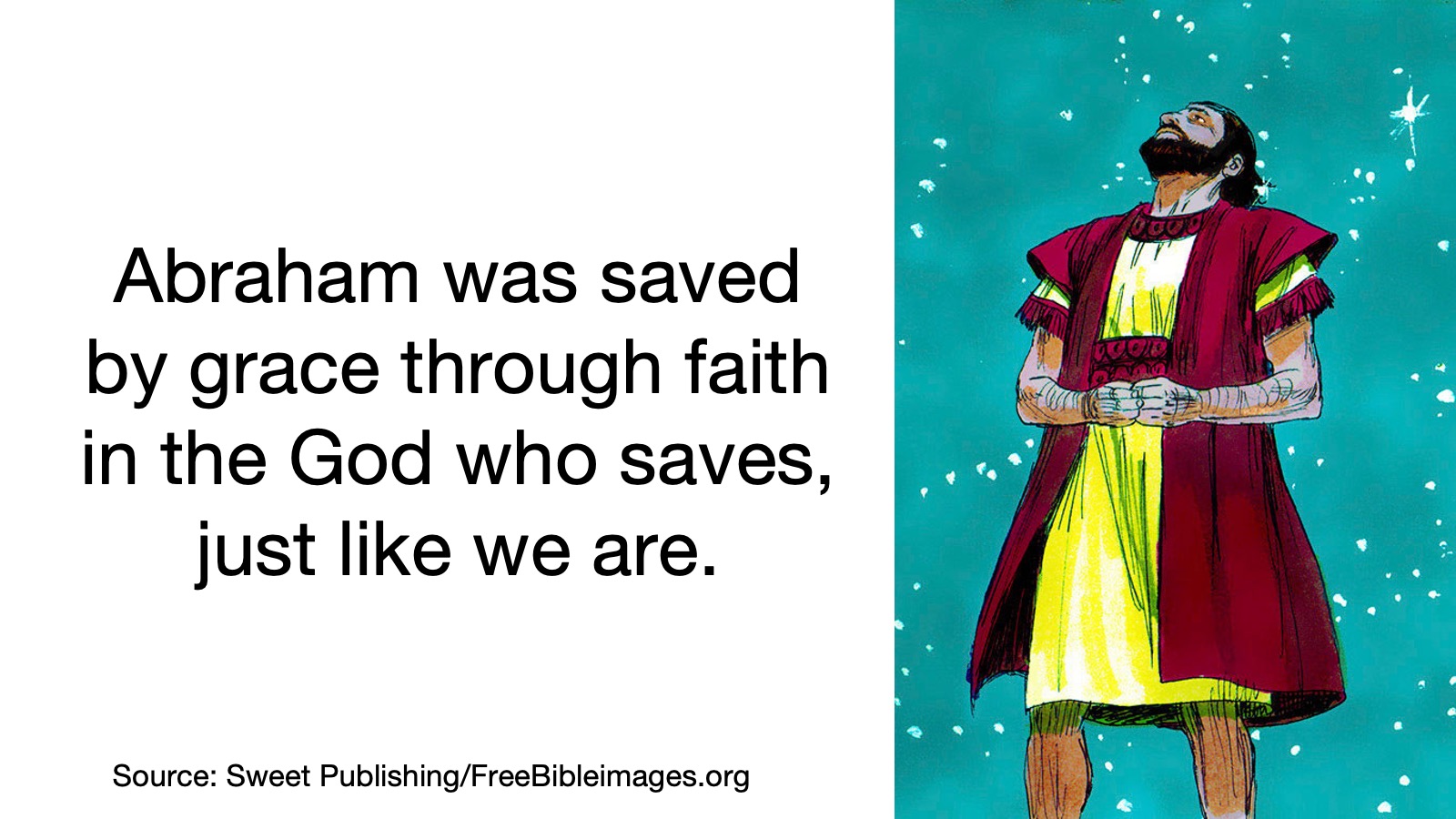
Then Paul goes on to make this point: all of this happened before Abraham was circumcised—so probably 25 years before he got circumcised—and centuries before the law was given to Moses on Mt. Sinai. Therefore, it was not through circumcision or the law that Abraham was declared righteous. It simply could not be.
What Paul is trying to tell us is that Abraham was saved by grace, through faith in the God who saves—just like you and I are today.
And therefore, Abraham is the father of all who believe in that God who saves—both Jews and Gentiles.
The Life We Have in Jesus
Now we jump into our main passage, Romans 5, and we notice that there’s a change in the theme. Chapters 1 to 4 of Romans are about how God has given us His righteousness through faith in Jesus Christ. Chapters 5 to 8 are about the life we have as a result of being given God’s righteousness through faith in Jesus Christ.
As a result of being declared righteous, we have a new life with God, a new life that is characterized by peace and grace. Paul starts off chapter 5 with these words: “Therefore, since we have been justified through faith, we have peace with God through our Lord Jesus Christ, through whom we have gained access by faith into this grace in which we now stand.” (Romans 5:1)
Dear friend, your war with God is over because God has reconciled you, and me, and everyone else who believes in Jesus, to Himself—and He did that by paying the full cost of our forgiveness and giving us His righteousness.
To give you a picture of what this is like, imagine that you are living under a bridge in a really rough part of Vancouver. You smell like smoke and human filth. You can’t remember when your last meal was. You’re not sure when your next one’s coming.
Jesus comes by, picks you up, and carries you to His castle There He has some of His servants feed you, and give you a bath, a haircut and clean clothes. After you are all cleaned up, you are invited to stand before a large door. The doors are opened, you walk through the doorway and you find yourself in the throne room of a King—King Jesus—who looks at you and says, “This is now your home. You are a beloved, forgiven child of God, and this is where you live. Now stand in the home that I have given to you.”
By faith, we have been given access into Jesus’ throne room of grace, in which we now stand. Because of that, we also have the sure and certain hope of experiencing the fullness of God’s glory and His presence with us right now. Again, it’s all a gift to us from Jesus.
This hope that we have is not derailed or diminished in any way by the pressure of the trials and tribulations we face in life, because hard times can not overthrow the blessings of peace and hope and love that Jesus has given to you. But hard times can bring the blessings Jesus has given us into sharper focus and make them sweeter for us. Years ago, one of my children nearly died from a drowning incident. I would not have chosen that experience for myself, nor would I have wished it for anyone else, but I experienced such an incredible closeness with God during that time that I am grateful for that experience.
And hard times can help us to become more like Jesus.
You see, the life of peace and hope and love is ours because of Jesus and what He has done for us. It was not because of any redeeming quality in us that Jesus chose to rescue us. The action and the initiative were all God’s. And Paul tells us that in this passage, Romans 5:8: But God demonstrates His own love for us in this: While we were still sinners, Christ died for us.
And because of this foundational hope that we have in Jesus Christ, that means that when the end of this world comes and God rids this world of evil through His wrath, we will not be brought to shame. Instead, because of Jesus, you will be vindicated, because Jesus has already taken your condemnation and punishment for you on the cross. And God will say to you, “Come and enter into My rest. Well done, good and faithful servant.”
What Does this Mean for Us?
Jesus is the foundation of our hope. Because of His sacrifice for us, we are declared righteous by God through faith in Him. And because God has declared that we are righteous, we have a new life with God that is filled with peace and hope and love, and we have a new purpose, which is to become more like Jesus. And God can use the challenges that we face in life to deepen our relationship with Him and to further refine our character—to help us to become more like Jesus.
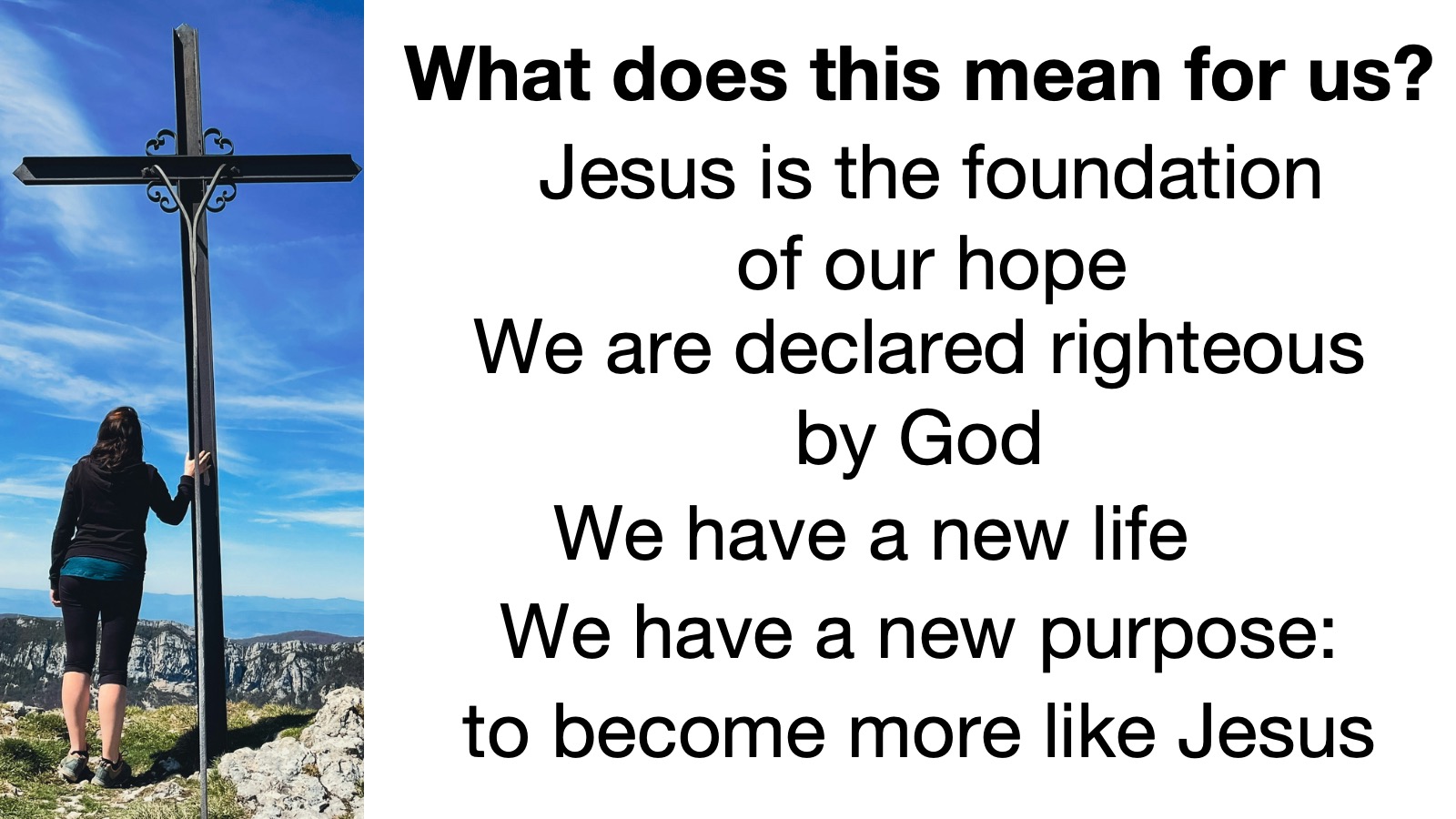
Therefore, in good times and in bad, because of what God has done for us and because He is always present with us, we stand in the faith, hope, and love that He has given to us.
God’s Gift of a Peace Child
In 1962, Don and Carol Richardson, two Canadian missionaries, courageously went and served among the Sawi people in Papua, Indonesia. And I use the word courageously for a reason. The Sawi people were cannibals and were known for being treacherous. They would fatten up a future victim with friendship before they killed them and ate them. They would teach their children how to lie and to steal, and they would reward them if they were able to trick their parents.
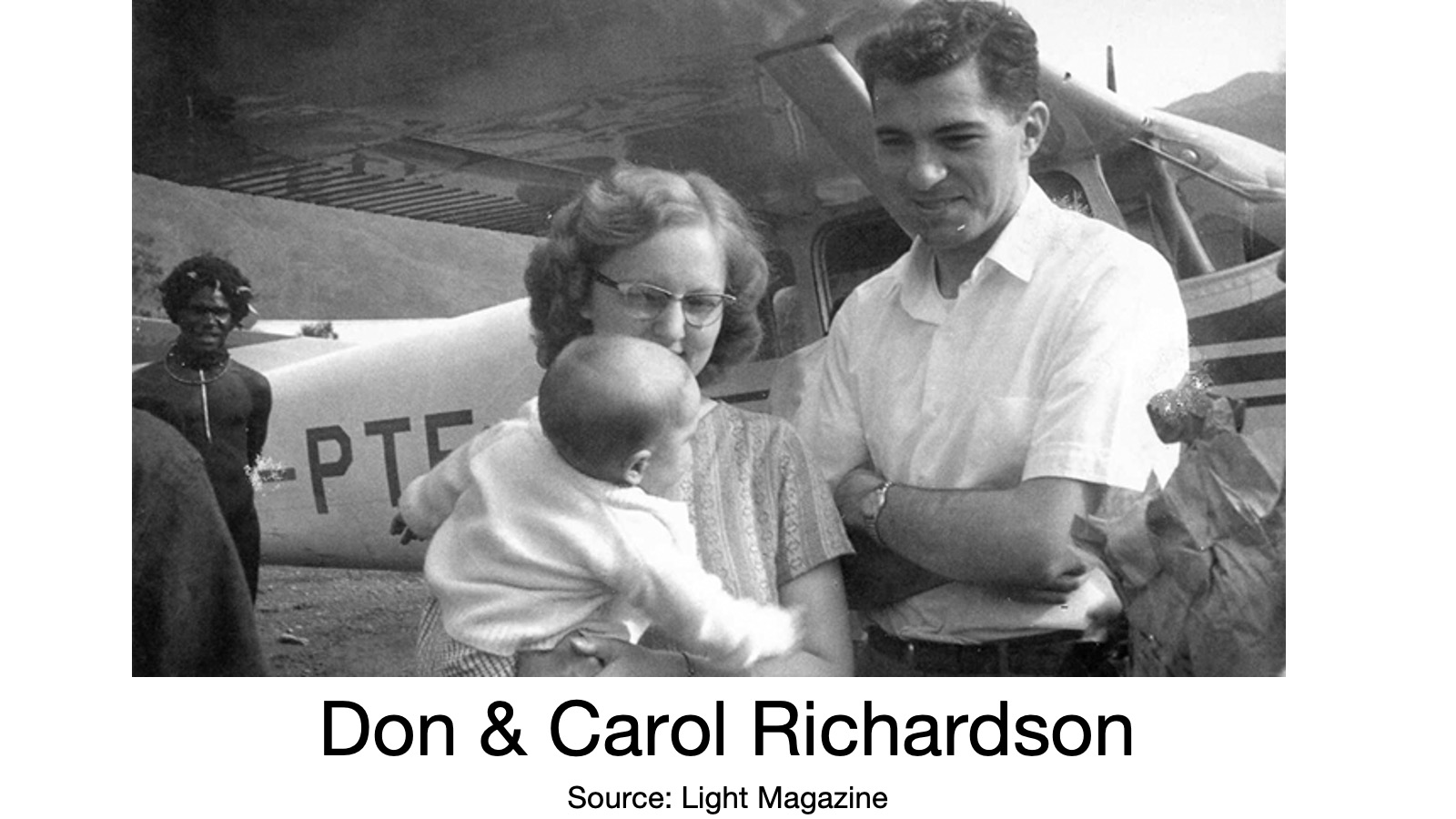
Working together, Don and Carol were able to make some progress among the Sawi people. Don was able to help in terms of putting their language into written form and then raise literacy rates through education. Carol was a nurse and she was able to help reduce the incidence of infant mortality through medical care. But the Sawi people were particularly resistant to the gospel. In fact, when Don told them the story of Jesus, they thought that the hero of the story was Judas because he was even able to trick the Son of God.
After years of frustration, Don and Carol decided they were going to leave the Sawi people. And at that point, the Sawis begged them to stay. When they told them that their mind was made up, they said, “Okay, then we will sacrifice a peace child.” That was when the Richardsons learned that the Sawi and the neighboring tribes (with whom they were often at war) had an ancient tradition where two warring tribes would exchange babies. Each baby was called the peace child in the tribe where they were raised, and as long as that child lived, there would be peace between the two tribes.
With this awareness, Don then told Sawi that God the Father sent His Son, Jesus Christ, to be their peace child. That was when they realized that Judas was not the hero but a traitor, because he had killed the peace child. And that was also when the Sawi people started to receive Jesus Christ as their Lord and their Savior.[i]

Dear friends, Jesus is your peace child, given to you by God the Father, sent into this world to save you. And so the challenge that I wish to set before you today is this: First, stop fighting against God. To lay down your weapons and the tools that you have been using to try and justify yourself. Second, receive God’s declaration of righteousness for you. And third, live the life of peace, hope, and love that you already have through our Lord Jesus Christ. Amen.
[i] Ed & Janice Hird, “Don & Carol Richardson’ Peace Child,” The Light Magazine (Internet; available at: https://lightmagazine.ca/don-carol-richardsons-peace-child/; accessed May 7, 2025).

 Farewell to Shadowlands