

Once there was an excavation taking place for a major building project in the northern part of the United Kingdom. Because there were some ancient Viking ruins in the area, the construction company hired two archeologists to supervise the excavation: Angus MacDonald, a local archeologist from Scotland, and Sven Bjornson, from Norway. As the digging began, Angus said to Sven, “This excavation will enable us to see the different levels of technology used the various cultures that lived in this area. See they have dug down about six feet and we have some fibre optic cable buried by the contemporary culture of Scotland. That’s what people here are using now for communication.” Sven just nodded his head and said, “Jah, that is true.” A little while later the excavators had dug down ten feet. Angus called Sven over and said, “Look, Sven! We are at the level when the English ruled over this area, and there is a copper cable. That’s what the English used for communication.” And Sven said, “Jah, that is true.” The next day, the excavators had dug twenty feet into the ground. Angus called Sven over and said, “Take a look around. We are at the level when the Vikings ruled over this area and there is no evidence of any technology, so they must not have had anything.” Sven said, “No, that is not true. They were using wireless.”
We Need a New Operating System
My point is this: We live in a time of amazing technology that enables us to do things that we could only dream about before, and much of this technology is relatively low cost or even free. We can video chat instantaneously with people on the other side of the world when we used to have to write letters on onion skin paper and it would take weeks to send and receive a reply. We can order something that gets shipped to us from a far-off country and it is on our door step within days, when we used to have to go in a store to special order certain products and then we would have to wait weeks for it to come in. When I grew up, we could only get one channel on our TV consistently, and a second channel when atmospheric conditions were just right. Now, not only can any of us get dozens of channels on our TV, we can set up our own YouTube channel and produce video content for people all over the world to view.

However, in spite of all the benefits and blessings God has given us through technology, when we dig down deep to the core of the challenges we face individually and as a species, we’ve got nothing. The challenges we face today are in many ways the same as they were 1,000, 2,000 or 3,000 years ago. People are still hating, hurting and killing each other, and we are all self-centred and flawed, with no way of repairing ourselves. The idea that humanity is evolving into a higher and better life form doesn’t seem to be supported by what we see in our past history or in the news today. To use a computer metaphor, our current operating system is beyond repair and we need to be rebooted with a whole new operating system. But where will humanity get the new operating system that we need? To help us as we think about that question, we are going to look at two Biblical events side-by-side: the raising of Lazarus in John 11 and the pouring out of the Holy Spirit in Acts 2.
Jesus Waited Before Going to Lazarus
Turning first to John 11, we notice something which is very surprising. Jesus is told that Lazarus is ill, then we read: But when Jesus heard it he said, “This illness does not lead to death. It is for the glory of God, so that the Son of God may be glorified through it.” Now Jesus loved Martha and her sister and Lazarus. So, when he heard that Lazarus was ill, he stayed two days longer in the place where he was. (John 11:4-6) Perhaps you are thinking to yourself, “This does not make any sense! Jesus knows that Lazarus is ill, but because he loved Lazarus and his sisters, Martha and Mary, he stayed where he was for two more days. Why would he do that? He says that it is for the glory of God. How does that help Lazarus, Martha and Mary?” If you are thinking that, you are not alone. I have wondered that same thing.

And the reason that Jesus’ actions do not make any sense to us is because there is an important concept here that we do not understand. Every creature of God glorifies God when it simply is what God created it to be. What do I mean by that? A hummingbird brings glory to God when fully lives as a hummingbird. People see a hummingbird flying near their bird feeder for the first time and they go, “Oh my goodness, that is amazing!” A grizzly bear brings glory to God when it fully lives as a grizzly bear. When people see a grizzly bear for the first time in the wild (from a safe distance away) it can send shivers up and down their spine. A flower brings glory to God when it fully lives as a flower. People might take a picture of it or pick it and take it home for a loved one.
The reason that Jesus waited for two days before going to Lazarus is because he knew that Lazarus’ life was going to glorify God in a miraculous way. And because Jesus loved Lazarus, Martha and Mary, he wanted them to experience God being glorified in their lives. There is no greater feeling than that because that is what God created us to do: glorify him by living the lives that he has given us. Far too often, we try to live like a god instead of a human, and then we neglect the opportunities God sets before us to grow and become the glorious human that he has in mind for us to be. And not only would Jesus do something amazing that would be a great blessing to his friends, it would also bless the other people who witnessed it because every demonstration of God’s glory has the potential of drawing people closer into life with him.

The pouring out of the Holy Spirit in Acts 2 also involved glorifying God because it was preceded by Jesus’ crucifixion. Before going to the cross, Jesus said, “And I, when I am lifted up from the earth, will draw all people to myself.” (John 12:32) Here the phrase “lifted up from the earth” has a double meaning for it indicates that Jesus will die by being lifted up on a cross, but it also has this sense of being lifted up and glorified. That is a definitely a theme in John’s Gospel, that the epitome of Jesus’ glory is when he is lifted up on the cross.
So both passages begin with a death. In John 11, it is Lazarus who dies. For the events in Acts 2 to happen, it is Jesus that dies. The deaths at the start of each of these two stories remind us that one day, we too will die. All of us have to grapple with our own mortality. Are we going to deny, avoid and fight against death? Or are we going accept our own mortality and seek to fully live the life we have been given so that we may glorify God with whatever time we have in this world?
Dramatic Turnarounds
For a follower of Jesus, death is a reality, but is not the end. Both the Lazarus and Pentecost stories have a dramatic turnaround. In John 11, by the time Jesus arrives at the home of Lazarus, Mary and Martha, Lazarus has been dead for four days. Back then, there was a belief among the Jews that a person’s spirit would hang around for three days after they died and then depart. With four days now gone, Lazarus was as dead as a dead person could be. Further evidence of this are Martha’s protests when Jesus commanded that the stone covering the entrance of the tomb be rolled away. She was concerned about the release of the terrible smell of Lazarus’ decomposing body. Jesus responded, “Didn’t I tell you that you would see God’s glory if you believe?” (John 11:40)
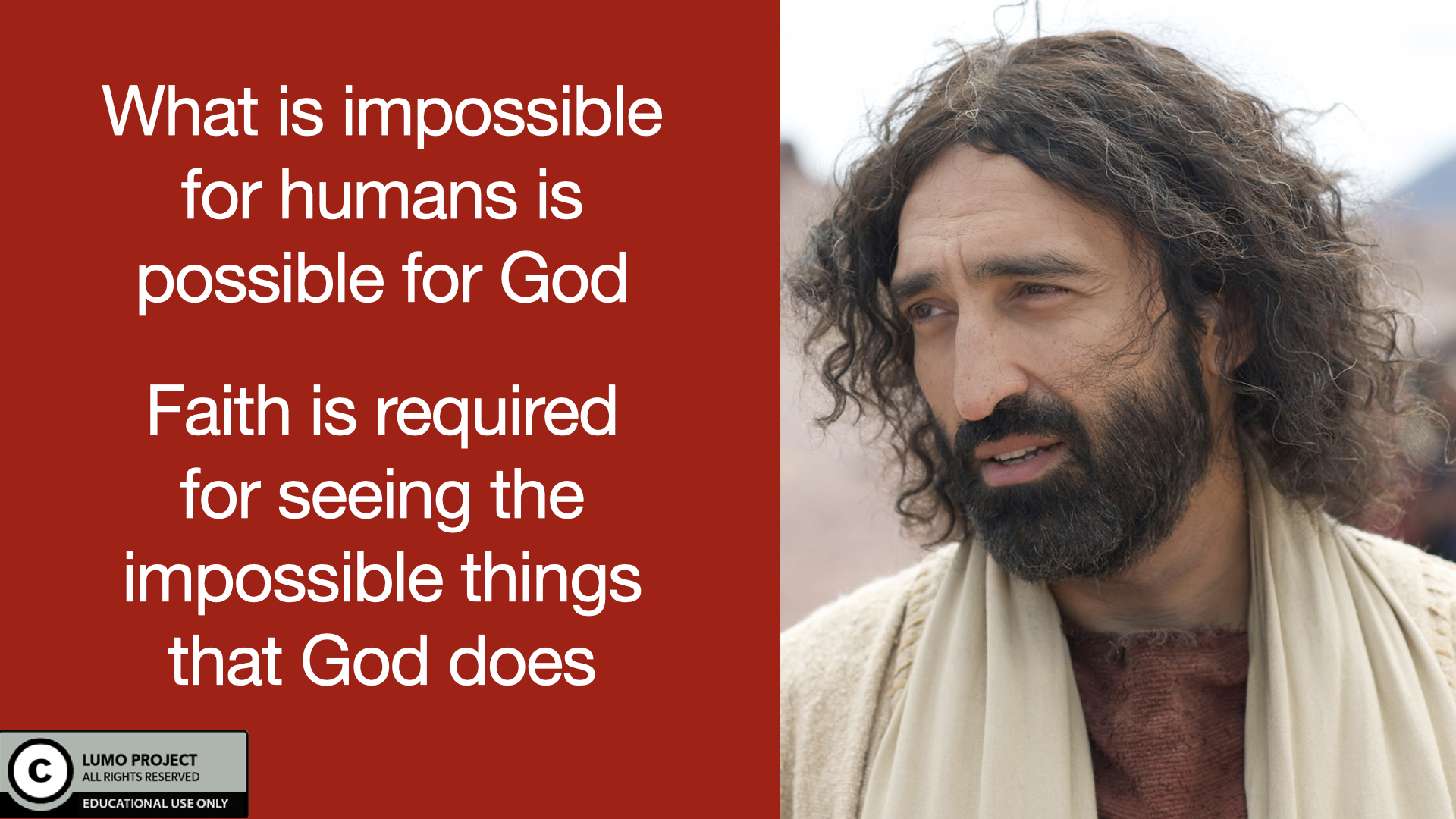
Jesus is telling us two things here: First, what is impossible for humans is possible for God, and second, that faith is required for seeing the impossible things that God does. Seeing those impossible things then helps us to have the faith we need to live a full life that glorifies God. Then Jesus shouted, “Lazarus, come out!” (John 11:43) One of the commentaries I read said that Jesus had to say Lazarus’ name when he called him from the grave because if he hadn’t, all the dead in that cemetery would have come out. Such is the power of life in Jesus. And the dead man came out, his hands and feet bound in graveclothes, his face wrapped in a headcloth. Jesus told them, “Unwrap him and let him go!” (John 11:44)
Just like Lazarus, after Jesus suffered the inevitable death that happens when one is crucified, he also was laid in a tomb. On the third day that followed, his Father called him out of his tomb, and over the next forty days, he appeared to hundreds of witnesses. Before he left this earthly dimension and transitioned to the dimension of heaven, he ordered his followers to stay and Jerusalem and wait for a special gift. Jesus promised them, But you will receive power when the Holy Spirit comes upon you. And you will be my witnesses, telling people about me everywhere—in Jerusalem, throughout Judea, in Samaria, and to the ends of the earth.” (Acts 1:8)

The gift of the Holy Spirit came ten days later during the special festival of Pentecost. Held fifty days after Passover, (which celebrated the barley harvest), Pentecost, or the Feast of Weeks, celebrated the wheat harvest. It also commemorated the giving of the Ten Commandments and the covenant God made with his people at Mount Sinai. Just as there was lightning and thunder at Sinai as God came to his people and formed a special bond with them, so also there was fire and a loud rushing wind in Jerusalem as God came to his people and formed a special bond with them. Pilgrims were in Jerusalem from all over the known world for Pentecost, and they heard Jesus’ disciples declaring the works of God in their own language. God had miraculously poured out his Holy Spirit on everyone who believed in Jesus. In the past, the Holy Spirit was given to special people for a certain task or role, but now all of God’s people had the Holy Spirit poured out on them. With the Holy Spirit living within them, every believer had all the life, love, joy, and peace, of God within them. So we can say that there was a miraculous transition from death to life for everyone who received the Holy Spirit in Jerusalem that day, just as there was for Lazarus when Jesus called him out of the grave. And note that in all these death to life transitions, Jesus is the cause. It was Jesus who restored Lazarus to life. It was Jesus who walked out of the tomb on the third day after his burial to proclaim the promise of resurrection life to everyone who looks to him in faith. And it was Jesus who tore down all the barriers between us and God so that the Holy Spirit could be poured out on all of us.
Jesus’ Surprising Emotions
But the second thing which is very surprising in these two accounts when we hold them side by side is Jesus’ emotions. In John 11:33, we read, When Jesus saw her weeping and saw the other people wailing with her, a deep anger welled up within him, and he was deeply troubled. (John 11:33)

In verse 38, John again tells us that Jesus was deeply moved. Why would Jesus feel a deep anger over all that was happening around the death of Lazarus when he knew that he was going to restore him to life? And this is especially puzzling when compared to what Jesus was like as he hung on the cross. He had been beaten and flogged, and was now experiencing the most excruciating pain imaginable, a pain that would end in his death. He was falsely accused and suffering for crimes that were not his own. If ever there was a time when Jesus had a right to be deeply moved and very angry, it was then. But what types of emotions does Jesus display? He forgives those who crucified him. He promises paradise to one of the criminals who were crucified with him. He makes sure that his mother will be properly cared for. And then he gives up his life and dies.
Why was Jesus angry when we wouldn’t expect it, and why wasn’t he angry when we would expect it? I think that there is only one explanation. At the home of Lazarus, Jesus is angry over what sin and death have done to people he loves. At the cross, Jesus is gracious because he knows that the damage of sin and death will soon come undone. It was through the beating and the flogging, the unjust condemnation and the suffering for sins that were not his own that Jesus was winning forgiveness for all the sins of all people in the world. With his last breath, that cost would be more than paid for in full. With his resurrection from the dead on the following Sunday, Jesus’ victory for us would be complete. Within seven weeks, everyone who looks to him in faith would be able to live with the ongoing fellowship of the Holy Spirit just like Jesus. As he hung on the cross, Jesus knew that the grip that sin and death had on humanity would soon come to an end, and everyone who trusts in him will be restored, renewed, filled with all the fullness of God and live in a loving relationship with God forever. That’s why he could be gracious as he hung on the cross.
Questions to Ask Ourselves
So what does all this mean for us? It means that each and everyone of us has the opportunity to pause and ask ourselves a couple questions. First, what kind of life am I trying to live? The default setting for human beings is to live a self-centered, self-directed life that is fulfilled by experiences, stuff and other people. Is that the kind of life you or I are trying to live? And there is a litmus test that we can use to measure whether we are living our lives according to the standard human operating system or not. And that litmus test is joy. The standard way of living will not produce joy in our lives. And by joy, I do not mean happiness.

On the night before he went to the cross, Jesus said to his followers: So you have sorrow now, but I will see you again; then you will rejoice, and no one can rob you of that joy. (John 16:22) So the kind of joy I am talking about is the joy of knowing that the resurrected Jesus is with us, that he loves us, and that, even now, in us and in the world around us, he is bringing to fulfillment his plan for the redemption and renewal of all things.
The second question we can ask ourselves is this: what kind of life do I want to live? And if we want to live a life of joy, then every day we throw our old way of living in the garbage can, and ask our risen Savior, Jesus, and his companion, the Holy Spirit, to come and fill us again, and help us to live with their life, joy, peace, wisdom and love.
A Life Transformed
Benjamin Budde grew up in a Christian home in Ohio, the youngest of eight children. All he wanted in life was to be good at something so that he could fit in and be accepted. Eventually that something became music. He played on a music team in church, but he also jammed in settings where alcohol and drugs were prevalent, and he soon began indulging in both. When he was 18, he got in trouble with the law, which got him kicked out of the church band and he began playing music exclusively in bars and nightclubs.
On Christmas Day, the year he was 20, he found out that his mother had breast cancer and nine months later, she died. Angry at God over the death of his mother, Ben cursed God and declared that he no longer believed in him. He poured himself into his music, but his addictions were stealing his life away. After ten years, everything Ben had was gone.
After a two-month binge, Ben realized the predicament he was in, so he called an old girlfriend, Missy. Missy shared the Gospel with Ben and told him that Jesus had a purpose and a plan for his life but he needed to stop drinking and drugging. Thinking about that conversation with Missy, Ben started digging through a box of his personal stuff and there he found his mother’s Bible. It was well-worn and full of her hand-written notes.

Ben partied again that night and woke up full of remorse and sadness. But he also had a new awareness that he had seen a light in the darkness. He started asking Jesus for forgiveness for all the sinful things that he had ever said or done, and Ben felt that forgiveness begin to change him.
Now Ben and Missy are married and have a family, and they do outreach ministry geared towards people who are caught in addiction. In an article in Christianity Today, Ben wrote:
“We have seen the mighty hand of God moving in people’s lives to change and rearrange them from hopelessness to new life in Jesus Christ. Praise God that I can share the hope of having a relationship with Jesus that truly turns one’s darkness to light.”[i]
Today’s Challenge
So the challenge that I am setting before you today is this: If you haven’t done so already, Toss your old way of living in the garbage, and embrace the new way of living that Jesus and the Holy Spirit are offering to you. And you will have joy because of their presence in your life. Amen.
(This message was shared at Walnut Grove Lutheran Church in Langley BC on May 28, 2023. For more info about WGLC, please go to wglc.org.)
[i] Benjamin Budde, “I Was the Proverbial, Drug-Fueled Rock and Roller,” Christianity Today (Internet; available at: https://www.christianitytoday.com/ct/2023/march/benjamin-budde-testimony-drug-fueled-music.html?utm_medium=widgetsocial&fbclid=IwAR1aOBd8JJnAtC8IULiOtQaLEYI54rZORD9UcCuQF9yyqsLlz7wZ7iFLles; accessed on May 24, 2023).

 Farewell to Shadowlands
Thank you for sharing my testimony.
God bless you.
LikeLike
You are welcome, Ben! You and your testimony are an encouragement to me and many others! God bless you and your family! God’s peace, James
LikeLike