

Are you familiar with the term “influencer”? If not, here is a definition: An influencer is someone who exerts influence, someone who inspires or guides the actions of others.
And the word “influencer,” as we use it today, is kind of a new concept that has come about with the rise of social media, and it has had a huge impact on our culture. It has an impact not only on behaviors but also on the products we buy. So you only need to look at the latest TikTok challenge to see how it influences our behaviors.
But it also has an impact in the marketplace. There are estimates that $2 billion is being spent annually on products now because of influencers, and companies take this into account because it can actually be a very effective means of marketing.
Now, using influencers to market products is not new. I mean, they’ve been using celebrities to sell things like cars ever since advertising was invented. But what is new is that anybody can be an influencer, and they can reach people almost anywhere in the world. Statistics indicate that 37% of the people in the world have a Facebook account, and that’s just one social media app.
The other thing that’s new is that when we’re choosing somebody to influence us, we have a much larger array of people to choose from. There are 64 million influencers on Instagram, so we can pick any kind of topic, any kind of aspect of life, and there’s probably somebody who would like to guide us in that area.
Influencing works because, with social media, what happens is people feel like they know you personally, and therefore, they trust your opinions about products and actions.
Influencing doesn’t always work as planned. One influencer advertised T-shirts to her 2 million followers and only 36 T-shirts were purchased. In order for influencing to work, certain things need to be in place. First, the product needs to have relevance for the followers. It has to be something that’s meaningful for them, something that matters to them. Second, there has to be integrity, in other words, the product needs to fit with who the influencer is.
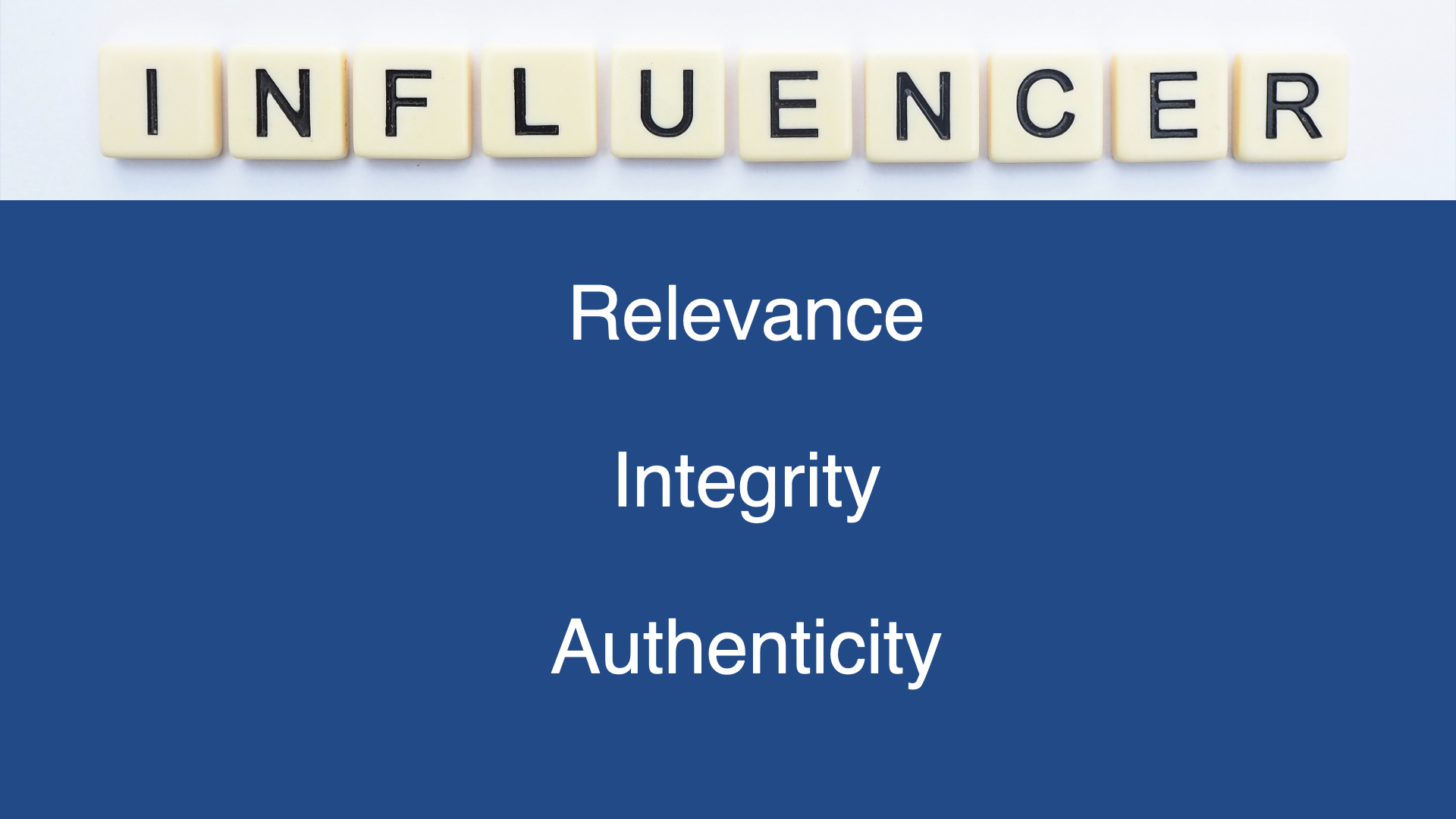
The third thing that is needed is authenticity. It is very important that the influencer be who they actually portray themselves as on social media because if there’s a mismatch and that becomes public, then the influencer’s reputation (or brand) is ruined.
Influencers as we now know them are new, but what isn’t new is that we get to choose who our influencers are and we also get to choose how much influence they have on our life. This has been going on for millennia. Even in Jesus’ time, young men would choose the teacher, or rabbi, that they were going to follow. That makes what Jesus did all the more extraordinary because his followers didn’t choose him, he chose his followers.
This timeless ability of influencing to change and transform a human life means that we have some very critical decisions to make in terms of who we allow to influence us and the depth of influence that we allow them to have over us. You and I have only have one life to live, and the influencers we choose can potentially change our lies. But are our influencers actually going to lead us where we want to go? Are they going to instill in us the kinds of qualities that we really want to have? Are they going to help us become a better version of ourselves? Or are they just going to encourage us to become more selfish and self-centered?
That leads us to this question: How do we choose who influences our life? To help us as we consider that question, let’s reflect on Philippians 1:27 to 2:11. If you have a Bible or a Bible app nearby, I invite you to open it up to that passage.
When we are considering who we allow to be an influence over us, one of the things that we look at is the kind of life that they are calling us into. We find out about the life that Jesus is calling us into by looking at this passage. Here is a bit of background information. Philippians is a letter from Paul that he wrote while in jail, probably in Rome. He’s writing to Christians in Philippi, which was the first church in Europe that Paul started. Philippi was a Roman colony filled with retired Roman soldiers who believed that Caesar is Lord. So to go around believing and saying that Jesus is Lord was not only unpopular but could actually invite persecution. The Christians in Philippi were feeling this kind of persecution, and Paul is writing to them, not only to thank them for a gift they sent to him, but also to encourage them.
And there are three themes in Paul’s letter to the Philippians: thankfulness in all things, joy in the midst of suffering, and advancing the gospel. Those themes reveal the life that Jesus is calling us into, and they also hint at how we enter into that life. Having thankfulness in all things enables us to see that Jesus is bringing about good in all things. Then, having joy in the midst of suffering helps us see how Jesus is able to redeem our suffering and bring about good things that could not have happened otherwise.

However, we cannot have thankfulness in all things and joy in the midst of suffering in our own power. It is impossible for us to do that on our own and it seems intimidating to even to think about it. That’s because we need to be filled with a power outside of ourselves to enable us do those things. That power is a person, Jesus Christ, and as he lives his life in and through us, that’s when we’re able to have thankfulness in all things and joy in the midst of suffering. With Jesus living within us, we become Jesus people, and as we live as Jesus people in this world—being thankful in all things and having joy in the midst of suffering—the gospel will spread. Being thankful in all things and having joy in the midst of suffering is extraordinary. People will wonder how we are able to live that way, and that will give us opportunities to tell them about Jesus.
Being a Jesus person means standing with other Jesus people and contending for the one true faith. It also means not being afraid of those who oppose you and being willing to suffer for being a follower of Jesus. Again, we can only do these things with Jesus living within us.
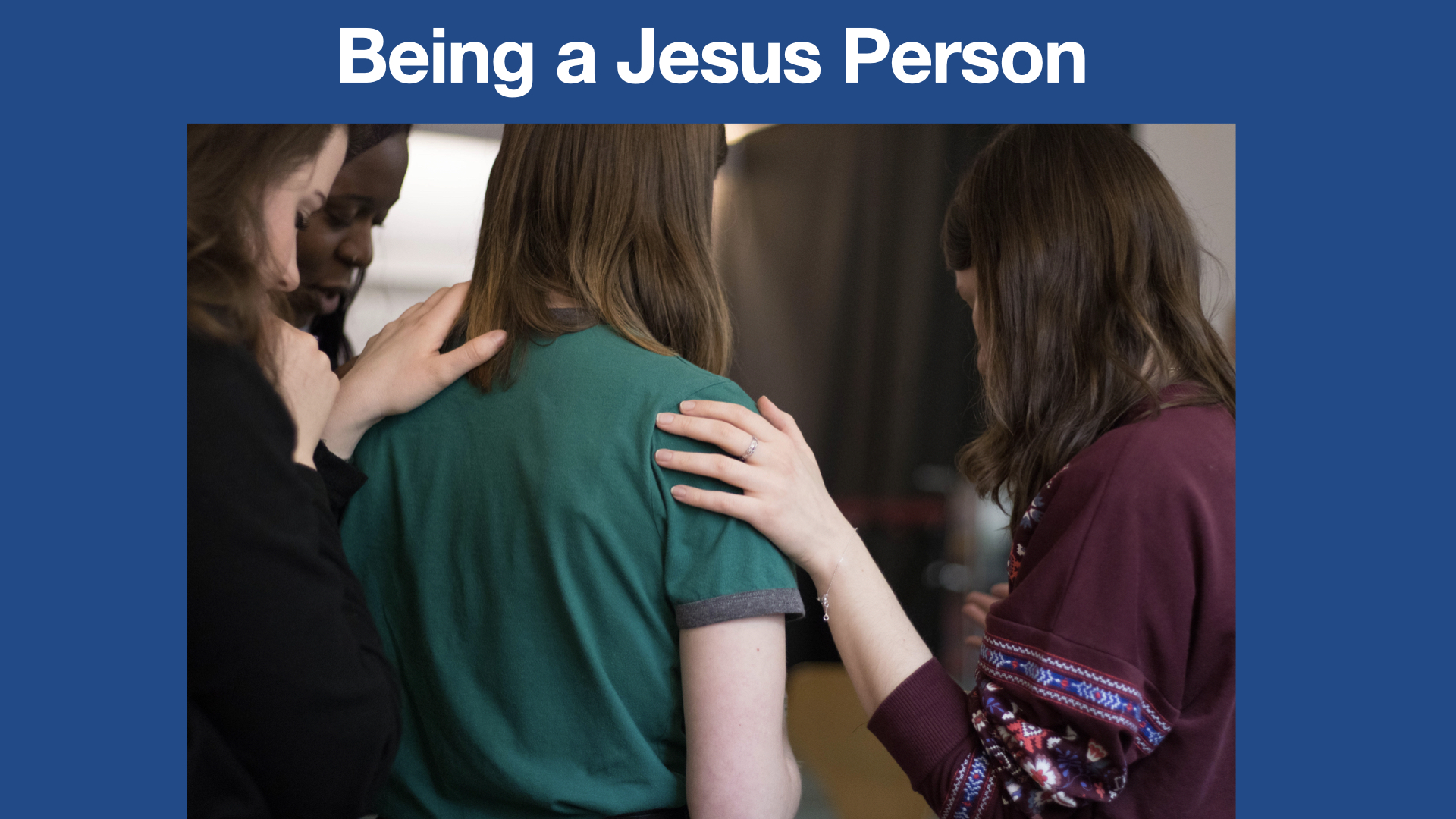
As a group of Jesus people are gathered together, a Jesus community is formed. Being a Jesus community means that we are like-minded, having one love, sharing one spirit, and being of one mind. It doesn’t mean that we are all the same, but it does mean that we are united because we all share in the life of Jesus Christ. It also means that we do not elevate ourselves over others. This is the way of the world, to elevate ourselves over others. But being a Jesus person in a Jesus community means elevating others over yourself. So, the life that Jesus is calling us into is to be a Jesus person, to be like him, and have love at the center of our life.
The second thing that we do when we’re choosing who our influencers is we consider the life they live. Paul has this beautiful poem in Philippians chapter two that describes for us the life of Jesus. Right from the start of the poem, Paul emphasizes Jesus’ humility. Consider this for a moment: God the Son becomes fully human and comes into this world as the ideal human being. And his chief characteristic is not that he’s really handsome, or a great singer, or very powerful, or a wonderful actor, or makes lots of money. His chief characteristic is humility. And I think the reason why is because humility is necessary to make room for love. Pride, you see, is the enemy of love. At least that’s what I’ve noticed in my life. When there’s pride, there’s not much room for love anymore.
So Jesus comes into the world, and his chief characteristic is humility, and his humility led to His humiliation. Jesus was beaten, whipped, stripped naked, and nailed to a cross to suffer and die beside a public road where people could walk by and curse him and spit on him. Jesus willingly chose to do that.
But then there’s a shift in the middle of Paul’s poem, because Jesus’ humiliation led to his exaltation. On the third day after he died, Jesus rose from the dead, he’s alive, and He’s with you and I right now. All this Jesus did for us and for the whole world. His humiliation and His exaltation are the assurance of our salvation, the assurance of our forgiveness, the assurance of our peace with God, the assurance of our life with God, the assurance of our healing, and the assurance of our hope.”
Let’s now look at Jesus’ credentials as an influencer. Did Jesus offer something relevant to us? Jesus came into this world, died and rose again to offer us the forgiveness of all of our sins so we can live without guilt and shame anymore. Jesus is offering us healing on the inside now and complete healing one day in the future when we will live with him forever in a renewed and restored creation. Jesus is offering us life in its fullness. And what could be more relevant than that?
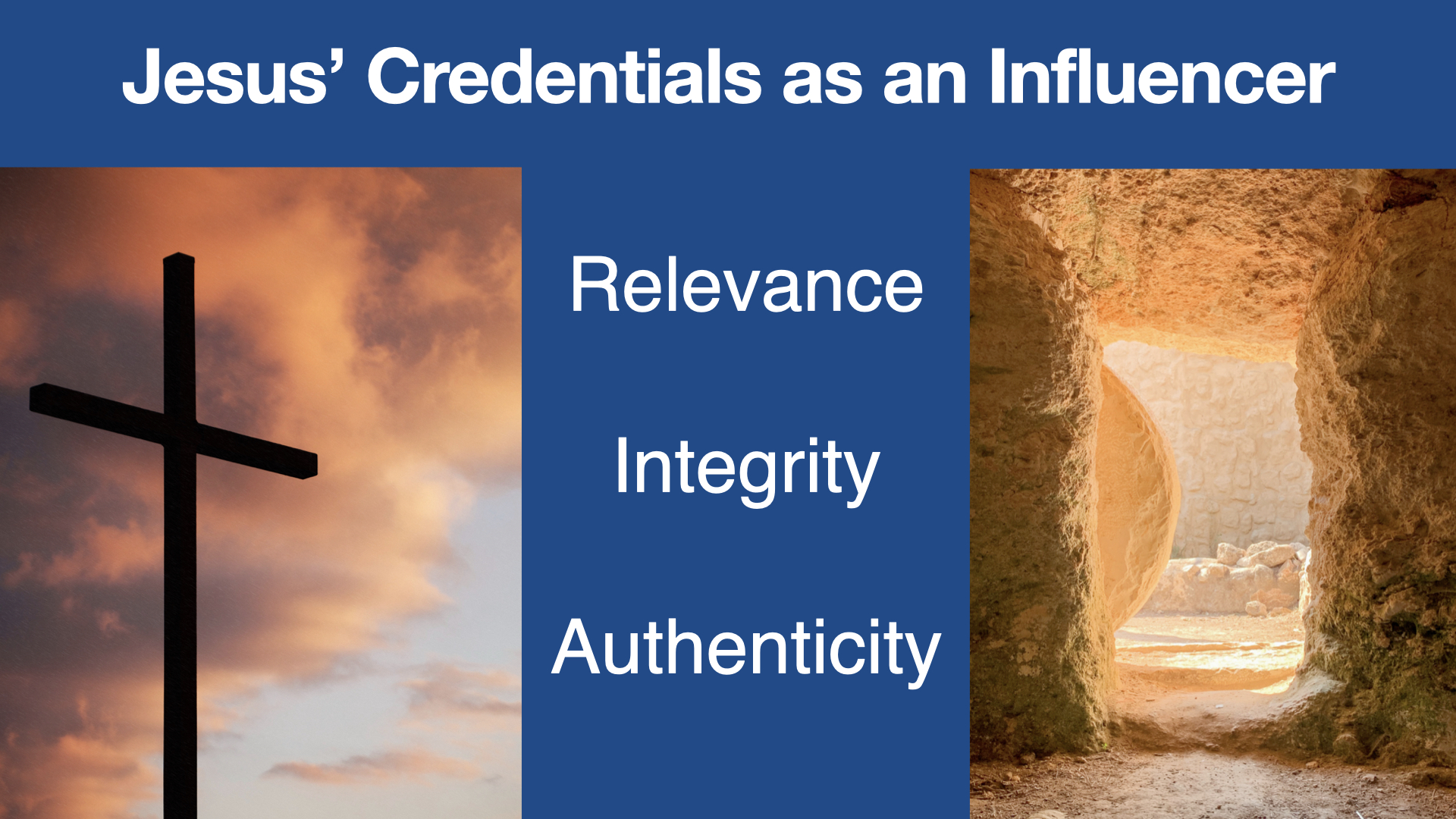
Is there integrity between Jesus and what he is offering, does it fit with who he really is? Yes, because all of the things Jesus did, he did because of love, and the Bible tells us that God is love.
Then there’s the question of authenticity. Is Jesus portrayed accurately in the medium of the Bible? Yes, he is. In fact, that is the whole point of the Bible. As we read the stories about Jesus and the words that he spoke which are contained within the Bible, we are actually getting to know who Jesus really is. So, that’s why it’s so important for us to immerse ourselves in the Bible. so we can get to know Jesus.
So, what does all of this mean for us? Well, glory and humiliation are actually part of human life. For example, there’s the glory of being young, beautiful, and strong, and being able to accomplish great things. But with human life, humiliation also comes, the humiliation of weakness, illness, aging, not meeting society’s standards for appearance, or failing spectacularly, which all of us have done from time to time. And, according to our human nature, we humans want some kind of shortcut that gets us to, and keeps us in, the glorious aspects of human life and avoids the humiliation that comes with being human. We don’t want the humiliating aspects of human life and we’d like to avoid them if we could.
But here’s the thing: in our striving for glory, what we inevitably do is we abandon God and His path for us in life. We try to be the God of our own lives and carve our own path for ourselves. This is what our first parents did in the Garden of Eden. This is what all of us have been doing ever since.
What did God do in response to our inherent tendency to abandon him and go our own way? He entered into the humiliation of humanity in order to glorify humanity. Jesus emptied himself to join his life to ours. So then, let us empty ourselves to give him complete influence over our entire life, so that we can become more like him.
Instead of trying to escape our weakness and humiliation, let us embrace it. Instead of striving to glorify ourselves, let us strive to live a life that glorifies Jesus. The ironic part of all this is this: as we do that, as we live with Jesus in our weakness, he will give our life more influence in the lives of others than we ever thought possible. You see, the ideal human being is Jesus, and the ideal human life is the one He lived. There was humiliation, and there was exultation, and in all of it, Jesus was so filled with love that he chose to suffer sacrificially so that the best interests of others could be met.
Dr. Helen Rosevear was born in England in 1925. She grew up in a Christian family, but it was more of a head knowledge thing for her until she went to a retreat when she was in university. That was when God met with her in a personal way.
After she gave her testimony at that event, a Bible teacher wrote Philippians 3:10 in her new Bible, “I want to know Christ—yes, to know the power of his resurrection and participation in his sufferings, becoming like him in his death, and so, somehow, attaining to the resurrection from the dead.” (Philippians 3:10-11) The Bible teacher said told Helen that she had experienced the first part of that verse, knowing Christ. Then he said that his prayer for her is that he would know Jesus in an even deeper way and come to experience the later phrases in the verse as well.
After training in evangelism, languages & medicine, she became a medical missionary to the Congo in 1953 at age 28. In 1964, during the Congo Civil War, she and other missionaries were captured and brutalized by rebel forces. Helen was beaten and raped. She felt that the Lord had failed her and she fell into the darkness of despair. In that darkness, she felt that the Lord was saying to her, “These are not your sufferings. They’re Mine. All I ask of you is the loan of your body.”
She later wrote, “Through the brutal heartbreaking experience of rape, God met with me—with outstretched arms of love. It was an unbelievable experience: He was so utterly there, so totally understanding, his comfort was so complete—and suddenly I knew—I really knew that his love was unutterably sufficient. He did love me! He did understand!”
She continued, “I knew that Philippians 4:19, “My God will supply every need of yours according to his riches in Christ Jesus,” was true on all levels, not just on a hyper-spiritual shelf where I had tried to relegate it…. He was actually offering me the inestimable privilege of sharing in some little way in the fellowship of His sufferings.” (Justin Taylor, “A Woman of Whom the World Was Not Worthy: Helen Roseveare (1925-2016),” The Gospel Coalition (Internet; available at: https://www.thegospelcoalition.org/blogs/justin-taylor/a-woman-of-whom-the-world-was-not-worthy-helen-roseveare-1925-2016/; accessed October 7, 2023).
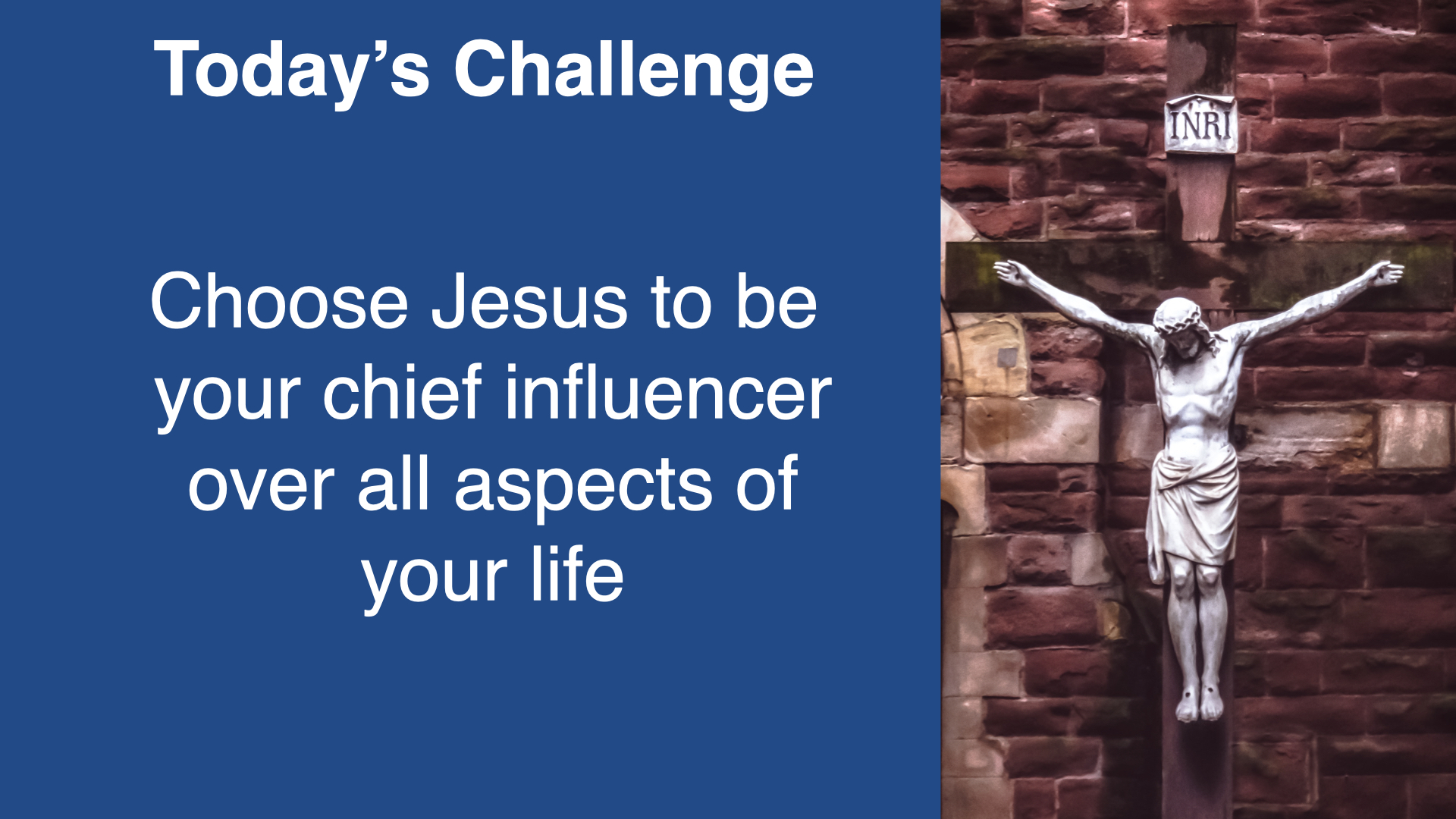
In closing, the challenge that I would like to leave with you today is to choose Jesus as you were Chief Influencer over all aspects of your life, and he will influence others through you. Amen.
(This message was shared at Walnut Grove Lutheran Church in Langley BC on October 8, 2023. For more information about WGLC, please go to wglc.org.)

 Farewell to Shadowlands