

Wrexham Association Football Club is the oldest football club (the sport that we in North America know as soccer) in Wales, and it’s the third oldest in the world. Throughout its long history, it’s had several ups and downs. But prior to 2020, there was a real stretch of deep downs. In 2008, they were relegated out of the lowest level of the English Football League, which meant that they dropped into the National League of Wales. And that was something that hadn’t happened in decades to the club. Then in 2020, the season was ended early because of COVID-19. Based on their points, they were placed at 19th in the league, which was the lowest level they had ever been in their entire 150-year history.
But then, Rob McElhenney and Vancouver’s own Ryan Reynolds bought the team, and with their investment, connections, and expertise, things began to turn around. The team began to have more success on the field. Rob and Ryan helped create a show called Welcome to Wrexham, which debuted in August of 2022. Because of that TV show, people all around the world became fans of the club, and some of the games that Wrexham played, even though they weren’t in the English Football League, were some of the most popular football or soccer games on ESPN at times. Then, in April of this year, they had their most successful season ever and won their league, which meant that they were promoted to the first level of English football.
So it’s a huge turnaround that they experienced in a relatively short period of time.
Now, like Wrexham, each of us can have low points in our lives. Maybe interest rates have caused your dream home to become a nightmare. Maybe some kind of disease or injury is stealing life away from you or from someone you love. Maybe you’re grieving the death of a loved one. Or maybe life, in ways you just don’t fully understand, seems much, much harder than you ever thought it would be. So we can wonder at times, is it possible for us to have a turnaround in our lives? Is there something or someone from the outside that would come in and totally change the trajectory of our lives? And if so, what would that even look like?

To help us as we think about these things, we’re going to be taking a look at 2 Timothy 1:1-14. So if you have a Bible or Bible app, I invite you to turn there now.
As we dig into this book of the Bible we find that it’s actually a letter that the apostle Paul is writing to his younger friend and protege, Timothy, and Timothy has some problems. He’s pastoring the church in Ephesus, and there are people going around teaching various things that aren’t true; among them is the belief that the resurrection has already happened. So they’re saying it’s kind of a spiritual resurrection. They’re abandoning all hope in the physical resurrection, that gift of life after death that God wants to give us, along with the hope of the new creation, the new heaven and earth. They’re just living for the present, as if they’re thinking and believing it’s just about what Jesus can do for them today, and that’s it.
So Timothy has problems. But Paul also has problems because he’s in jail. This is likely a different imprisonment from the one we find at the end of the Book of Acts because his circumstances are much more dire. He is on trial, it seems, and he doesn’t think he’s going to come out of the whole thing alive. So this is like his farewell letter to Timothy. His words are carrying a lot of weight.
What we can draw from this is that the turnaround that God is offering to us, and God is offering you a turnaround in your life. But the turnaround that God is offering us is not a life without problems. You see, the biggest problem we have in life is not our problems. If we have the courage to take a look at them, we will see that the way we respond to our problems reveals a deeper issue in our lives; there’s a heart issue. Getting angry, frustrated, or dismayed can be an indication of how much we think the universe should revolve around us and bow to our whims. At least, that’s what goes on inside my heart. So, there’s a turnaround needed, but it must start in our hearts.
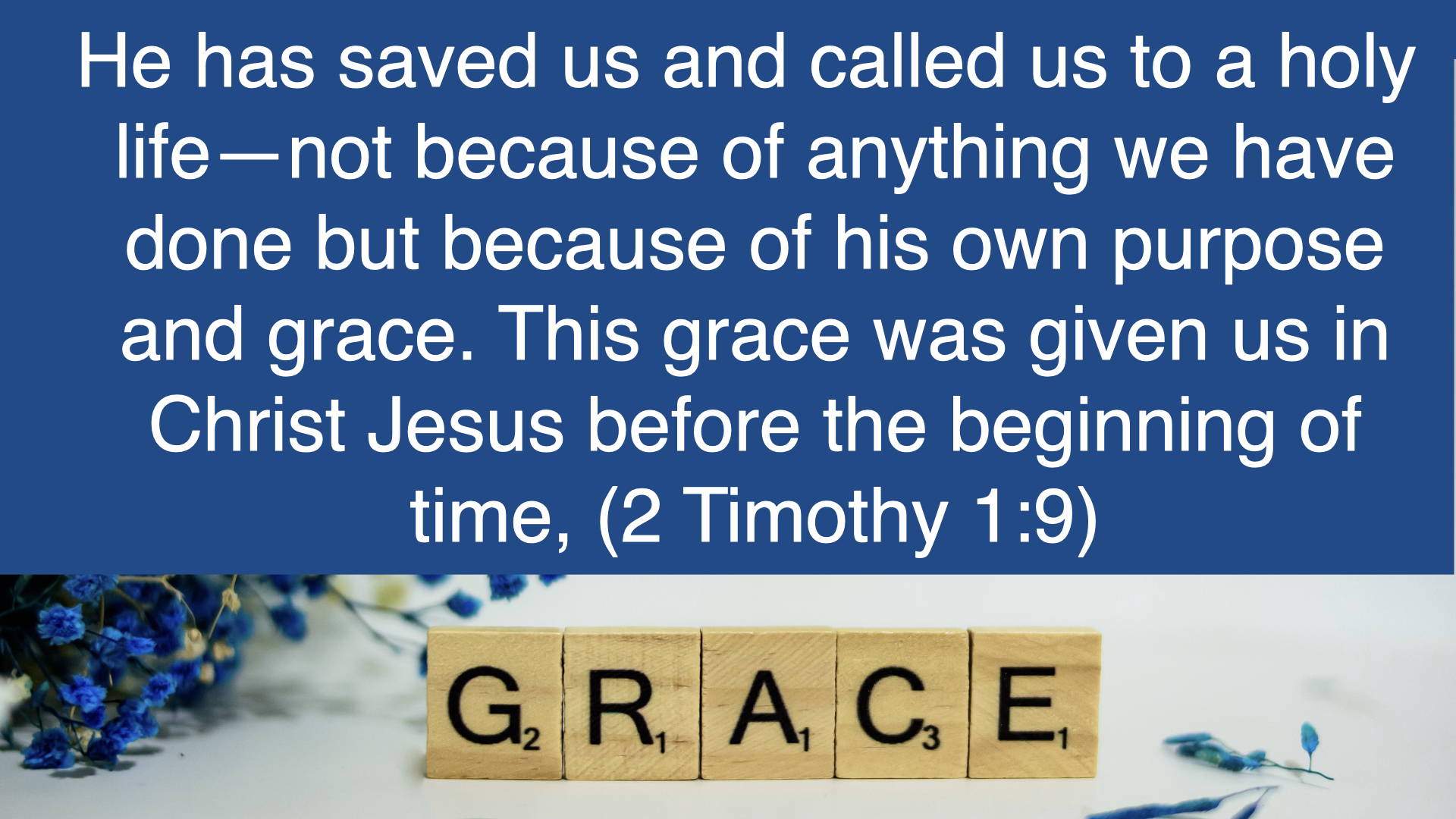
The turnaround happens because of three words or concepts, and those words are grace, the gospel, and joy. First of all, grace. Early in the passage we’re looking at, we see this word pop up. Paul writes, “He has saved us [referring to God] and called us to a holy life—not because of anything we have done, but because of His own purpose and grace. This grace was given us in Christ Jesus before the beginning of time.” (2 Timothy 1:9)
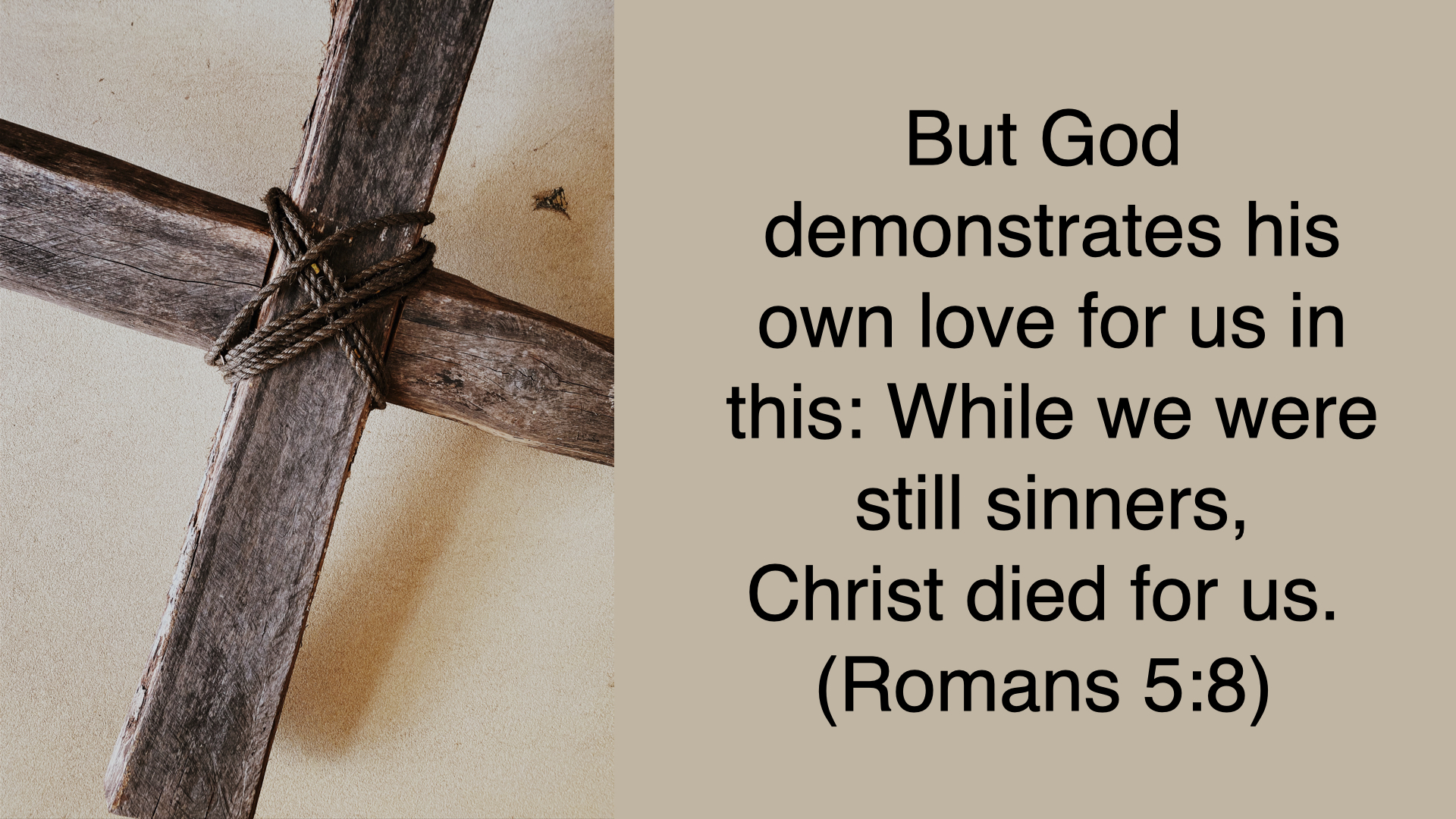
And so, what is grace? Well, grace is God’s love and favor for us, even when we are far from Him. And this passage tells us that God was giving us grace before the world was even created, when you were just a thought in His mind. We see a bit of what this grace looks like in Romans 5:8, where we read, “But God demonstrates His own love for us in this: While we were still sinners, Christ died for us.” (Romans 5:8) So, it’s not because of anything that we’ve done or any action on our part that we deserve God’s love and favor. He’s simply giving it to us because of who He is – a loving and gracious God. Grace was what motivated God to save us and give us life with Him.
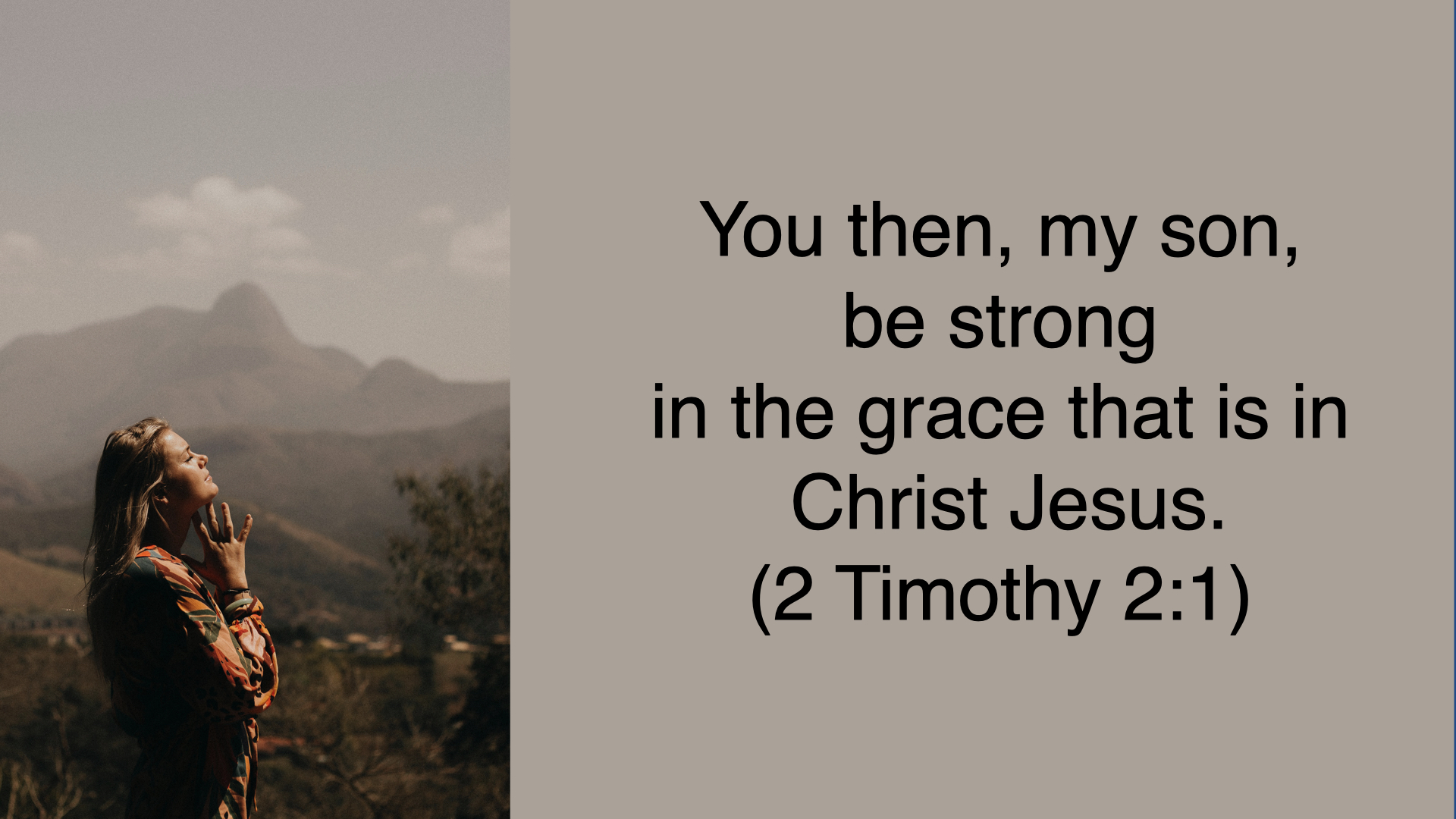
So then, Paul writes a little later in his letter these words to Timothy, “You, then, my son, be strong in the grace that is in Christ Jesus.” (2 Timothy 1:1) So, what does it mean to be strong in grace? Well, it means having wholehearted confidence that God loves you infinitely and unconditionally. It means realizing and seeing the world in a different way, and knowing that because of God’s grace, you can see that the problems you face are not put in your life to punish you or frustrate you or cause you to suffer. They are simply what happens when a broken person lives in a broken world with other broken people. Being strong in God’s grace also means living with the assurance that God is with us and that He is helping us in the lead role and working on our life’s problems together. He is with us, even in our low points.
So, that’s grace.
But then there’s this word “gospel,” and turning to Paul’s letter, we read, “But it is now being revealed [he’s referring to grace here] through the appearing of our Savior, Christ Jesus, who has destroyed death and has brought life and immortality to light through the gospel. Of this gospel, I was appointed a herald and an apostle and a teacher.” (2 Timothy 1:10-11) God’s grace was given to you before the creation of the world, and then that grace was revealed when Jesus Christ came into the world. He came on the scene in human history and through the perfect human life that He lived and the horrible sinner’s death that He died and His resurrection from the dead on the third day after His death, Jesus has destroyed death and given us the gift of life forever with Him. And Jesus’ resurrection changes everything for us because it means that we now have the opportunity to live a new life and we now have the opportunity to live in a new way. And it’s the gospel that ushers us into that new life and that new way of living.
So, there’s grace, there’s the gospel, and then there’s joy.
This past week, I was at the BC Church Workers Conference, and I want to thank all of you for making it possible for me to attend. While we were there, our key presenter was Dr. Joel Heck, who is the interim president of Concordia Lutheran Seminary in Edmonton and a CS Lewis scholar, and he talked about Lewis’s definition of Joy. In a letter dated August 19, 1945, and addressed to “Mrs. Ellis”, Lewis states that joy is not the same as security, prosperity, or a life without problems. He writes, “Real joy seems to me almost as unlike security or prosperity as it is unlike agony.” In his autobiography, “Surprised by Joy,” Lewis hints at what he means by this word when he refers to “an unsatisfied desire that is more desirable than any other satisfaction”. Some have used the German word “sehnsucht” or “holy longing” to describe what Lewis meant by Joy. Essentially, Joy is a longing for God. This is what Augustine was referring to when he wrote, “You have made us for yourself, O Lord, and our heart is restless until it rests in you.”

One thing that was new and profound to me was when Dr. Heck started talking about the difference that Lewis identifies between contemplating Joy and experiencing Joy. Contemplating Joy involves thinking, writing, or talking about it, which is good, but it’s not the same as experiencing it.
Initially, I thought that this meant that most of a Christian’s life is spent contemplating Joy with only fleeting moments of experiencing Joy. However, Dr. Heck helped me see otherwise. He said that the difference between those two things is like the difference between simply throwing a ball and aiming at a target. The first is done freely, naturally, and without thinking, while the second requires focus, concentration, and coordination.
Dr. Heck referred me to an essay that Lewis wrote called “Meditations in a Toolshed.” In that meditation, Lewis writes about going into a dark tool shed and seeing a beam of light intersect the darkness and he notes that there is a difference between seeing that beam of light in the tool shed, and standing in the light and looking along the beam. With the first perspective, you see the beam of light, but with the second, you see the leaves on the trees outside the tool shed and the brilliance of the sun millions of miles beyond that.
Now, as I mentioned, Joy is a holy longing for God, and faith is what connects us to God.
And much of what I do as I preach and teach is talking about faith. But my truest and deepest hope is that you would not simply observe the light of faith from the side, but that you would actually stand in the light of faith, look along it, and see the source of that light and experience the joy having your longing for God met by God Himself. And when we do that, we will be able to see our problems, our sorrows, and our griefs as fertile ground for Joy to spring forth, for our longing for God to intensify. So let’s fan into flames that gift of faith that we have been given. Let us be strong in God’s grace. And let’s live our faith and our life with God freely and naturally and full of Joy.
Yesterday as I was working on this sermon, news came that Matthew Perry, one of the stars of the TV show Friends, had died. When he was a teenager, Matthew prayed for the first time, and his prayer was this: “God, you can do whatever you want to me. Just please make me famous.” It was a prayer that he later regretted because Matthew did become famous, but he also developed addictions to alcohol and opioids. His opioid addiction resulted in a burst colon and hospitalization, and at one point, he was given a 2% chance of surviving the night. In his autobiography, Three Friends, Lovers, and the Big Terrible Thing, he describes the moment when he hit rock bottom.
“I whispered, ‘God, please help me. Show me that you are here. God, please help me.’ As I kneeled, the light slowly began to get bigger and bigger until it encompassed the entire room. I started to cry, I mean, I really started to cry. That shoulder-shaking kind of uncontrollable weeping. I wasn’t crying because I was sad. I was crying because for the first time in my life, I felt okay. I felt safe, taking care of decades of struggling with God and wrestling with life and sadness. All was being washed away, like a river of pain, gone into oblivion. I had been in the presence of God. I was certain of it, and this time I had prayed for the right thing. Help.”

Today we reflected on three words: grace, the gospel, and joy. And there’s a fourth word, faith, which runs like a thread through all of those things. The challenge which I wish to leave you with today is a fifth word—guard—in the sense of guarding your faith, the faith that God has given to you. So let me challenge you with words that Paul wrote to Timothy:
“What you have heard from me, keep as a pattern of sound teaching with faith and love in Christ Jesus. Guard the good deposit that was entrusted to you. Guide it with the help of the Holy Spirit who lives in us.” (2 Timothy 1:13-14) Amen.
Sources:
Alison Flood, “Unseen CS Lewis letter defines his notion of joy,” The Guardian (Internet; available at: https://www.theguardian.com/books/2014/dec/09/unseen-cs-lewis-letter-defines-joy-surprised-by-joy; accessed October 28, 2023).
Paul Batura, “Friends’ Star Matthew Perry: “I started to cry … I had been in the presence of God.” Daily Citizen (Internet; available at: https://dailycitizen.focusonthefamily.com/friends-star-matthew-perry-i-started-to-cry-i-had-been-in-the-presence-of-god/; accessed October 28, 2023).
Amy Mantravadi, C. S. Lewis on Joy, 1517. Christ For You (Internet; available at: https://www.1517.org/articles/cs-lewis-on-joy#:~:text=Early in the book%2C Lewis,from Happiness and from Pleasure.; accessed October 28, 2023).
C. S. Lewis, “Meditation in a Toolshed,” Katolicka Teologicka Fakulta (Internet; available at: http://ktf.cuni.cz/~linhb7ak/Meditation-in-a-Toolshed.pdf; accessed October 28, 2023).
(This sermon was shared at Walnut Grove Lutheran Church on October 29, 2023. For more info about WGLC, please go to wglc.org.)

 Farewell to Shadowlands