

On June the 12th in the year I graduated from high school—I was on my way to my cousin’s wedding in a neighboring town. I had a lot of friends with me in my pickup truck, and it was a proverbial dark and stormy night. It was raining and the road we were driving on didn’t have any lines marked on it, and that made it hard for me to see the black cow that suddenly appeared walking down the road in front of me.
In an instant, I had a decision to make.
I could either stay on the road and hit the cow or take the ditch on one side or the other. Not knowing what was in those ditches, I decided to stay on the road and hit the cow. Fortunately, neither I nor the people riding with me were hurt, but the cow wasn’t feeling too good, and my truck was a sorry mess. It had steam coming out of the radiator which was broken and leaking coolant all over the road. When I got out of the truck and looked around, I was glad that I didn’t take the ditch because there were hazards in those ditches, which meant that staying on the road was the safest option.
When you have an accident, there are certain things you must do. You need to deal with the RCMP, so my dad and I went to the local office and made a statement. You also need to deal with insurance, and the adjuster came to my school the next week and I gave him my description of what happened. And then you need to get your vehicle fixed. I didn’t think that this would take long because the truck was a new model, and we had a good body shop in our little town. I both wanted and expected that my truck would be back on the road soon because I was looking forward to my high school graduation summer which would start in two weeks.
But that isn’t how things turned out. The frame that the radiator sits in was backordered and would not come for two months. So, I spent my high school grad summer asking for rides from my friends and going where they wanted to go, not going where I wanted to go. I got my truck back at the very end of the summer, just in time for me to leave and go away to college.
I tell you that story because this is how things happen for us sometimes. We look ahead to the future, we hope for and expect certain things to happen, and we may even make goals around them. For example, we might say to ourselves, “I’ll go to school for four years, then I’ll graduate, and then I’ll get that great job I’ve been looking forward to. I’ll be married by the time I’m 30, and we’ll have two kids by the time we’re 35. And then, I’ll retire when I’m 55.” But then life happens. You’re in school for four years and you have two more to go. The age of 30 comes and goes, and that special someone hasn’t come into your life yet, so you don’t have the great job, a significant other, or any kids. Then 55 arrives and disappears into your rearview mirror, and you aren’t any closer to retiring than you were at 45.
And these are not the worst things that life can throw at us.
When I was pastoring in Saskatchewan, I met and got to know a man who told me that years prior, his sister and brother-in-law, when they were on their honeymoon, were both killed in an automobile accident. So, a time of great joy and celebration turned into a long season of grief and sorrow. This is what life can do to us. We can be waiting for something, and that thing for which we’re waiting never seems to happen.
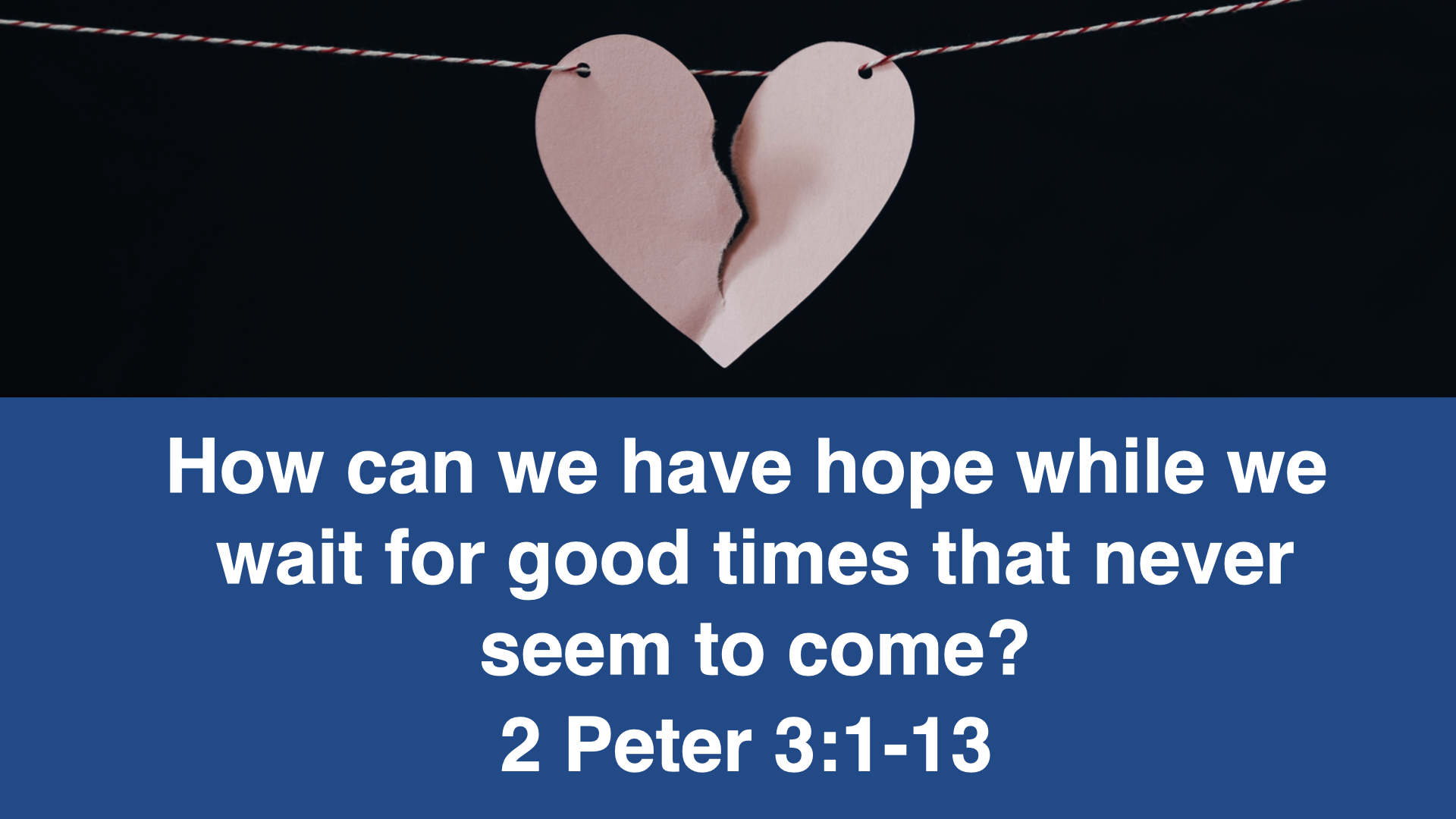
So, how can we have hope while we wait for good times that never seem to come? That’s what we’re going to be thinking about today, and let’s look at 2 Peter 3:1-13 to guide us in our reflections as we do that.
This is the second letter that Peter wrote to Christians in Asia Minor who are undergoing persecution. In his first letter, he was encouraging them to endure by assuring them that, with Jesus, they were on the winning team.
In this letter, Peter is dealing with something a little bit different. The people he’s writing to are still facing persecution. But in addition to that, there have been false teachers who have come into the church and are leading people astray. And they are doing it in a particularly insidious manner. What the false teachers are doing—to all the believers who are undergoing persecution and hoping for Jesus to come again—is ridiculing them for having that hope.

This is a major problem because, when you are facing persecution for your faith or facing injustice for any reason, the only thing that will help you endure is to trust that God is indeed good and just, and that one day, he is going to come down to this world and make all things right. As the prophet Amos has written, “Let justice roll on like a river, righteousness like a never-failing stream” (Amos 5:24). The reason why these false teachers are so toxic is because they are denying that God’s justice will come. If a believer allows their ridicule to shatter their trust in God’s justice, the hope that they need to endure persecution will be lost.
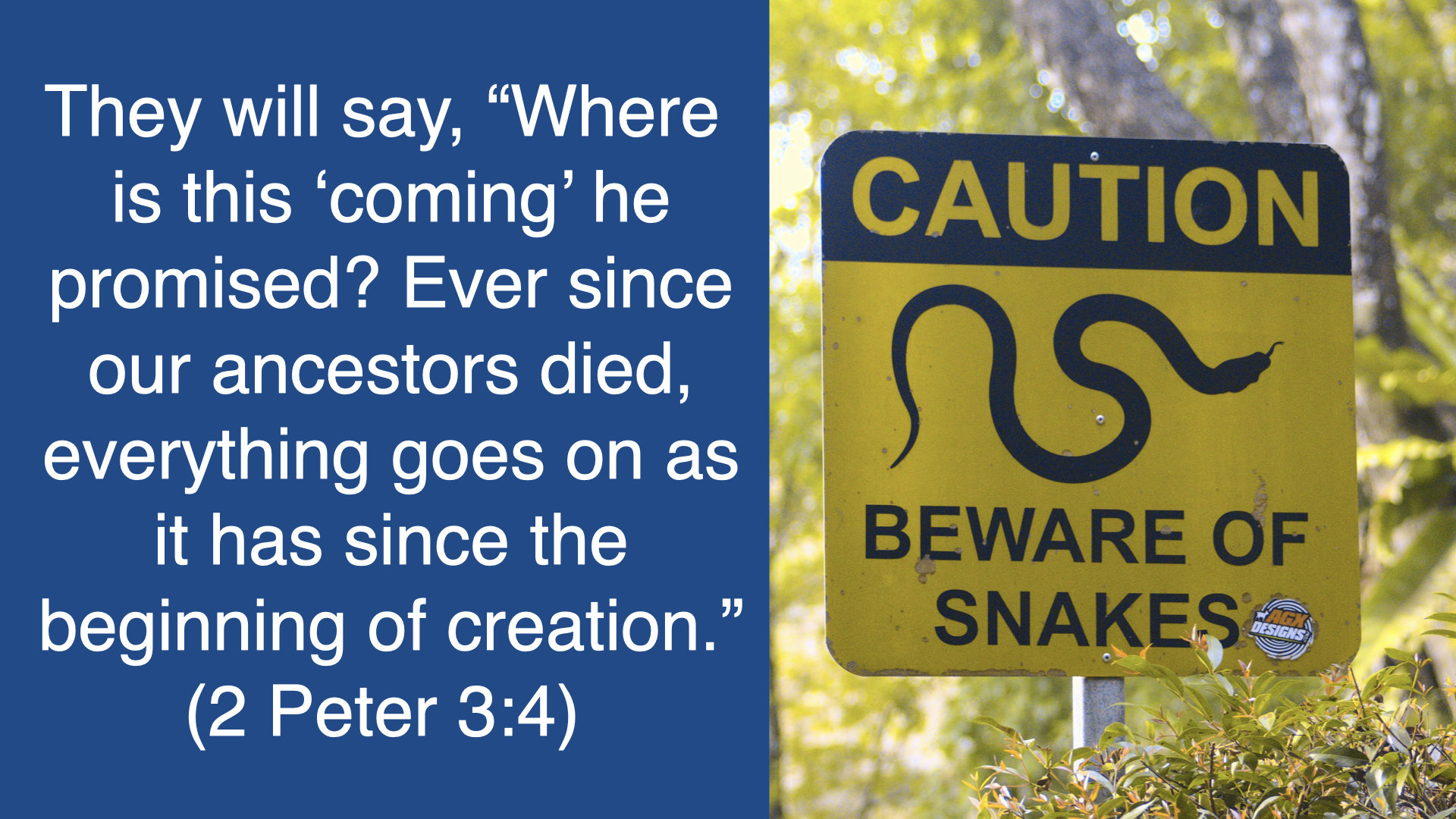
That’s why Peter warns his beloved friends about the scoffers. He writes,”They will say, ‘Where is “this coming” he promised? ever since our ancestors died; everything goes on as it has since the beginning of creation’” (2 Peter 3:4).
We, dear friends, have the exact same thing happening today because the predominant way of thinking in our society is that all that we see came into being by natural processes and anyone who believes that a supernatural being created what we see around us is considered unintelligent and uneducated.
However, if we believe what secular humanism tells us, which is to say that there is no room for miraculous intervention by a spiritual being, namely God, in the past, then what that means is there is no space for miraculous intervention by God in the future either.
So, we need to look to God for hope in facing tough times just like the readers of Peter’s second letter did.
To help us do that, Peter tells his readers, and us, that there are three special pillars to having a foundation of firm faith. When you build a building there are often pillars, or supports of some kind, that hold up the structure. In the same way, we need pillars that support our faith so it can be firm in the face of major challenges.
The first pillar that Peter directs us towards is that “Our God is a creating God.” He writes, “But they deliberately forget that long ago by God’s Word, the heavens came into being, and the earth was formed out of water and by water” (2 Peter 3:5). Peter is reminding his Gentile readers and us to go back and look in the Hebrew Scriptures, or what we call the Old Testament, and see how God created the world and all that exists by special creation, through his intention, design, and power. God has the power to make things happen just by saying so. We see that in his Word where we read, “And God said, ‘Let there be light,’ and there was light.” (Genesis 1:3).
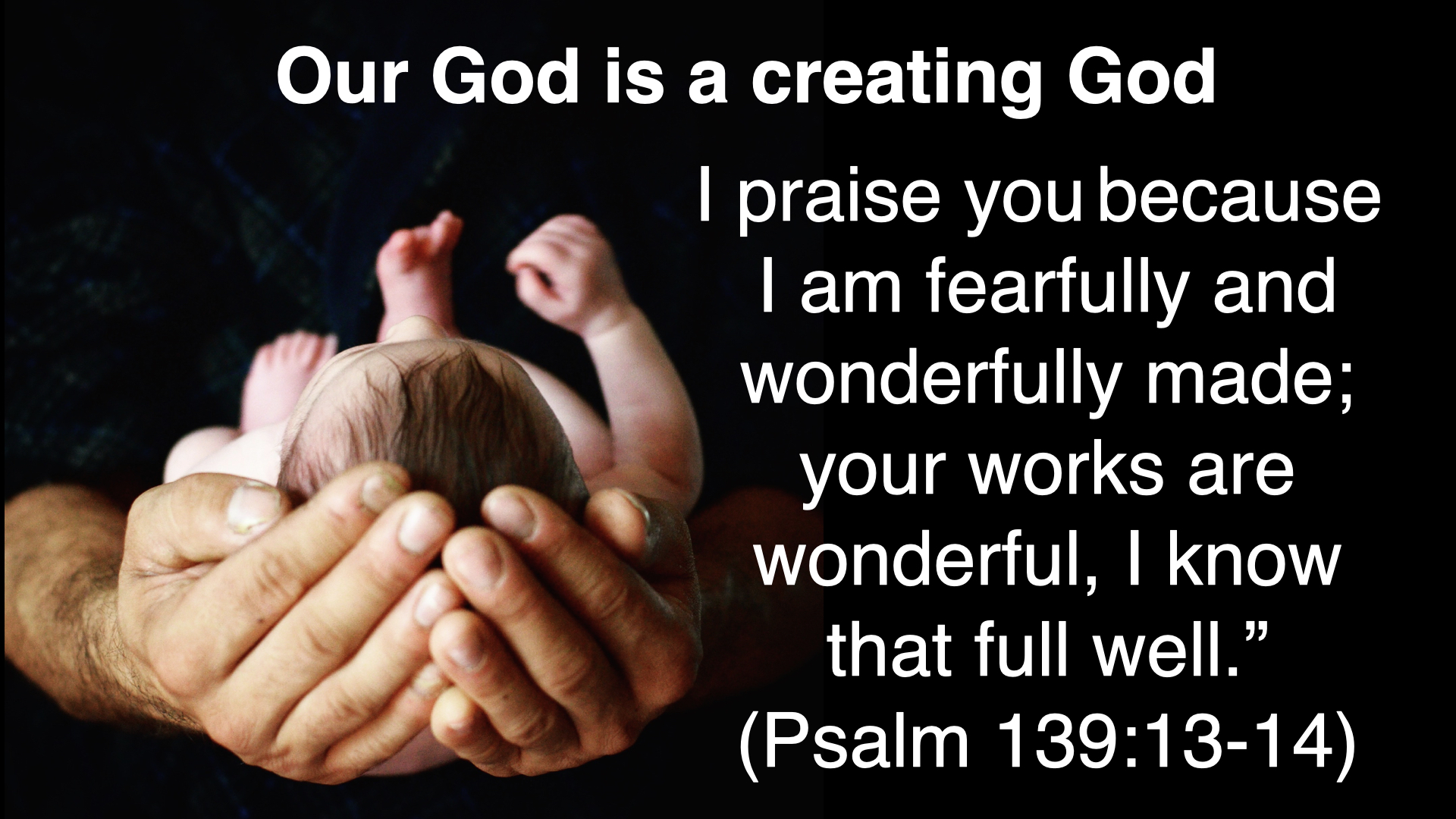
The implications of this are even bigger than the beginnings of the world because you are a unique special creation of a loving, intelligent, powerful God. Therefore, we can say with the Psalmist, “For you created my inmost being; you knit me together in my mother’s womb. I praise you because I am fearfully and wonderfully made. Your works are wonderful; I know that full well” (Psalm 139:13-14). Our hope is strengthened when we see ourselves and all around us as the handiwork of God.
The second faith-supporting pillar that Peter encourages us toward is that “Our God is a renewing God”. Peter introduces this pillar by writing these words, “By these waters, also, the world of that time was deluged and destroyed” (2 Peter 3:6). Here again, he’s referring back to the Old Testament, in the book of Genesis, when God renewed the world in the time of Noah. Back then, humanity had become so wicked that God told Noah to build an ark, and then God sent a flood to wash clean the face of the world and start over with Noah and his family. It was not an ultimate solution because Noah and his family passed on to all who followed them the sin they had inherited from our first parents, Adam and Eve. But what was important was that God preserved humanity and he also protected the promise he gave to Adam and Eve that he would send a Messiah who would make all things right.
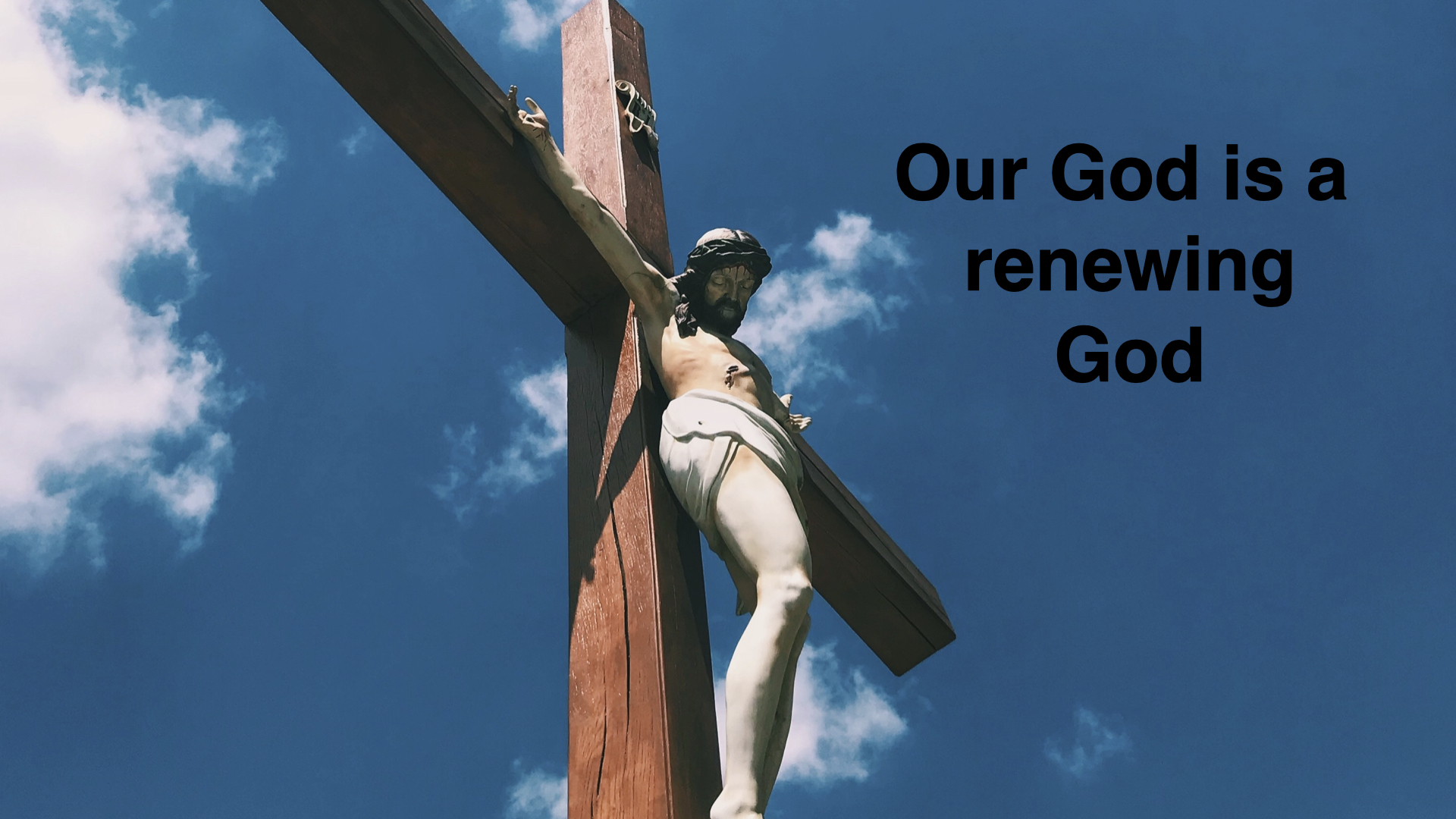
We see God’s renewing work in Noah, but we truly see it in Jesus.
Jesus is God the Son who came into the world, and this time, instead of allowing a cleansing action to come upon the world, God took it upon himself. Because he loves you, Jesus willingly went to the cross where he bore, for you and me, all of our sin, guilt, shame, and condemnation, and he destroyed its power over us as he suffered there. When that work of reconciliation was fully complete, only then did Jesus give up his life and die.
Now, that is not the end of the story and that is not the end of God’s renewing work. On the third day that followed his death, Jesus rose from the dead and with his resurrection, God began a new creation. And God’s new creation is both universal and personal. God began his new creation in you in the moment you believed—a new person has been brought to life by Jesus.
All of this is hidden from our eyes, and we can only say and believe this through the eyes of faith. So, as we look around at the world, it looks like nothing has changed. People are still lying, cheating, hurting, and even murdering one another. In the world, evil and suffering continue to unfold just as if nothing happened 2000 years ago. That’s what it looks like. But underneath the surface, God is doing his renewing work, and he is doing it in all of the people who trust in Jesus. God has promised us that, one day, what is now invisible to us will become visible. Jesus is going to come back to this world, and he will raise from the dead all those who look to him in faith. He’s going to restore and renew all the rest of creation, and we will get to live with him in the new heavens and earth forever. Jesus is going to come and make all things right, including you and me. We see God’s renewing work back in the Old Testament, we see it in the New Testament in what Jesus has done, but it’s also happening right inside of us right now and we can look forward to God’s renewing work in the future. So, our faith is strengthened when we see that God’s renewing work is underway.
The third pillar that Peter holds before us is that our God is a patient God. Sometimes God is so patient that his delay looks to us like inaction and it can seem like he’s not going to come. But when we adopt that view, we are failing to see what is behind God’s delay, which is love, mercy and grace. So, Peter writes, “But do not forget this one thing, dear friends: With the Lord, a day is like 1000 years, and 1000 years are like a day. The Lord is not slow in keeping his promise, as some understand slowness. Instead, he is patient with you, not wanting anyone to perish but everyone to come to repentance.” (2 Peter 3:8-9).
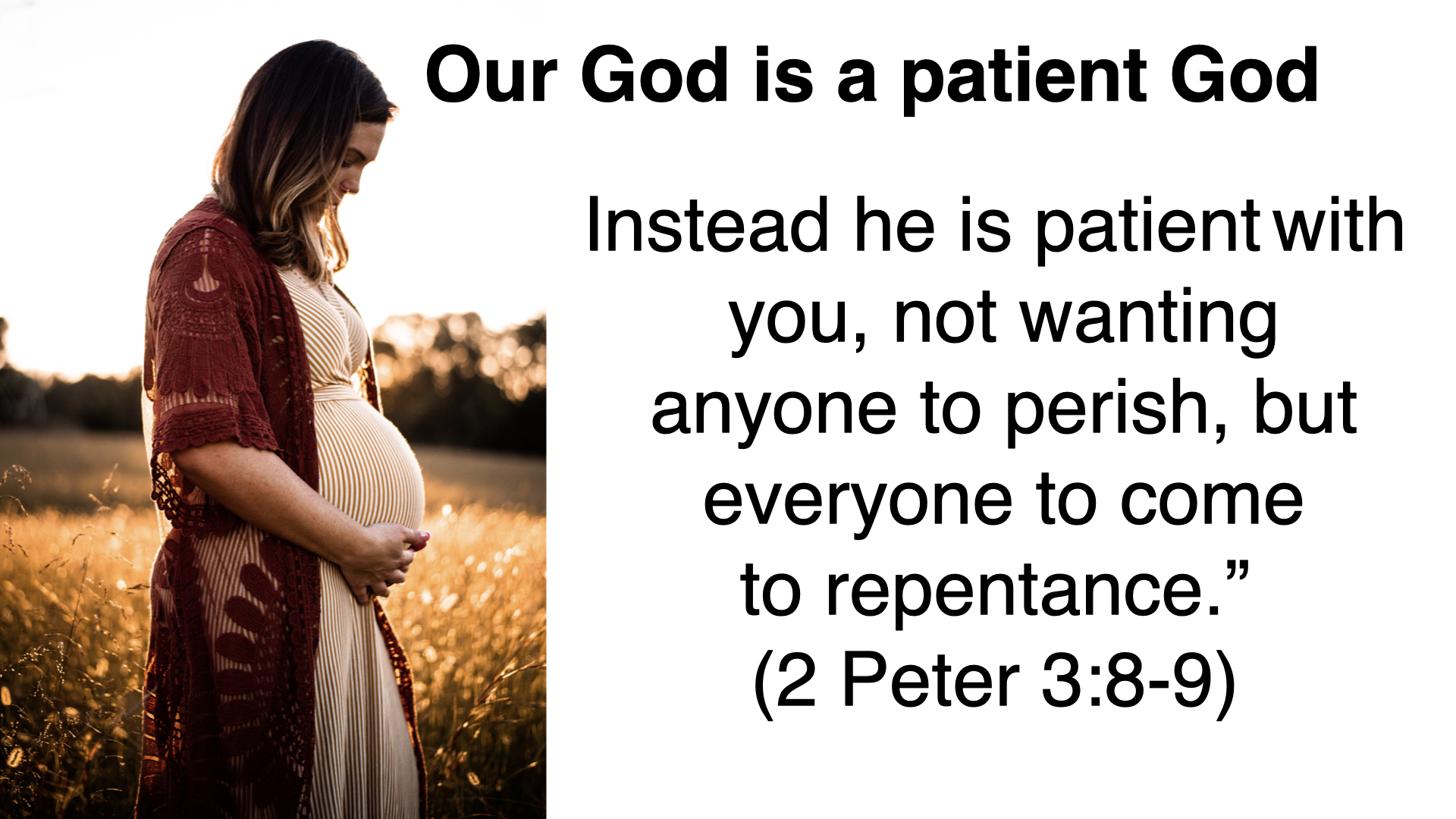
Dear friend, God has been patient with you and with me. He has waited until the moment when you believed in Jesus as your Lord and Savior and received from him the life that he wants to give to you. With our hearts set on God’s love, mercy, and grace, we can wait for other people to believe in and trust in Jesus as Lord and Savior and receive the life that he wants to give to them as well. Patience is what helps our hope to endure.
Now, what does this mean for us? Well, what it means is that a shift needs to take place in our lives. To be specific, we need to shift the focus of our hope and center it, not on our circumstances, but on God. God has already given you everything you need to have firm faith and hope: He has created you and all things, he has already planted the seeds of creation’s renewal within this world and within us through Jesus, and he will bring those seeds to fulfillment when the time is just right in the future.
Every Friday evening up until he died in 1973, an old man would go to the end of a pier on the east coast of Florida and feed the seagulls with a bucket of shrimp that he had purchased. That man was Captain Eddie Rickenbacker.
In 1942, he and his crew were flying in a B-17 airplane to New Guinea so Captain Rickenbacker could give a very important message to General MacArthur. They had to take an unexpected detour, which meant they had to fly through the South Pacific. That longer route caused the plane to run out of fuel and they had to ditch it in the ocean. The crew climbed into the life raft they had on the plane. But they soon ran out of food, and while they waited to be rescued large sharks would bump their boat with the hope of making a meal out of them.

One afternoon when it seemed like all hope had been lost, one of the crew read a devotion. Then Captain Rickenbacker settled down in the corner of the boat to have a snooze. He pulled his cap over his eyes, and as he was laying there and drifting off, he suddenly felt something land on his head. Even without looking, he knew it was a seagull. He opened his eyes and looked at the rest of the crew who were staring back at him with their eyes wide in amazement. That seagull meant food if Captain Rickenbacker could catch it. He caught the seagull, and the crew ate its flesh for nourishment, then used its intestines to catch fish for more food. Eventually, they were rescued. Captain Rickenbacker never forgot the seagulls. And that’s why every Friday night, he would go down to the pier with a bucket of shrimp and feed them in gratitude for that one seagull who gave up its life without struggle so that he and the rest of the crew could live.
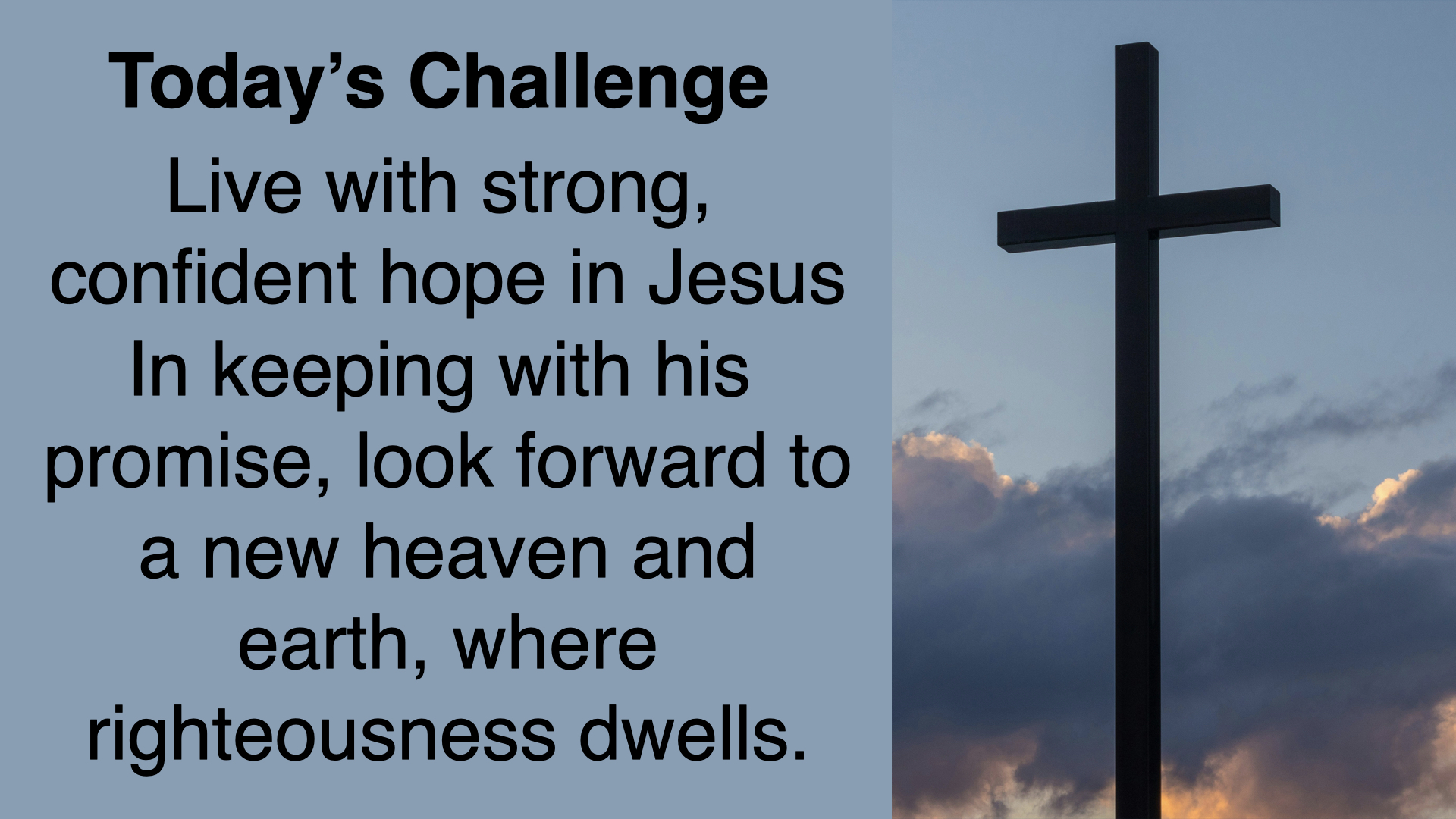
Dear friends, in a much, much greater way, Jesus Christ has given up his life for you without struggle so that you could live, and in Him, you are already living your eternal life. So, the life you have with Jesus right now is your assurance that he will indeed bring all things to fulfillment at the end of time. The challenge I want to leave with you is to live with strong, confident hope in Jesus and, in keeping with his promise, look forward to a new heaven and earth where righteousness dwells. Amen.

 Farewell to Shadowlands