

Have you ever assembled a piece of furniture from IKEA? Did you experience any stress or frustration while assembling a piece of furniture from IKEA? Would it give you any comfort to know that things could have been worse? The website hotukdeals.com conducted a study where they asked participants to assemble IKEA products while being hooked up to heartrate monitors. The product that raised participants heartbeats the most was the PAX wardrobe. This product is a complex closet organizer with lots of parts that need to be assembled in a very specific way in order to work properly. The average heart rate increase for participants was 20 percent (or 13 BPM) and only half of them were able to assemble the PAX wardrobe within the time limit.[i] In my experience in assembling IKEA furniture, the only way I can have any hope of successfully completing the project is if I religiously follow the directions that IKEA provides.

We know that assembling a complex piece of furniture will have a much better result when we follow the manufacturer’s instructions, but, for some reason, we try to live the one and only lives we have in this world, which is a far more challenging and complex operation with much more significant consequences both in the near and long term, without any help from our Creator. The results are often tragic because God was ready, willing and able to build our life into something far greater and more beautiful than we could ever develop on our own. So how do we receive and live the abundant life that God has in mind for us? To help us as we consider that question, we are going to reflect on Deuteronomy 6:1-12. If you have a Bible or a Bible app with you, I invite you to turn there now.
The Shema
As you are doing that, I will share with you some background information that will help you to better understand the passage. Most of the book of Deuteronomy is a sermon that Moses gave to God’s people shortly before they entered the Promised Land. In this sermon, Moses reminds the Israelites of all the things that God did for them from the moment when they left Mount Sinai, throughout all the forty years while they wandered in the wilderness up, and how he brought them to this point in their journey when they are about to cross the Jordan River and enter the land God promised to give to them. It is also good for us to be reminded from time to time of God’s love and care for us in the past and how he has brought us safely to this point in the present, on the verge of the future that will set before us.
Because much of Moses’ sermon is a retelling of what God has done in the past, some of the information in Deuteronomy is a repeat of the original record in Exodus and Numbers. For example, you can find the Ten Commandments in Exodus 20 and again in Deuteronomy 5. But Moses also includes new material, as any good preacher would do, to emphasize particular points or share new information as God has directed them. Our passage for today is in the category of new information from God through Moses.
It follows Moses’ retelling of the time when God gave his people the Ten Commandments, and here Moses is emphasizing the importance of the Ten Commandments and describing how they fit in to the lives of the Israelites as they live in relationship with the one, true God.
And at the center of his explanation of the law’s importance and purpose, Moses includes a couple of sentences that became some of the most important, if not the most important, in the Jewish faith. I am referring to Deuteronomy 6:4-5 which are often called the “Shema” because that Hebrew word, which means “hear”, is the first word in these very important phrases. Down through the centuries, Jewish males, at a bare minimum, were expected to recite these verses twice a day, in the morning when they get up and, in the evening, when they lie down for the night. Baby boys were taught the Shema as soon as they could speak, and when Jews confess their sins shortly before they die, the Shema is spoken at the conclusion. In this way, Jews are taught to have the name of God on their lips from early childhood to when they die.
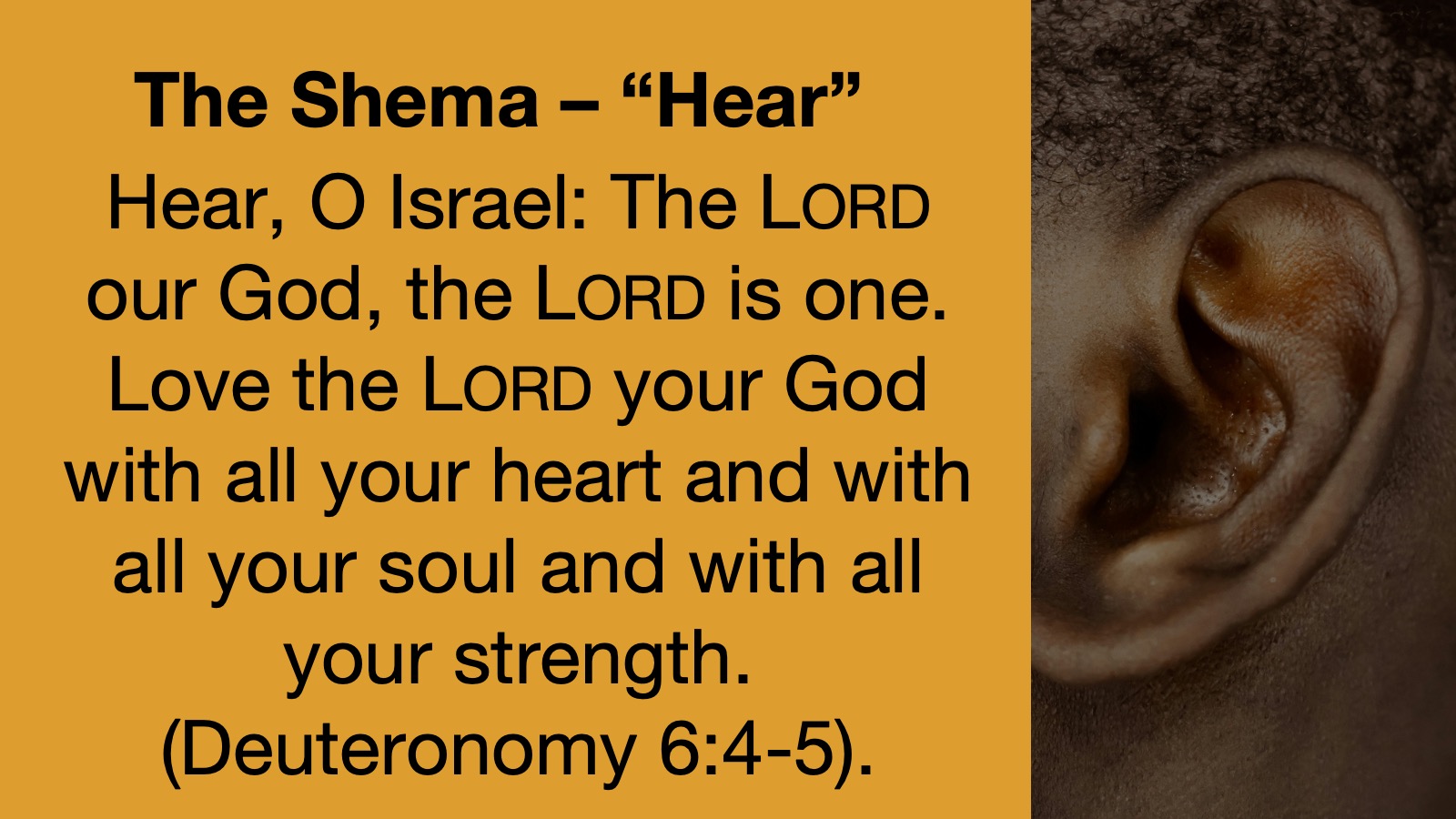
Perhaps it should not surprise us that Jesus, who was thoroughly Jewish, quotes part of the Shema and expands on it to speak some sentences that form what we call the Great Commandment and are some of the most important words, if not the most important, in the Christian faith. The Shema is: Hear, O Israel: The Lord our God, the Lord is one. Love the Lord your God with all your heart and with all your soul and with all your strength. (Deuteronomy 6:4-5). And Jesus’ expansion of the Shema is: Jesus replied: “‘Love the Lord your God with all your heart and with all your soul and with all your mind.’ This is the first and greatest commandment. And the second is like it: ‘Love your neighbor as yourself.’ All the Law and the Prophets hang on these two commandments.” (Matthew 22:37-40) The importance of the Shema in the Jewish religion and Jesus’ reemphasis of it during his time on this earth tells us that there is something very significant here that we need to have in our lives. So how is the Shema relevant to our lives today?
Relevance of the Shema
To answer that question, think back to what life was like for the Israelites. They had been in slavery for more than eighty years to forces that were determined to oppress, abuse, dominate, and even destroy them. The pattern of their daily lives, their quality of life, and their futures were all determined by their Egyptian slave masters. Then the one, true God humiliates Egypt and their pantheon of demonic gods and goddesses and miraculously saves the Israelites from death and frees them from slavery. Within 90 days, God brings the Israelites to Mount Sinai where he gives them the Ten Commandments.
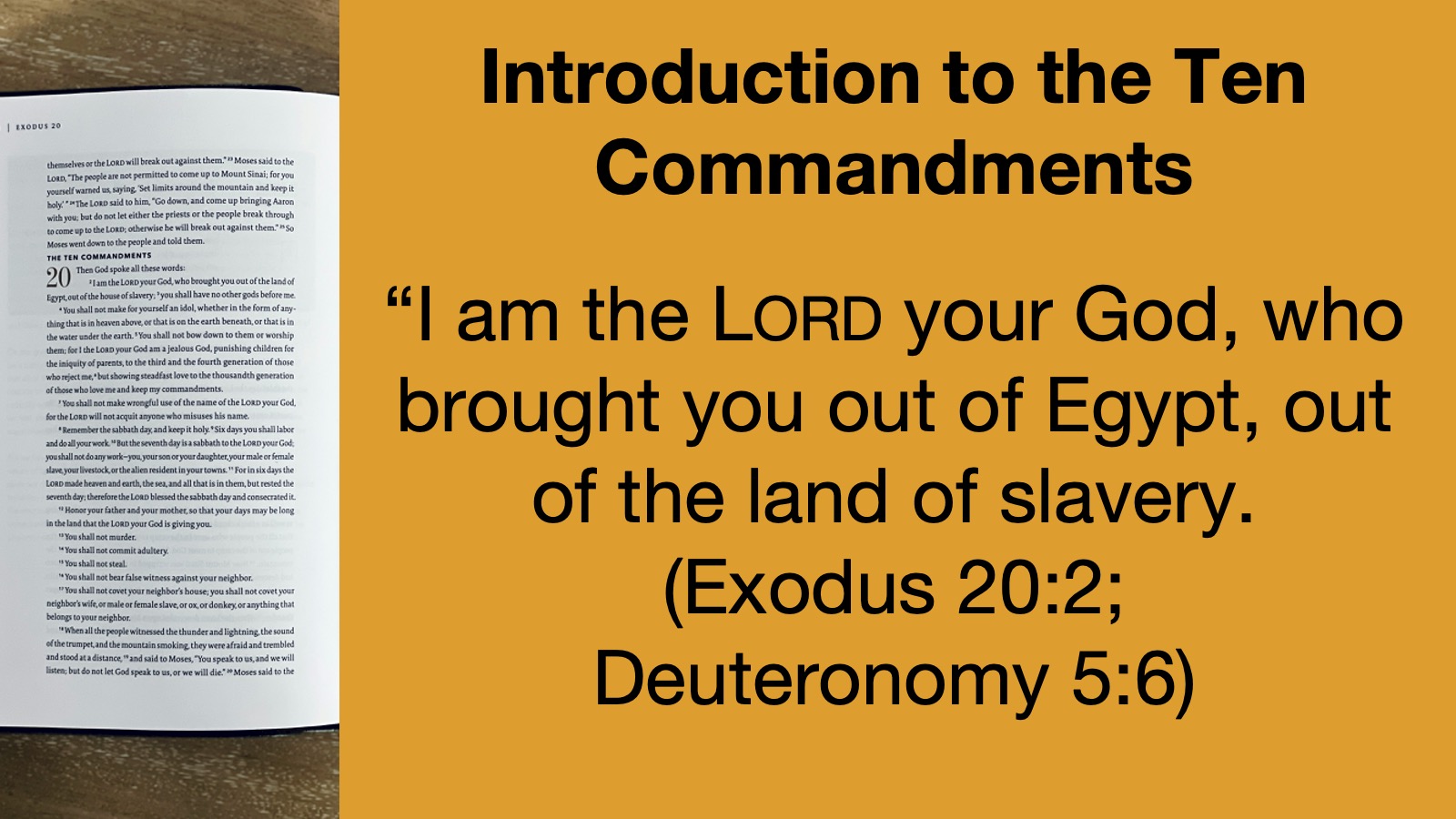
And in both Exodus 20 and Deuteronomy 5, the account of when God gave those Commandments starts off in this way: “I am the Lord your God, who brought you out of Egypt, out of the land of slavery. (Exodus 20:2; Deuteronomy 5:6) In this introduction, God is communicating three things: First, his identity. I am the LORD, and whenever you see the word “LORD” in capital letters in the Old Testament, that means that the Hebrew word being translated is Yahweh. So God is saying here, “I am Yahweh” the one, true God who is the source of all existence, the God of action who creates, loves and rescues.
Second, God is communicating his relationship with his people. He is saying to the Israelites, “I am your God”. The Egyptians and their gods did not have your best interests at heart, but I do. Even when you were impoverished, oppressed, helpless, and you have been disobedient, rebellious, and contemptuous towards me, I unconditionally love you. And I am inviting you to love me as your God in return.
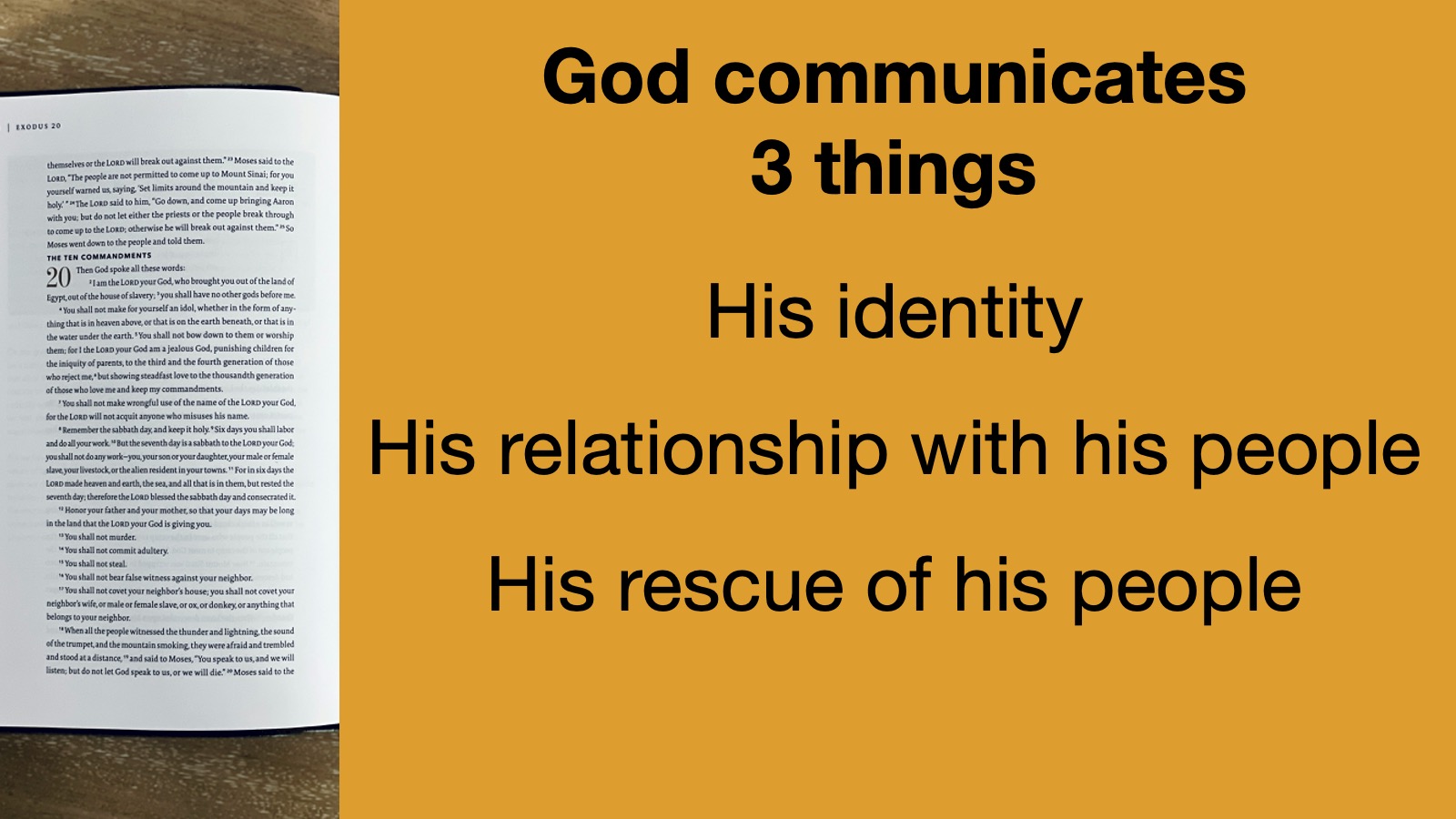
Third, God is reminding his people of how he rescued them by saying, “I am the One who brought you out of Egypt, out of the land of slavery.” This is how God demonstrates his love for his people, by stepping into human history in a miraculous way and personally taking action so that his people can move transition from life in slavery to life in freedom. In a very real sense, the Israelites life with God began when they were set free.
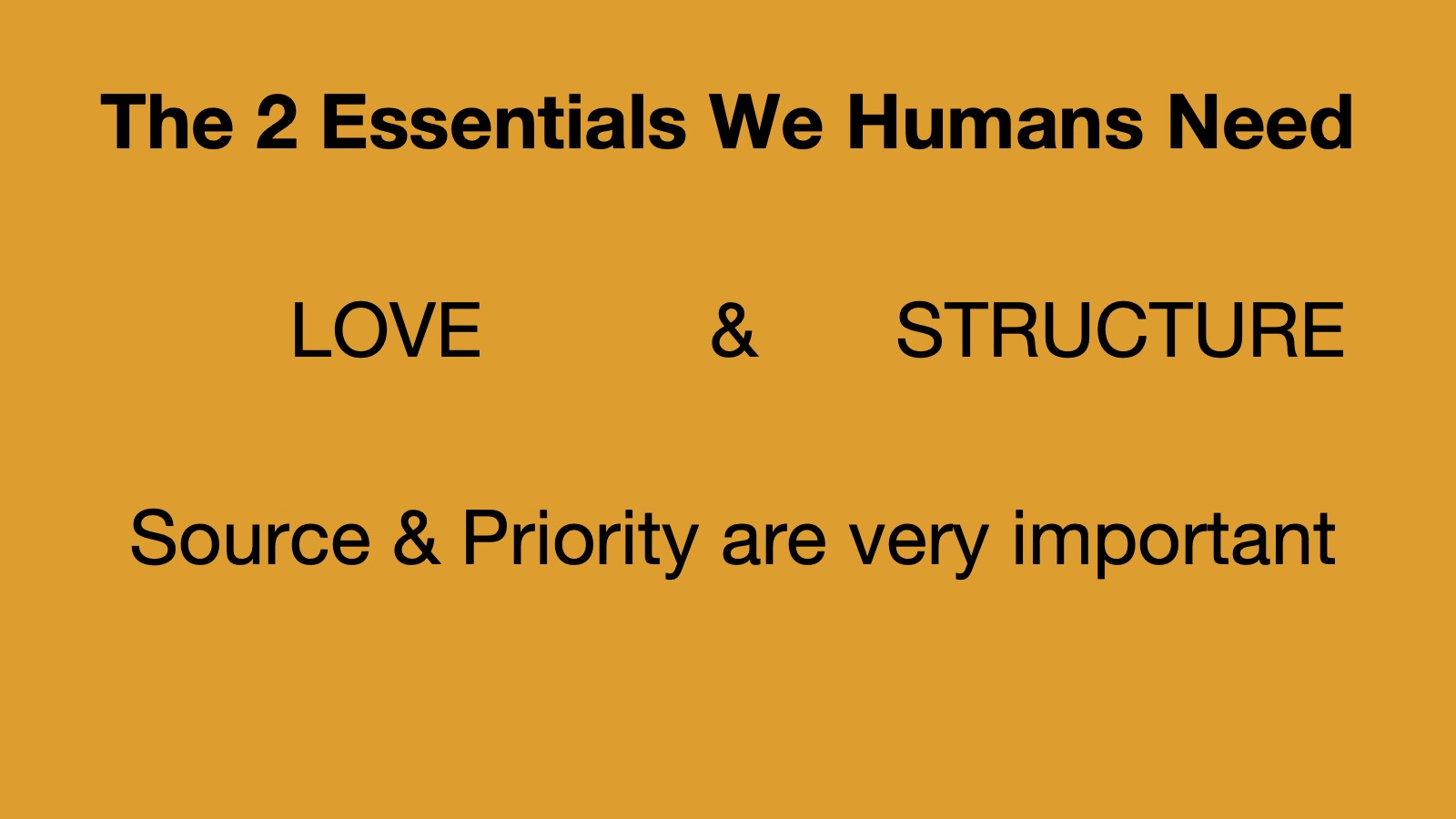
What these three things do—the divine identity of God, human relationship with God, and human rescue by God—is create a context of love for what comes next: the Ten Commandments. And what the Ten Commandments do is provide structure for the Israelites. When they were in slavery in Egypt, it was their slave masters that imposed structure on the Israelites’ lives. But now that they were free, the Israelites had to learn how to live in a new way, and so God gave them that new way to live.
That’s why Moses wrote: These are the commands, decrees and laws the Lord your God directed me to teach you to observe in the land that you are crossing the Jordan to possess, so that you, your children and their children after them may fear the Lord your God as long as you live by keeping all his decrees and commands that I give you, and so that you may enjoy long life. Hear, Israel, and be careful to obey so that it may go well with you and that you may increase greatly in a land flowing with milk and honey, just as the Lord, the God of your ancestors, promised you. (Deuteronomy 6:1-3) God gave to his people the structure of the Ten Commandments so that they could flourish and live an abundant life in freedom under his loving care.
And the grace God’s people experienced in their rescue would continue in their life of freedom. Later in the passage, Moses writes: When the Lord your God brings you into the land he swore to your fathers, to Abraham, Isaac and Jacob, to give you—a land with large, flourishing cities you did not build, houses filled with all kinds of good things you did not provide, wells you did not dig, and vineyards and olive groves you did not plant—then when you eat and are satisfied, be careful that you do not forget the Lord, who brought you out of Egypt, out of the land of slavery. (Deuteronomy 6:10-12) All the good things that the Israelites would enjoy in the Promised Land were not things that they deserved or earned. They were all gifts given to them by God. There is a tendency for human beings to forget God when they become prosperous, and so part of the structure that God’s people need to have in their lives is to remember God’s identity, our relationship with him, and his rescue of us.
The Two Essentials We Need: Love & Structure
Dear friends, the Shema and Jesus are telling us that the two essentials that we human beings need in our lives are love and structure. But the source and the priority of that love and structure are very important. The source needs to be Yahweh, the God who shared his identity, relationship and rescue with his people before he gave them the structure they needed to live in his love. And the order in which God did that indicates to us that the priority with love and structure always needs to be with love. Structure without love is slavery, like the Israelites experienced in Egypt, like we experience when we get addicted to food, substances or behaviors. And love without structure isn’t really love at all. It is like a vine without a trellis to train it. It grows along the ground wherever it wants, but any fruit it produces is rotten. But with a solid trellis to support it, a grapevine can produce abundant amounts of high-quality fruit. We need both love and structure.

But the love which God has for us, love which we receive so it can transform us from the inside out, always needs to be primary in our heart, soul, strength, and mind. Only God’s love can change us into being people who love him in return, and gladly accept and live by the structure he gives us because we know that it is good for us and others. God’s love and God’s structure. That is how we live the abundant life he wants to give to us. But the main focus, from start to finish, is always on God’s love.
Our Huge Advantage
Though we worship the same God as the Israelites, we have a huge advantage over them in that we know that same God much more fully than they did because we know God through Jesus. Jesus is God the Son who came into this world and became fully human so that he could reveal God the Father to us and pour out God the Holy Spirit over us.
We also know much about the rescue we have in Jesus. It’s more than freedom from slavery and a land of our own. Jesus suffered and died on a cross to pay the full cost of our forgiveness so we could be free from our slavery to sin, death, and condemnation and enjoy life with him forever.
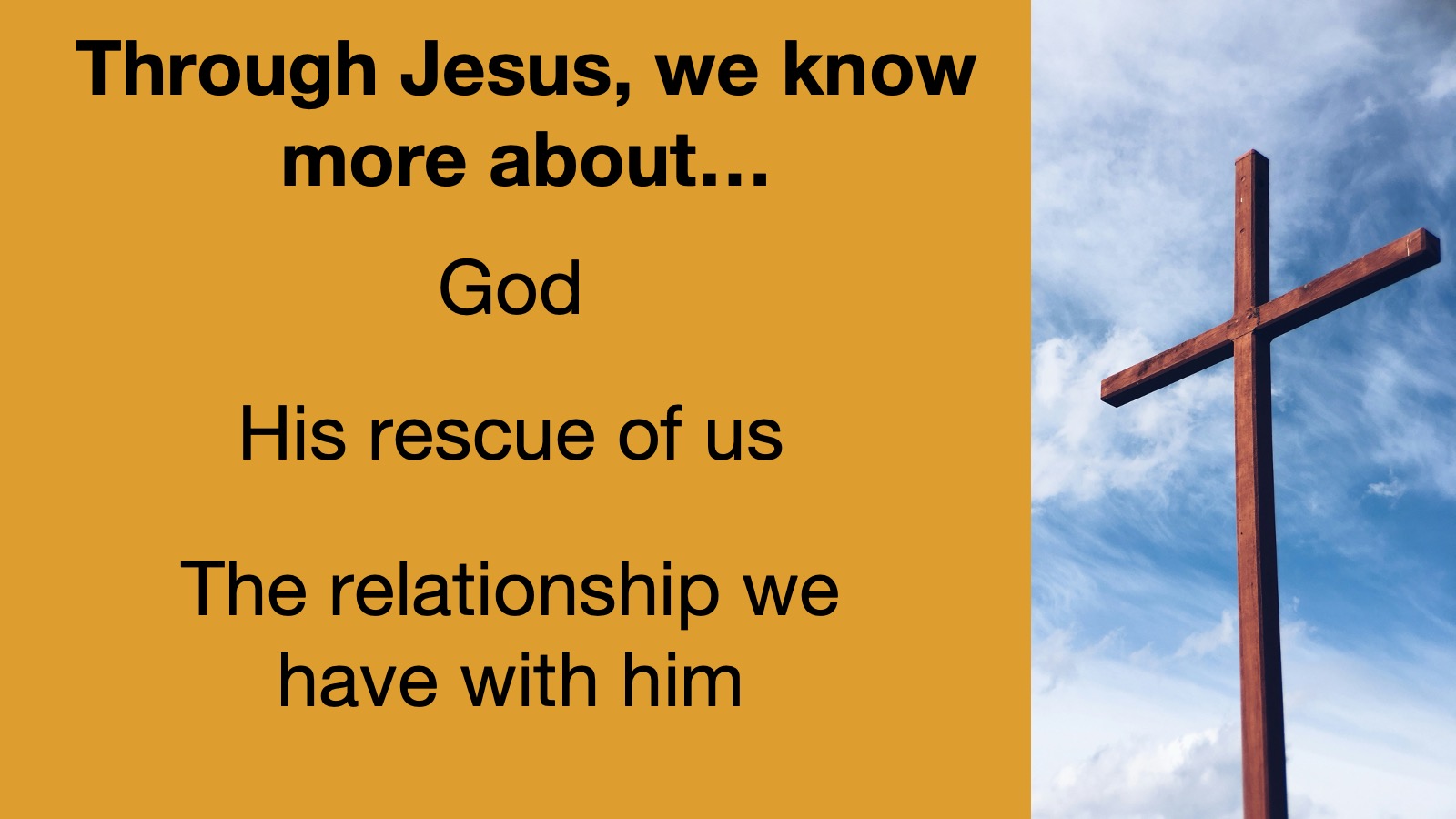
And we know more about the close, personal relationship we have with God through Jesus. Jesus is the ideal human being who is transforming us more and more into his likeness every day. During our time in this life, it is an inner transformation that progresses even was we outwardly waste away. But one day, Jesus will return to this world to transform all outward reality as well. He will raise us from the dead, restore and renew all creation and we will get to live with Jesus forever in the new heaven and earth to come.
So the challenge that I want to leave with you is this: First, focus on Jesus’ great love for you. Constantly remember who Jesus is, how he has rescued you, and the loving relationship you have with him. Second, respond to Jesus’ love by adopting the structure he gives you for your life. And your life will be abundant because you will have more of Jesus in it. Amen.
[i] “This is IKEA’s Most Stressful Product to Assemble, Says One Study,” Apartment Theory (Internet; available at: https://www.apartmenttherapy.com/ikea-most-stressful-product-assemble-37231625; accessed February 15, 2024).
(This message was shared at Walnut Grove Lutheran Church in Langley BC on February 25, 2024. For more information about our church, please go to wglc.org.)

 Farewell to Shadowlands