

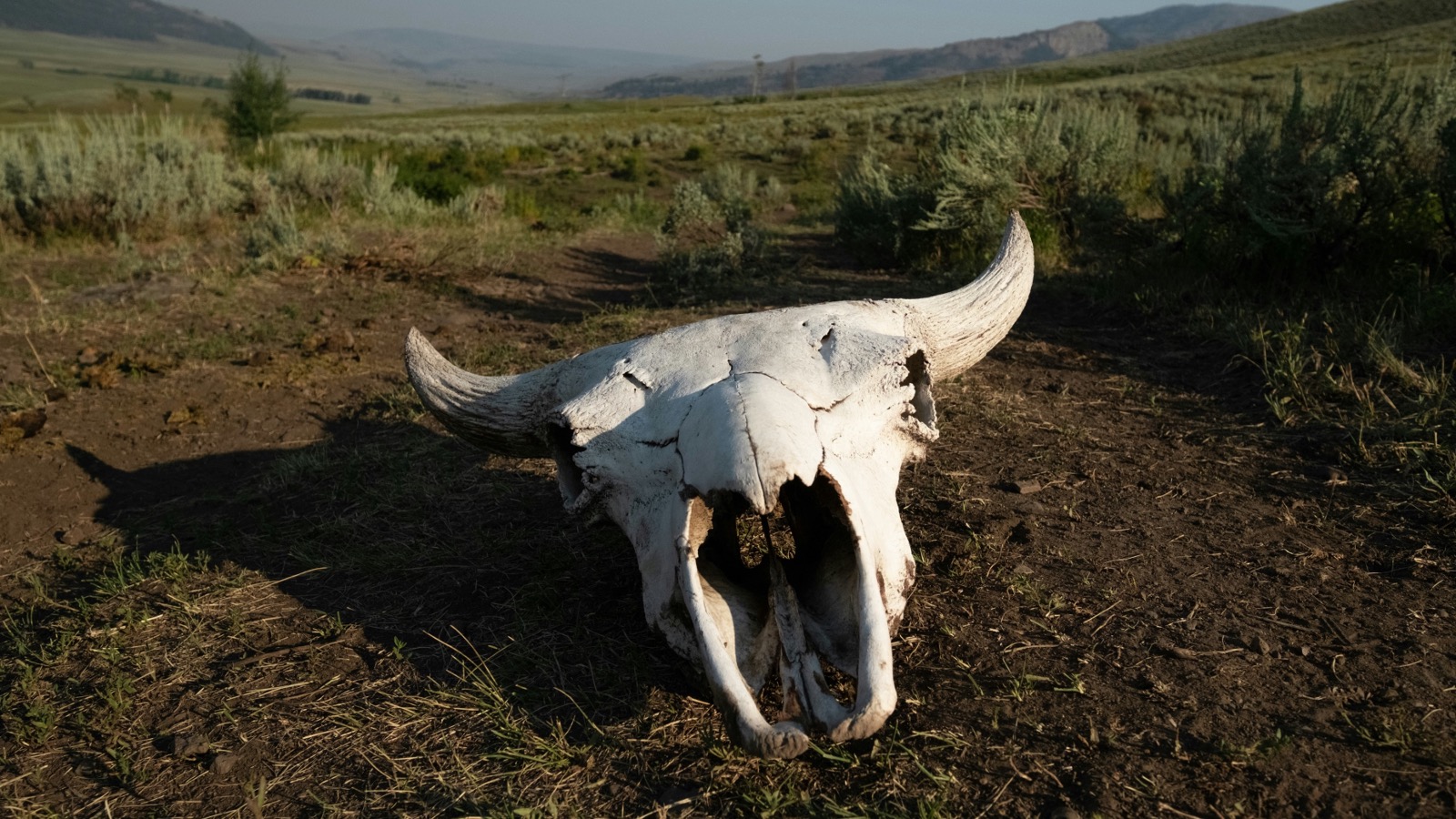
When you grow up on a farm, you learn the realities of life and death in ways many people today never experience. On the prairies, every farm with cattle had a dead pile. When an animal died, someone had to haul the carcass out there and leave it. And as a kid, you learned quickly what death meant when the chicken you fed yesterday ended up on your dinner table today.
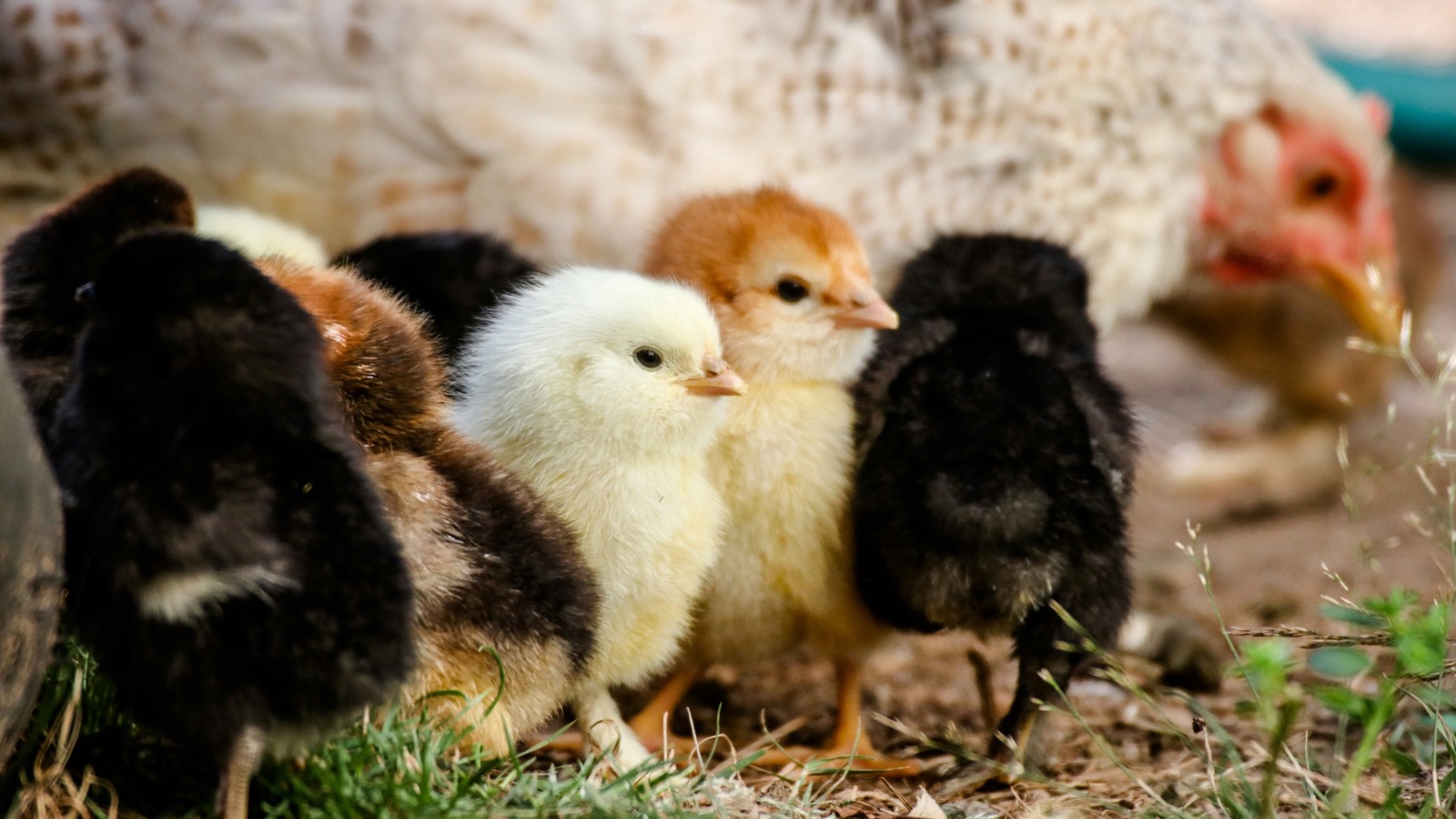
But life on the farm wasn’t only marked by death. It was also full of new life. You watched seedlings push through the soil and turn a brown field into a carpet of green. You heard baby chicks peeping as they followed their mother hen around the yard. And sometimes you were right there when a calf took its first breath — after you pulled it from its mother’s womb and wiped the mucous from its nostrils so it could live.
Growing up that way teaches you something important: you’re part of a pattern bigger than yourself. A pattern of life and death that existed long before you were born and will continue long after you’re gone. And for a little while, God places a small piece of that pattern in your hands to steward — to care for, to cultivate, to bring life from the land — a reminder that God’s world is meant to flourish.
The further many of us get from the farm, the more unfamiliar we become with this pattern — especially the death part. Death is a future reality for all of us, but we don’t like to think about it. We sanitize it. We avoid it. We push it out of sight and out of mind.
And when we do, three things happen: we undervalue the preciousness of life we are unprepared for death when it comes we forget to live in the hope Jesus has given us
So how do we become the kind of people who face death honestly, value life deeply, and live with confident hope in the new world that is coming?
To answer that, we turn to Revelation 21:1–6.
God Is Bringing a New Creation, Not an Escape
John writes: “Then I saw a new heaven and a new earth…” (Revelation 21:1)
These words are central to the Christian hope. John is not describing the end of creation — he is describing the renewal of creation. Not God abandoning the world, but God restoring it. Not us escaping earth, but heaven coming here.
This is the moment the entire biblical story has been moving toward.

From Genesis onward, God’s intention has always been to dwell with His people in a world filled with His presence, beauty, and life. Sin fractured that relationship. Death entered the story. Creation was subjected to decay. But God never abandoned His plan.
And here, in Revelation 21, John sees the fulfillment of that plan.
The “new heaven and new earth” are not brand‑new in the sense of replacement — they are renewed, restored, transformed. Like a seed that goes into the ground and rises as something more glorious, creation itself will pass through death into resurrection.
And notice the direction of movement: “I saw the Holy City… coming down out of heaven from God.” (Revelation 21:2)
Not us going up. Not escape. Not evacuation.
God comes down.
This is the ultimate fulfillment of the prayer Jesus taught us: “Your kingdom come, your will be done, on earth as in heaven.”
Every time we pray those words, we are praying for this moment.
This is not escape. This is new creation. And it is the foundation of our hope.
God Will Heal Every Wound and Make All Things New
John hears a loud voice from the throne: “Look! God’s dwelling place is now among the people…” (Revelation 21:3)
This is the heartbeat of the new creation — God with us, fully and forever.
Then comes one of the most beautiful promises in Scripture: “He will wipe every tear from their eyes…” (Revelation 21:4)
These words are not symbolic. They are not poetic exaggeration. They are God’s promise.
And notice the tenderness: God doesn’t send an angel. He doesn’t hand you a tissue.
He wipes your tears Himself.
The hands that shaped the universe… The hands that were pierced for your salvation… The hands that hold all things together…
Those same hands will one day touch your face and wipe away your tears.
And when He does, death will be no more. Not less painful. Not less frightening. No more.
Then God declares: “Behold, I am making all things new.” (Revelation 21:5)
This is resurrection language. Restoration language. The language of a God who refuses to let death have the final word.
And then: “It is done.” (Revelation 21:6)
The future is secure. The new world is guaranteed. This is the hope that steadies us.
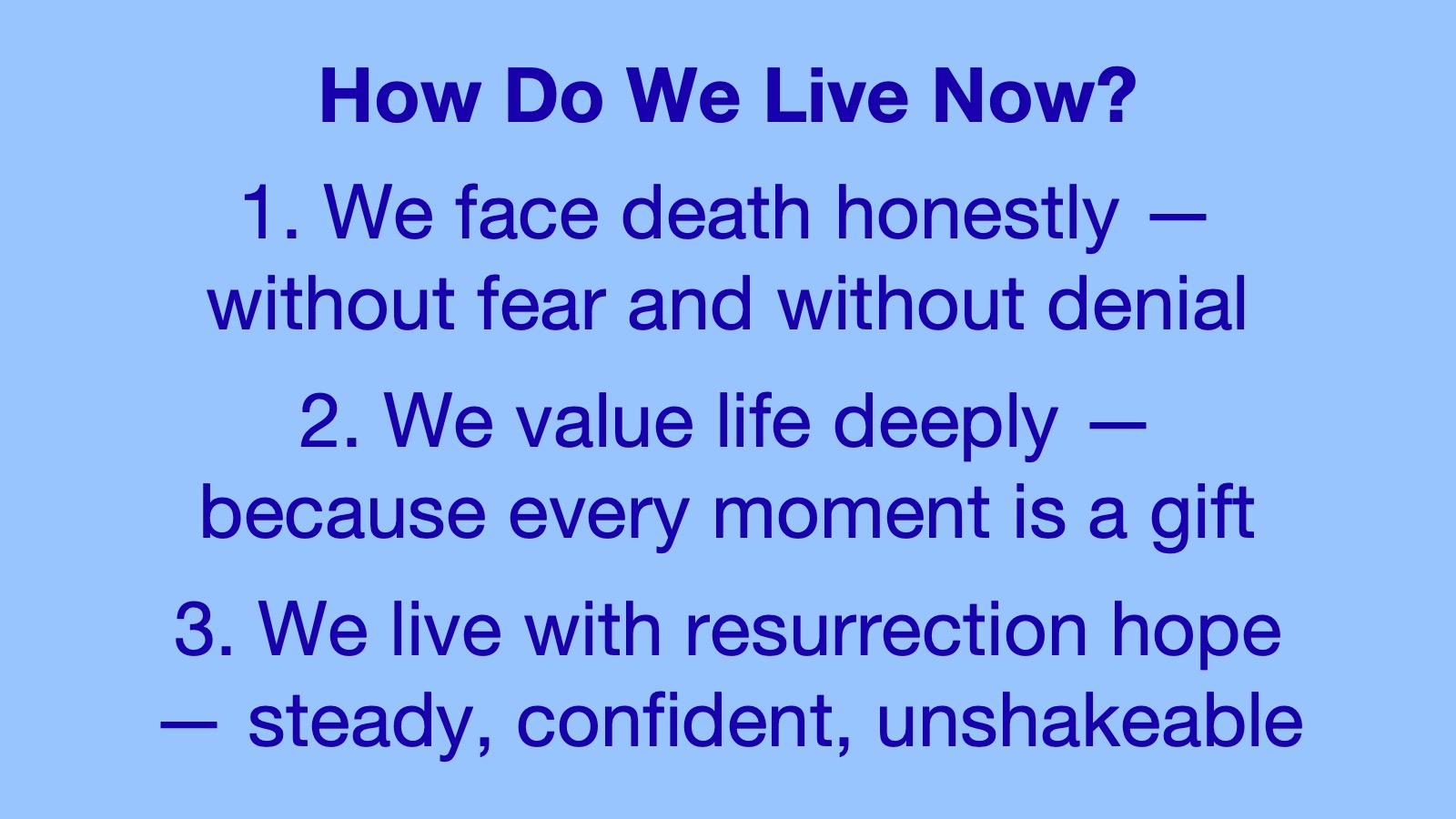
Application — How Do We Live Now?
If this is the future God has promised… If this is the world Jesus is bringing… If this is the hope secured by His death and resurrection…
Then how do we live in the world as it is today?
Revelation 21 is not just a picture of the future. It is a call to live differently in the present.
Here are three ways this vision forms us.
1. We face death honestly — without fear or denial
Because death will be no more, we don’t have to pretend it isn’t real now. We can talk about it. Prepare for it. Grieve honestly. Walk with others through it.
Christians are not people who avoid death. Christians are people who look death in the eye and say:
“You are real, but you are not final.”
2. We value life deeply — because every moment is a gift
If God is making all things new, then every breath is precious. Every relationship matters. Every act of love echoes into eternity.
Christians should be the most grateful people on earth — not because life is easy, but because life is sacred.
3. We live with resurrection hope — steady, confident, unshakeable
Hope is not optimism. Hope is not wishful thinking. Hope is the settled confidence that the One seated on the throne is making all things new — and He will finish what He started.
This hope steadies us in suffering. Anchors us in grief. Strengthens us in trials.
The World That Is Coming
We live in a world where death feels normal — and yet it never feels right. Something in us whispers, “This is not how it’s supposed to be.”
Revelation 21 answers that whisper with a shout of hope.
Imagine a world where grief is a memory where hospitals are empty where funerals are unnecessary where cemeteries are obsolete where every tear is wiped away where every wound is healed where every longing is fulfilled.
Imagine a world where God Himself dwells with His people — face to face.
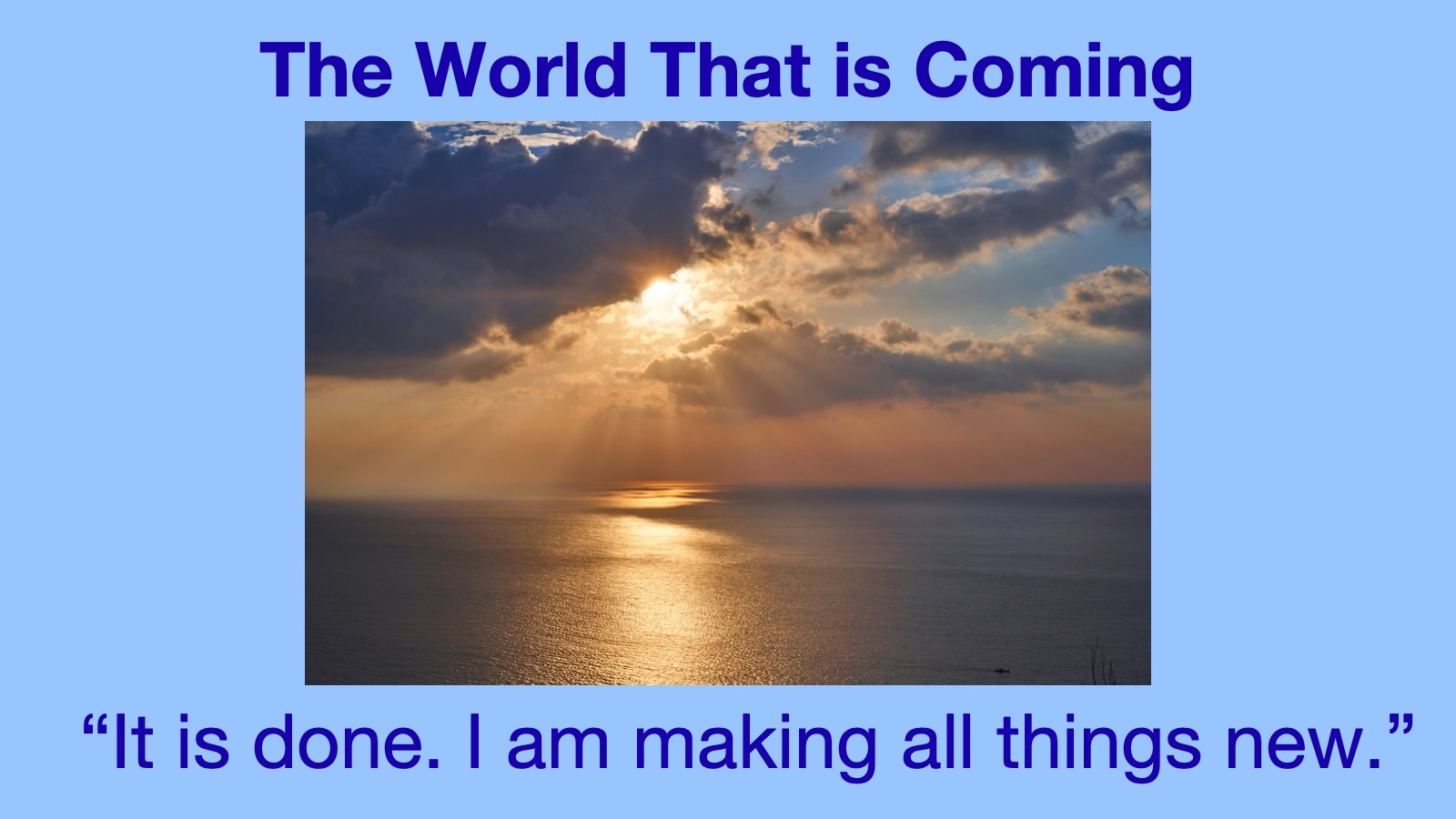
Imagine hearing Him say: “It is done. I am making all things new.”
Imagine the moment when the hands that were pierced for your salvation reach out and wipe away your tears — not just the tears you cry that day, but the tears you have cried your whole life.
That world is coming. And because it is coming, we can live differently now.
Action — Live as Citizens of the New Creation
So what do we do with all of this?
We begin living now the way we will live then.
Here are three invitations.
1. Live with open hands
Release bitterness. Let go of fear. Forgive freely. Trust God with what feels fragile.
Open hands are the posture of people whose future is secure.
2. Live with open eyes
Look for signs of the new creation breaking in:
every act of kindness every reconciliation every answered prayer every moment of beauty
These are foretastes of the world God is bringing.
3. Live with open hearts
Practice the love of the new creation now.
Serve the vulnerable. Comfort the grieving. Walk with the lonely. Speak hope into despair.
Open hearts make us living previews of God’s future.
So Here Is the Invitation
Live today as someone who belongs to the world that is coming.
Let the hope of Revelation 21 shape how you grieve, how you love, how you forgive, how you endure, how you worship, and how you live your ordinary, everyday life.
Because the One seated on the throne has spoken: “Behold, I am making all things new.”
And when God says it… it is as good as done.
Amen.


