

When the ground shakes
Trains have followed me around for most of my life. Nearly everywhere I have lived, I have been able to hear one. That’s no surprise on the Prairies, where trains are the economic lifeblood. Grain, potash and coal go out by train, and cars and other manufactured goods come in the same way.
But I wasn’t expecting trains to be part of my life when my family and I moved to the Lower Mainland, one of the largest metropolitan areas in Canada. So imagine my shock when I was lying in bed one night, minding my own business, and started to feel vibrations. I wondered, “Is this what an earthquake feels like?” Then I heard a train horn in the distance, and I realized a train was shaking my bed. But I couldn’t figure out why.
A little research gave me the answer: the soil under our house. We live near the Fraser River, on sediment laid down over thousands of years, with a high water table. It’s what’s called a soft soil, and soft soils pass vibrations along readily. We can even feel big trucks going by.
Trains and trucks are not the real concern with soft soil, though. When an earthquake comes, soft soil liquefies, and the result is devastation. So those of you on stiffer ground shouldn’t be surprised if, after the Big One, my family shows up on your doorstep wanting to move in.
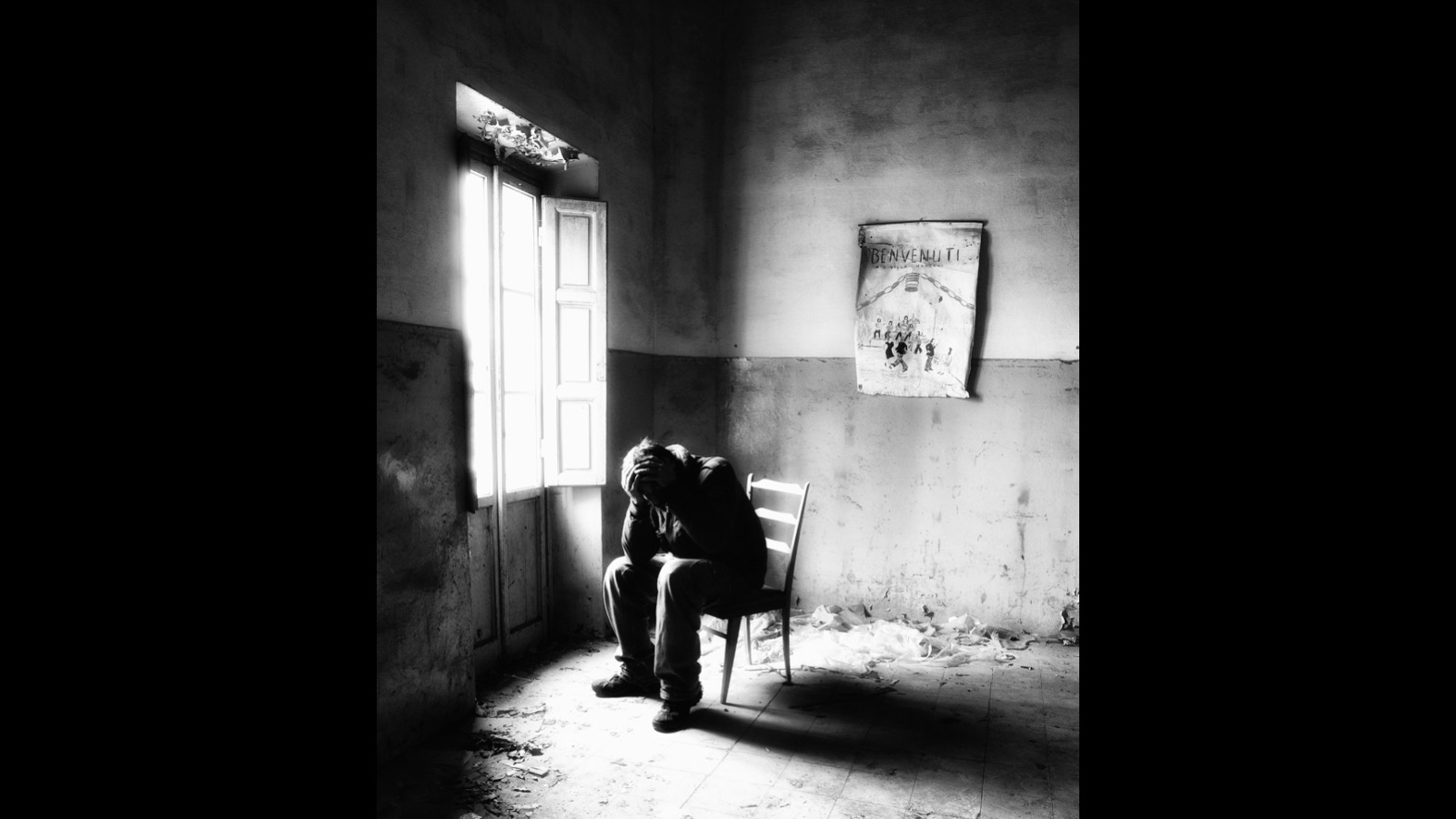
Live long enough in this world and you will feel the ground shake beneath you. We flounder and fail, disappointing ourselves and others. Calamities of various kinds befall us. And death is never more than a heartbeat away. When the ground shakes, the soil beneath us determines our destiny. Soft soil brings devastation. Bedrock holds us up forever.
So here is the question: Where can we find a soil that will support us through all the shaking this life can throw at us and carry us to a glorious future? For God’s answer, we turn to Hebrews 12:18–29.
Through Jesus, we have come to a mountain of joy, not terror
All through this series, the writer of Hebrews, inspired by God’s Holy Spirit, has been telling us that Jesus is greater. He is greater than the angels and greater than Moses. He is the great high priest whose once-for-all sacrifice means we can approach God with confidence. Now the writer brings it all to a head by setting two mountains side by side.
The first is Mount Sinai, where God gave the Ten Commandments. The writer doesn’t dwell on the commandments. He dwells on what it felt like to be there. It was a real mountain of rock and earth, something you could reach out and touch. Yet no one dared, because it burned with fire and was wrapped in darkness, gloom and storm. A trumpet blast grew louder and louder, and a voice spoke words so overwhelming that the people begged God to stop. If even an animal touched the mountain, it had to be stoned. The sight was so terrifying that everyone in the camp of the Israelites trembled.
Exodus 19 tells us why:
Mount Sinai was covered with smoke, because the LORD descended on it in fire. The smoke billowed up from it like smoke from a furnace, and the whole mountain trembled violently. (Exodus 19:18)
Did you catch that? The whole mountain trembled violently. Israel stood at the foot of that mountain and felt the ground shaking under their feet. If a passing train can keep me awake wondering about the Big One, imagine standing at the foot of Mount Sinai!
And the shaking wasn’t the scariest part. What shook that mountain was the presence of a holy God. Every flash of lightning and every peal of thunder said the same thing: Keep back. Don’t come any closer.
That was the old neighbourhood where God’s people used to live, and it was part of God’s plan. He had just rescued his people from slavery in Egypt. They needed to learn that the God who saved them is holy, and that sinful people cannot simply wander into his presence. That lesson still matters. But the writer of Hebrews tells his readers, and us, that this is no longer where we live:
But you have come to Mount Zion, to the city of the living God, the heavenly Jerusalem. You have come to thousands upon thousands of angels in joyful assembly, to the church of the firstborn, whose names are written in heaven. You have come to God, the Judge of all, to the spirits of the righteous made perfect, to Jesus the mediator of a new covenant, and to the sprinkled blood that speaks a better word than the blood of Abel. (Hebrews 12:22–24)
When we moved to the Lower Mainland, I had no idea what kind of ground was under our house until it started to shake. But when God moves us through faith in Jesus, he knows exactly where he’s putting us: on the most solid ground there is.
Look at who lives in this new neighbourhood:
- The city of the living God, filled with angels in joyful assembly. At Sinai there was a storm. On Zion there is a festival!
- The church of the firstborn, whose names are written in heaven. That’s the whole people of God. If you belong to Jesus, your name is on that list. You are not a visitor. You are family.
- God, the Judge of all. God hasn’t become any less holy. That should make us ask: if this is the same holy God, how are we allowed anywhere near him?
- The spirits of the righteous made perfect. These are the believers who have gone before us, now complete in Jesus Christ.
- Jesus, the mediator of a new covenant, and his sprinkled blood. And that’s how we can come near.
The better word
Remember Abel, Adam and Eve’s son, murdered by his brother Cain? God told Cain that his brother’s blood was crying out from the ground (Genesis 4:10). Abel’s innocent blood cried out for justice. It said: Guilty.
Jesus was innocent too, handed over and put to death by the very people he came to save. If any blood had the right to cry out Guilty, it was his. But listen to what he said from the cross: “Father, forgive them” (Luke 23:34). That’s the better word. Jesus’ blood doesn’t cry out against us. It cries out for us.
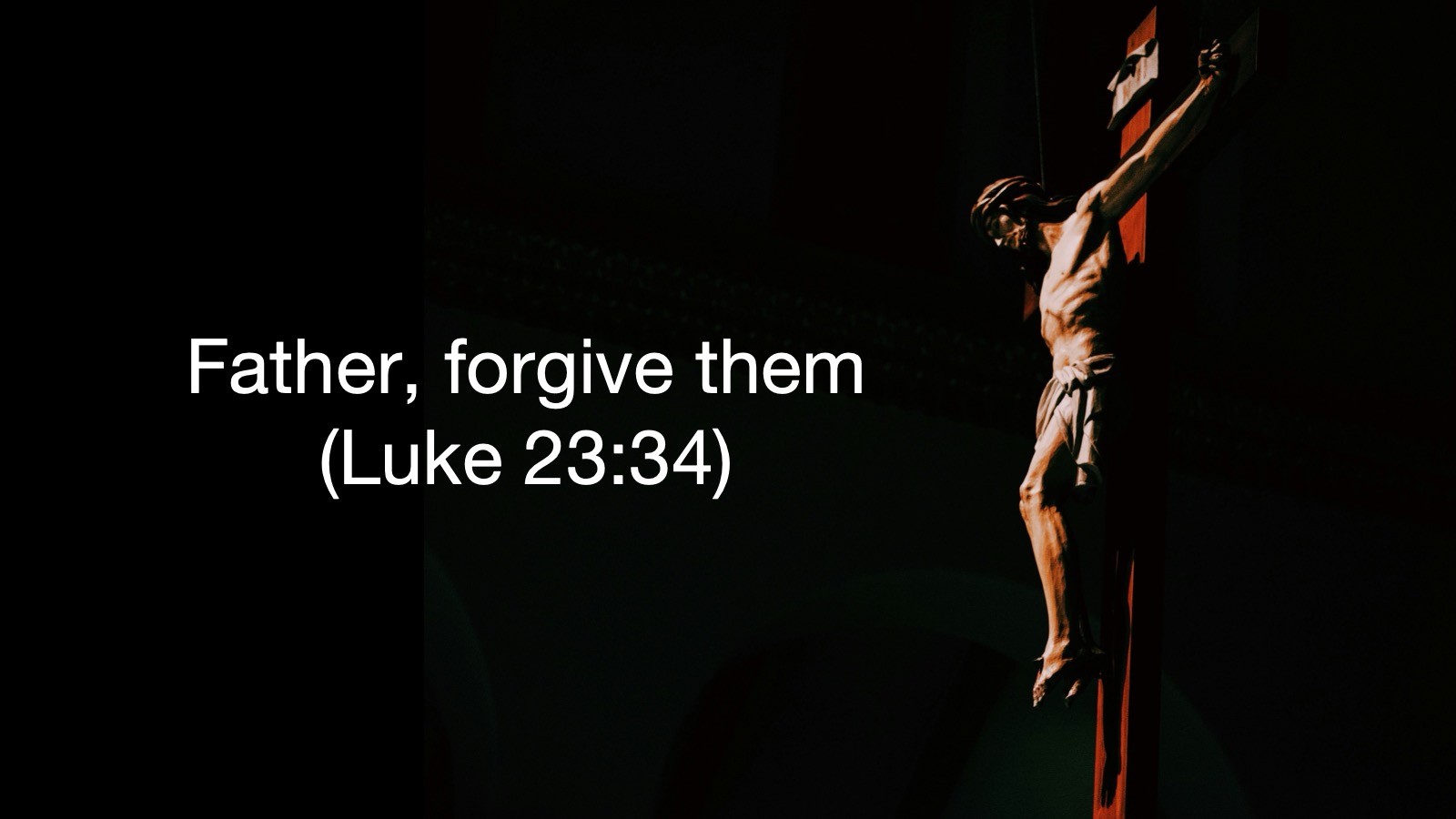
When Jesus died, the earth shook. The rocks split, and the temple curtain, the curtain that said Keep back, was torn in two from top to bottom. At Sinai, the ground shook to keep God’s people out. At Calvary, it shook to let them in.
That’s why we can stand where Israel could not. God is just as holy now as he was at Sinai. But Jesus has gone through the fire for us. He stands between us and God’s holiness, not as a wall to keep us out but as a door to bring us in. So hear his blood speak to you today: You are forgiven. You are welcome. Come home.
This is the ground we now stand on. That doesn’t mean the shaking stops. The writer of Hebrews says a far greater shaking is still to come. But the ground Jesus has brought us to is the one ground that won’t give way when it does.
Everything that can be shaken will be, so build on the kingdom that can’t be
The writer of Hebrews doesn’t leave us simply enjoying the festival on Mount Zion. In verse 25 his tone changes:
See to it that you do not refuse him who speaks. If they did not escape when they refused him who warned them on earth, how much less will we, if we turn away from him who warns us from heaven? At that time his voice shook the earth, but now he has promised, “Once more I will shake not only the earth but also the heavens.” The words “once more” indicate the removing of what can be shaken—that is, created things—so that what cannot be shaken may remain. Therefore, since we are receiving a kingdom that cannot be shaken, let us be thankful, and so worship God acceptably with reverence and awe, for our “God is a consuming fire.” (Hebrews 12:25–29)
Notice the first thing he says: See to it that you do not refuse him who speaks. The God who spoke at Sinai is still speaking to us. At Sinai he warned his people from a mountain on earth. Now he speaks from heaven through his Son, Jesus Christ. The people at Sinai begged God to stop talking. When they later turned away from what God said there, again and again, they did not escape the consequences. So how much less will we escape if we turn away from the one who speaks to us from heaven?
This is the heart of the whole book of Hebrews: Don’t drift. Don’t go back. When Jesus moves us into a new neighbourhood with better ground, we don’t keep driving back to the old one to live in a house that is shaking and sinking.
Then the writer tells us why it matters so much. God has promised to shake not only the earth but the heavens, removing what can be shaken so that what cannot be shaken remains.
Here in the Lower Mainland, we talk about the Big One. Scientists tell us it’s not a matter of if, but when. But Hebrews tells us about an even bigger Big One: the shaking at the end of time, when Christ returns. It won’t only shake the ground under the Fraser Valley. It will shake heaven and earth, and everything that has been made will be tested.
And here is the good news: we are receiving a kingdom that cannot be shaken. We’re not building it, earning it or buying it. We are receiving it as a gift from the King himself.
The Last Sunday of the Church Year is when the church fixes its eyes on Christ the King and his return. When the final shaking comes, it will not destroy God’s people. It will clear away everything temporary and reveal how secure we are in him. That is why we can be faithful to the end. We don’t hold on because we are strong. We hold on because the ground underneath us holds us.
So the question is not whether the shaking will come. It will. The question is what kind of soil you and I will be standing on when it does.
What are you standing on?
Here is one way to find out. Think about the thing that would devastate you most if it were taken away. It could be your health, your savings, your plans for retirement, your children and grandchildren, or even the future of this congregation. These are good gifts from God, and we should care about them. But if any one of them is what’s holding us up, we are building on soft soil. And Hebrews tells us plainly that a great shaking is coming.
The writer of Hebrews warns us about two dangers.
The first is drifting. His readers weren’t planning to walk away from Jesus. They were just tired, and tempted to slide back to what felt familiar. That’s how refusing the one who speaks usually happens. It isn’t one dramatic moment. It happens slowly, as worship becomes optional, as our Bibles stay closed, and as his voice gets quieter while other voices in our lives get louder. If that describes you right now, I want to encourage you to hear verse 25 as an invitation: Come back and listen. God is still speaking, and his words are filled with grace for you.
The second danger is living as though we are already shaken. We can be full of fear about the news, the economy, our health, the world our children and grandchildren will grow up in, and yes, even the Big One. But you are not standing on the soil under your house. You are standing on Mount Zion.
So this week, when something shakes you, remind yourself where you stand. Hold the good things of this life with an open hand, and hold on to Jesus, who holds on to you.
“Pray for my redemption”
Years ago, when I was serving in Saskatchewan, a friend asked me to visit his father. His father was dying in hospital, and he was filled with fear. So I went, we visited, and we shared Holy Communion together.
Then he said something that blew me away. No one has said it to me before or since. He said, “Pray for my redemption.” So I prayed with him.
Later, when I talked with my friend, he told me that his father was filled with peace from that moment on, right up to the moment he died. Somehow, in ways I still don’t fully understand, God gave that frightened man a peace that surpasses all understanding. He carried him in that peace all the way to the end of his time in this world.
Everything that could be shaken in that man’s life was being shaken: his health, his strength, his life itself. But in that hospital room, the blood that speaks a better word spoke to him. He was no longer standing on his own strength. He was standing on Mount Zion.
That’s our glorious future too. One day the final shaking will come, and everything temporary will fall away. No more trains rattling the windows. No more lying awake wondering about the Big One. No more fear. Only the joy of standing on solid ground forever, with the one who brought us there.
Thankful and in awe
So what do we do now? The writer of Hebrews tells us: Let us be thankful, and so worship God acceptably with reverence and awe.
And here’s the wonderful thing. We don’t have to wait for that glorious future to get a taste of life in God’s new neighbourhood. Every time we gather for worship, we come to Mount Zion. When we sing with “angels and archangels and all the company of heaven,” we join the joyful assembly of Hebrews 12. And whenever you hear the words of forgiveness at the start of a worship service, you are hearing the blood of Jesus speak that better word: not Guilty, but Forgiven.
So come with thankfulness, because the kingdom is yours as a gift. And come with awe, because our God is still a consuming fire. We can have both at once. We are thankful because we are safe. We are in awe because we know how close we stand to that consuming fire, and we know who it is that keeps us safe in the midst of it.
As this Church Year comes to an end, carry this one truth into the week ahead:
The ground under our houses may shake. Everything in this world may shake. But the kingdom we are receiving cannot be shaken. Through Jesus, his kingdom is the ground we stand upon, and that is why we can be faithful all the way to the very end. Amen.
Watch the full sermon on YouTube (starts at 22:48), or join us for worship this Sunday at Walnut Grove Lutheran Church (wglc.org).


