

We all want our lives to add up to something significant; we all want a life story that’s good, beautiful and true. Often, though, we don’t know how to get there. Even the possibility of such a thing seems remote because our mind keeps replaying memories of painful events and shameful failures from the past. Discouraged and downtrodden, it can feel like there is no hope for us. That’s because the trajectory of our life is often set by the memory that has the deepest hold on us. You could even say, “We become what we remember.”

Here is a real-life example: On May 27, 1943, while searching for a lost airplane and crew, the B-24 bomber on which Louis Zamperini served suffered mechanical failure and crashed into the Pacific Ocean. Out of the eleven crew members, only Louis and two others survived and were able to scramble into a life raft. After 47 days at sea, only Louis and one other crew member remained, and when they reached the Marshall Islands, they were immediately taken prisoner by the Japanese Navy. While held in Japanese POW camps, Louis was brutally mistreated by one of the prison guards, Mutsuhiro Watanabe, who was nicknamed “The Bird.” Nobody in the US knew Louis was alive and, in 1944, he was listed as killed in action.
After the war, Louis returned to the United States a hero, but he was suffering from what we now recognize as PTSD. He would have recurring nightmares about his POW experiences, and his heart was filled with thoughts of getting revenge on “The Bird,” that prison guard who tormented him. He began to drink heavily.
In 1949, at his wife’s urging, he reluctantly attended a Billy Graham Crusade. Graham’s preaching reminded Louis of the prayers he prayed in the life raft and POW camps, and Louis committed his life to Jesus Christ.
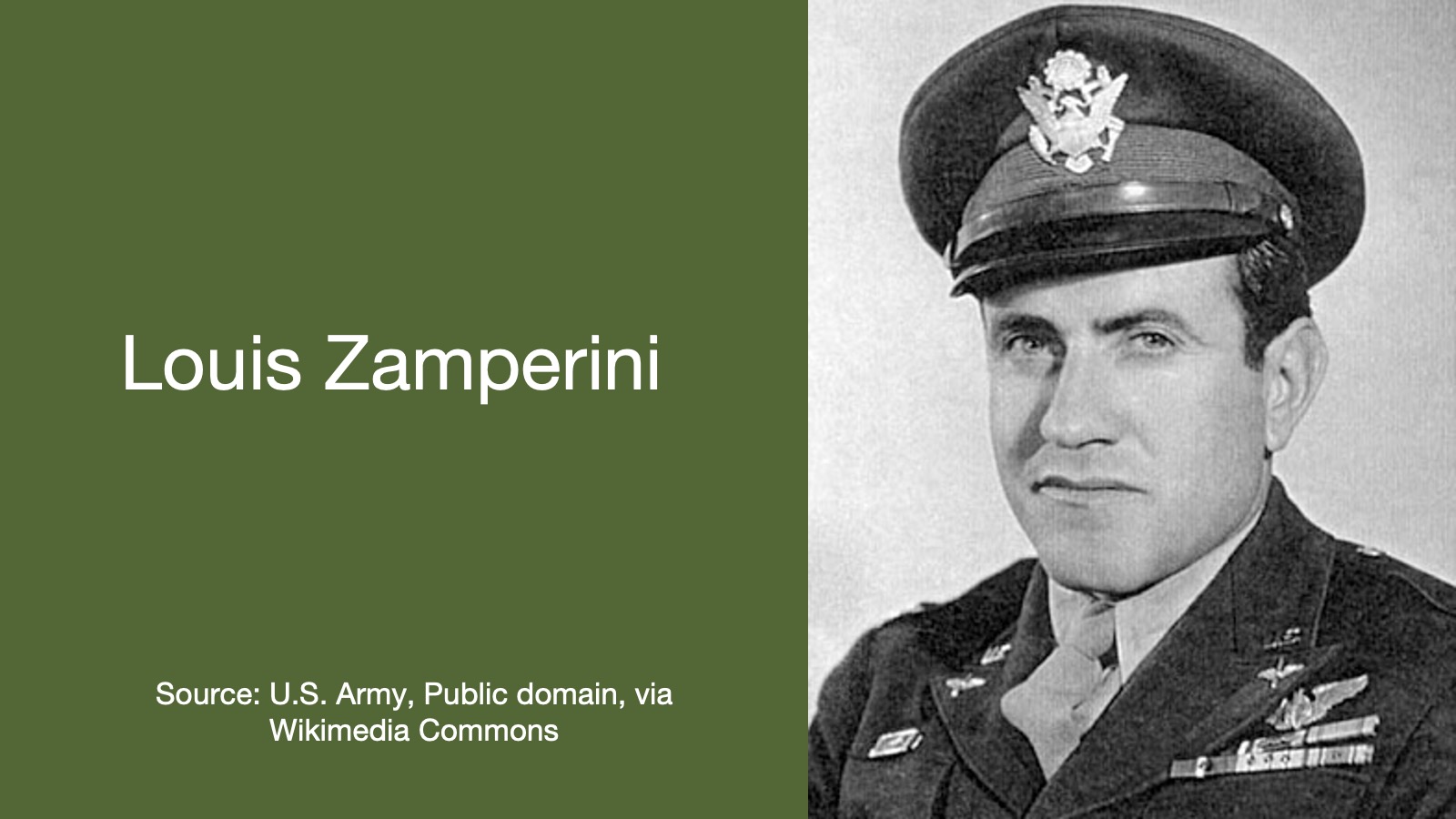
With that, the trajectory of Louis’s life changed completely. He became a Christian evangelist, and the main theme of his message was forgiveness. In 1950, he visited Sugamo Prison in Tokyo, where many war criminals were held. Louis expressed forgiveness to those prisoners, and some became Christians. While in Japan in 1998, Louis reached out to “The Bird,” and offered to meet with him in person. That offer was met with refusal. So Louis wrote him a letter. Though Watanabe had caused him great suffering, Louis said he forgave him. He never received a reply.
This lack of acknowledgement did not hold Louis back in any way. He was on a totally different path now. The trajectory of his life had been totally changed because his remembering had changed. [i]
The transformation of Louis Zamperini’s life is inspiring, but we may wonder how helpful it is for us personally. For there is an aspect of our memory that is beyond our control. Many of us have had traumatic experiences which we cannot possibly forget. Our minds are scarred by memories of bad things others have done to us or marred by memories of bad things we have done to others. We want to forget, but we cannot. It’s as if our memories hold us in bondage and darken our heart with feelings of shame and thoughts of revenge. Where can we turn for hope when the things we remember torment our soul? For God’s answer to that question, let’s open our Bibles to Psalm 103.
Remembering God’s Love, Mercy & Compassion Gives Us Hope
As we do that, let’s look at some background information that will help us to better understand what God is saying to us. First, and most importantly, Psalm 103 is part of Book IV of the Psalms, which runs from Psalm 90 to 106, and this section of the Psalms has a very special purpose.

Just before Book IV begins, Psalm 89 highlights the crisis God’s people faced during the Exile, when the Babylonians crushed the kingdom of Judah, destroyed Jerusalem and the Temple, and brought to an end the royal line of kings descended from David. All this happened because God’s people were faithless. Despite repeated warnings from God through his prophets, the people continually worshipped and gave their lives to the foreign gods of their neighbours. Finally, God’s patience came to an end, and he allowed his people to experience the consequences of their actions through the Babylonians. As they sat in devastation and exile, the people knew God was giving them the punishment they deserved. But that realization gave them no hope. They wondered,
How long, O Lord? Will you hide yourself forever?
How long will your wrath burn like fire?…
Lord, where is your steadfast love of old,
which by your faithfulness you swore to David?
(Psalm 89:46, 49 ESV)
The Psalms in Book IV give a surprising answer that can be of great help to us today. They call God’s people to remember an earlier time when they were going through tumult and had no king. As the people looked back to the time of the Exodus, and remembered that God was compassionate and merciful toward his people back then, they could know and trust that he would also be compassionate and merciful toward them now, even though, from a human perspective, it looked like everything had been stripped away.

It is the same with us today. We too are living in a world filled with turmoil, plus we all have personal struggles we need to deal with. And on top of everything else, we have those memories from the past of wounds the sins of others have caused us and the wounds our sin has caused to others. Through the Psalms, God is calling us to go back in time and remember his faithful history of love, compassion and mercy he had for his people back then, so we can be assured that he has that same love, compassion and mercy for us now.
The God Who Remembers Us
By quoting earlier Scripture, Psalm 103 draws us back to a very specific time in the history of God’s people, which we find recorded for us in Exodus, chapters 32–34. While Moses was on Mount Sinai receiving the Ten Commandments and God’s other instructions for life, the people formed a golden calf which they worshiped as god. Because of this, Moses destroyed the tablets of the Ten Commandments in anger, and God poured out his wrath on his people’s idolatry by sending a plague. People living centuries later in the time of the Exile would have recognized the parallels between what happened during the Exodus and what was happening during their own time. And Psalm 103 is saying, “Remember what happened next and why it happened!”
What happened next is that God called Moses back up Mount Sinai and gave him two new stone tablets with the Ten Commandments. Picking up the account in Exodus 34, we read,
The Lord passed before him and proclaimed, “The Lord, the Lord, a God merciful and gracious, slow to anger, and abounding in steadfast love and faithfulness,” (Exodus 34:6 ESV)

Yes, the Lord unleashed his anger against sin, but it was only for a limited time. The chief characteristics of God, the ones that define his core character and direct his main actions toward humanity, are repeated and re-emphasized for us in Psalm 103.
The Lord is merciful and gracious, slow to anger and abounding in steadfast love. (Psalm 103:8 ESV)
This is who God is.
God doesn’t keep a record of wrongs and rights, nor does he weigh out our good versus our bad, like humans do. Those calculations would never turn out in our favour anyway. Instead, he operates from the core of who he is: merciful, gracious, and abounding in steadfast love.
Because of his core characteristics, God gives us great and wonderful blessings we do not deserve. And it is these divine benefits that the Psalmist urges us to remember, for remembering those benefits is God’s way of transforming us. We read,
Bless the Lord, O my soul,
and forget not all his benefits,
who forgives all your iniquity,
who heals all your diseases,
who redeems your life from the pit,
who crowns you with steadfast love and mercy,
who satisfies you with good
so that your youth is renewed like the eagle’s. (Psalm 103:2-5 ESV)
How do we know that this side of God is for us? It’s because of the relationship we have with him. In ancient times, that relationship was defined by God through the Old Covenant he made with the Israelites. For the past two thousand years, that relationship is defined through the New Covenant God made with us through his Son, Jesus Christ. Jesus fulfilled the Old Covenant with his perfect obedience, something God’s people could never do, and now anyone can have a relationship with God as a free gift, through faith in Jesus Christ for the forgiveness of all our sins.
Psalm 103 goes on to describe just how far God’s compassion reaches:
As a father shows compassion to his children,
so the Lord shows compassion to those who fear him.
For he knows our frame;
he remembers that we are dust.
As for man, his days are like grass;
he flourishes like a flower of the field;
for the wind passes over it, and it is gone,
and its place knows it no more.
But the steadfast love of the Lord is from everlasting to everlasting on those who fear him,
and his righteousness to children’s children,
to those who keep his covenant
and remember to do his commandments.
(Psalm 103:13-18 ESV)
God remembers us, and he invites us to remember him and the way he remembers us.
Praying the Psalms Trains Our Memories
In his book Answering God: The Psalms as Tools for Prayer, Eugene Peterson starts off by making the point that one characteristic that separates humans from both animals and angels is that we use tools. And using tools is not just an option for us. We need to use tools to live well and completely in this world which God created to be our home and within which he is at work. Included in those tools is prayer, but prayer is a different kind of tool.
It isn’t a tool that helps us do or get things. It’s a tool that helps us to be and become. Most tools are for external use. A shovel, a computer or a car are all things we use in the world outside us. But prayer is designed for use in the vast, and usually overlooked and impoverished, inner world within us. And the best prayer tools available to us are the Psalms.
Peterson writes:
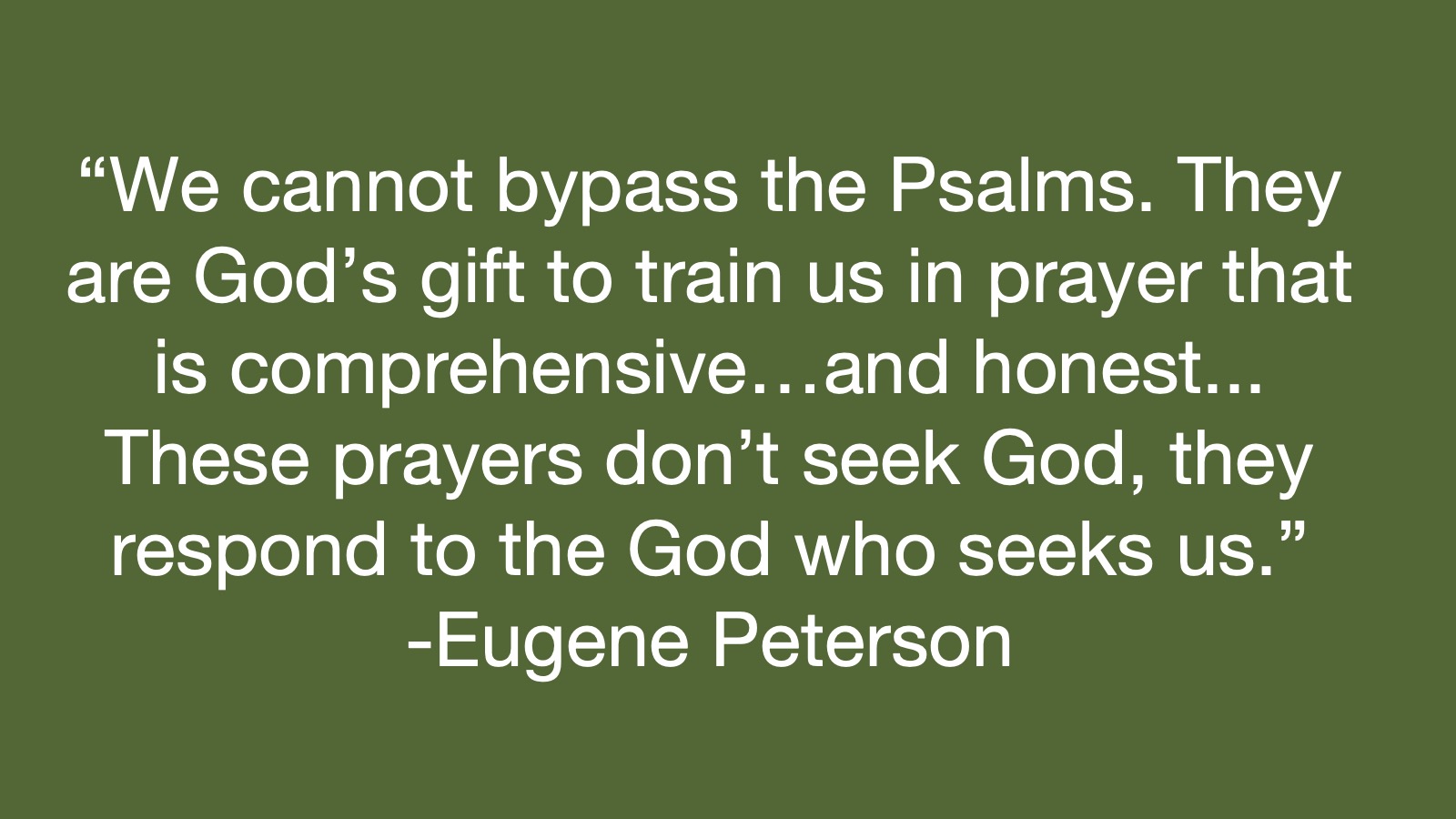
“If we wish to develop in the life of faith, to mature in our humanity, and to glorify God with our entire heart, mind, soul, and strength, the Psalms are necessary. We cannot bypass the Psalms. They are God’s gift to train us in prayer that is comprehensive…and honest… These prayers don’t seek God, they respond to the God who seeks us.”[ii]
One of the ways in which praying the Psalms shapes us is by giving us a memory map of God’s salvation. Peterson beautifully illustrates the vastness of that territory: “If creation is the north pole of our memory and sin the south pole, salvation is the seven seas and five continents between. We commonly have no idea of how large it is and how many lifetimes it would take to explore it.”[iii]

Psalm 103 encourages us to lift our eyes from our self-centered focus and “forget not all his benefits” (Psalm 103:2 ESV). Our tendency is to only see the brokenness around and within us, so we overlook the incredible benefits he has already given us, blessings intended by God to help us grow into becoming the people he created and redeemed us to be. We forget that we are God’s works-in-progress, who are being molded and shaped into the image of Jesus by his saving actions for us.
Praying the Psalms trains our memories so that we can fully live as God’s beloved, forgiven children.[iv]
God’s Forgiveness is Always Bigger than Our Sin
All of God’s benefits to us—all the healing, redeeming, crowning, satisfying, and renewing he does within us—all spring forth from the forgiveness he accomplished for us through the life, death, and resurrection of God the Son, Jesus Christ. Only by embracing the incomprehensible vastness of our forgiveness can we fully inhabit the vast territory of our salvation.
It was God’s steadfast love, mercy and compassion that moved God the Father to send his Son into this world. That same steadfast love, mercy and compassion moved Jesus to become fully human, live a life of perfection for us, and then offer his one and only perfect life as the ultimate sacrifice to pay the full cost of forgiveness for all the world’s sin. Raised from the dead on the third day, Jesus opened the door for us to live a new life in the country of salvation. We receive the gift of that new life by faith as the Holy Spirit, motivated by steadfast love, mercy and compassion, works within us.
However big our sin, God’s forgiveness is way, way bigger. We become what we remember, so let’s remember well. Let’s focus on Jesus, pray Psalm 103, and remember,
He does not deal with us according to our sins,
nor repay us according to our iniquities.
For as high as the heavens are above the earth,
so great is his steadfast love toward those who fear him;
as far as the east is from the west,
so far does he remove our transgressions from us. (Psalm 103:10-12 ESV)
Pray the Psalms to Remind You of God’s Benefits
So the challenge I am setting before you today is this:
Pray the Psalms to remind yourself of the incredible benefits of salvation God has given you. You can start this week with Psalm 103 because it’s fresh in your memory. Find a quiet place and read it aloud.
Make God’s words to you into your words to him. Let those words seep deep into your memory and live by them. Let them heal your old memories of shame and pain. Let them give you new memories of all that God has done, is doing and will do for you.
Over time, as you do that, you will see your life transformed by God. For we become what we remember. Amen.
[i] “Louis Zamperini,” Wikipedia: The Free Encyclopedia (https://en.wikipedia.org/wiki/Louis_Zamperini; accessed September 16, 2026).
[ii] Eugene H. Peterson, Answering God: The Psalms As Tools For Prayer (San Francisco: HarperCollins, 1989), 1-5.
[iii] Peterson, 114.
[iv] Peterson, 115-117.


