

At 2:00 pm on August 5, 2010, a cave-in occurred in a gold and copper mine north of Copiapó, trapping 33 miners deep beneath the ground. Those on the surface began drilling exploratory holes in the hope that one might reach an area of the mine where the miners might be. Seventeen days after the mine collapse, one of those drill bits returned to the surface with a note attached: “Estamos bien en el Refugio los 33” [Treinta y tres] (“We are well in the Refuge – the 33”). The miners were found alive! As good as that news was, that only began the next stage of the process, which was to enlarge the drilling passage so the miners could be brought to the surface. It took another 52 days to do that. Finally, on October 13, 69 days after the collapse, rescuers started bringing the miners to the surface, one at a time, in a red, white and blue capsule called Phoenix, and reuniting with their families.[i]

While the story of Chilean mine collapse had a great ending, I’m asking you to imagine what it was like for those 33 miners during the 17 days in the darkness when they looked toward the surface and cried out for rescue, but none came. It’s a dilemma that people of faith often face. The Bible encourages us to pray to God, yet sometimes we lift up intense prayers of sorrow, suffering, and loneliness, and we receive no response. A loved one’s deadly illness never gets healed. A broken marriage is never restored. An estranged child never comes home. The silence can cause us to wonder: Does God really hear me? Does God really care? Does God really exist? God’s silence in response to fervent prayers for rescue and restoration is not something we often talk about, but it has been a real-life challenge in the lives of God’s people for millennia. Even God’s own Son passionately prayed to his Father in a time of great crisis and heard nothing back. So, what do you do when you cry out to God and the only response is silence? To answer that question, let’s turn to Psalm 88.
Psalm 88 Gives Us Language for Our Darkest Times (Psalm 88:1-8)
As we do that, there is a key feature of this psalm that we need to be aware of. This is the only psalm in the Bible that gives no explicit expressions of hope like every other psalm does. This is a psalm for those times in life when it looks like all is lost. I have experienced those times myself. Hot tears rolled down my cheeks and I wept loudly in the shower after being told by a doctor that one of my children could die from injuries they sustained. Years later, tears filled my eyes again as Susan and I sat with a hospital counsellor, and we wondered why a different child was suffering so severely from mental illness. Sometimes, there are no signs of encouragement, and there’s no one who can give us hope. Our hearts are broken, and there is nowhere for us to turn. Except to God.
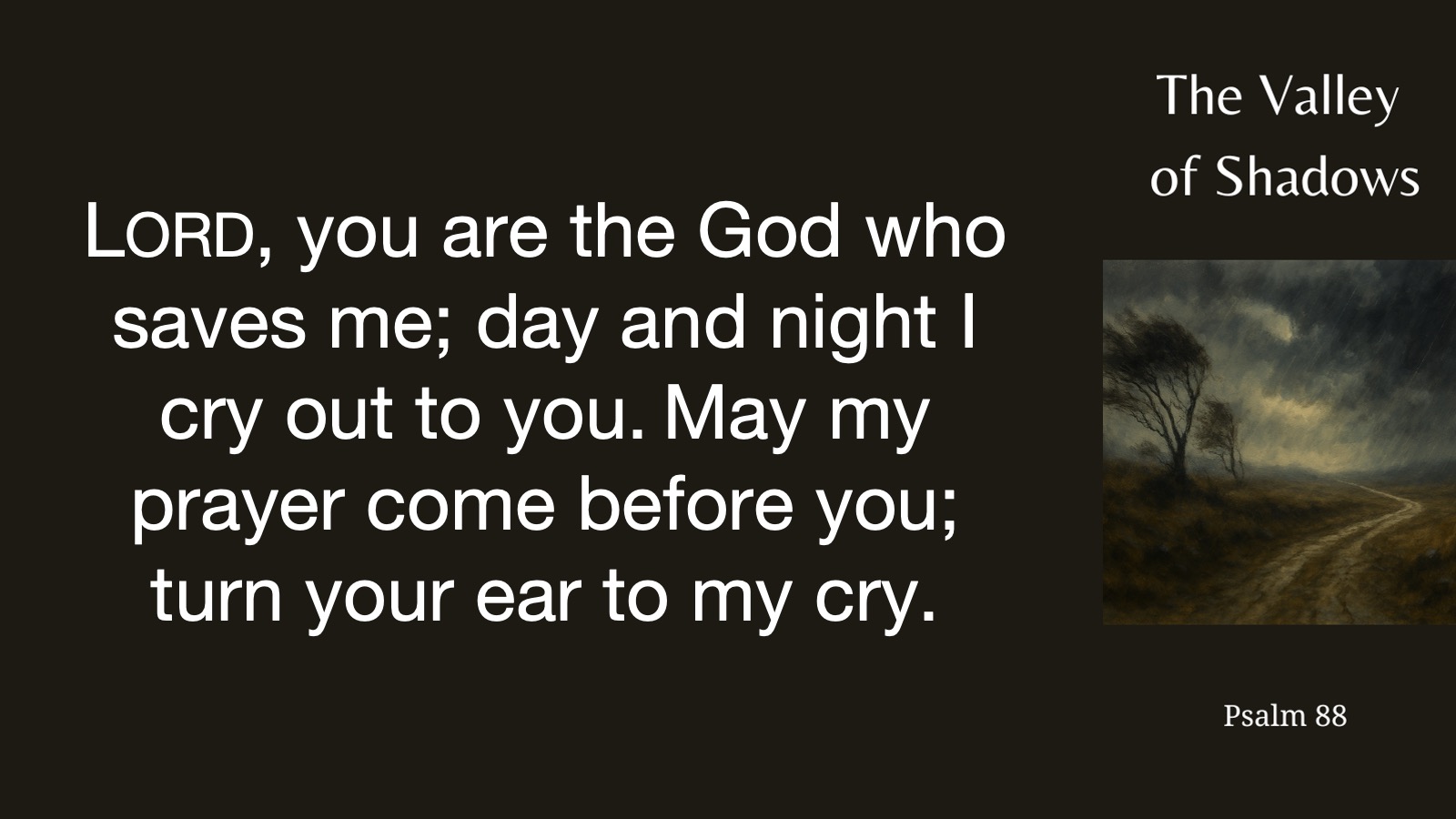
Despite being filled with despair, Psalm 88 can still help us. First, it gives us language to express what’s in our hearts during the darkest times of our lives. Second, it directs us to share our feelings with God. You may wonder, “What’s the point of doing that if the only response we get from God is silence?” That’s certainly a valid question, but there is a lot more happening in prayer than we may realize. We can grasp the concept of our prayers changing God’s direction for our lives. But we can miss how God is changing us through our prayers. A heart-felt cry of despair, along with expressions of anger, accusations and dismay directed toward God are still expressions of faith. It is at times like this when we are perhaps most honest with God. We pour out our heart to God, sharing our most painful thoughts and our deepest emotions until there is nothing left. With the Psalmist, we pray, Lord, you are the God who saves me; day and night I cry out to you. May my prayer come before you; turn your ear to my cry. I am overwhelmed with troubles and my life draws near to death. I am counted among those who go down to the pit; I am like one without strength. (Psalm 88:1-4)

We don’t know the specific circumstances behind this psalm, but these are the words of someone who is suffering, near death, and filled with dread. Their loved ones and their friends have abandoned them, and they fear the possibility that God has abandoned them too. Not only is God silent, he also allowed this crisis to happen. The Psalmist expresses to God the accusation in his heart: You have put me in the lowest pit, in the darkest depths. Your wrath lies heavily on me; you have overwhelmed me with all your waves. You have taken from me my closest friends and have made me repulsive to them. I am confined and cannot escape; (Psalm 88:6-8)
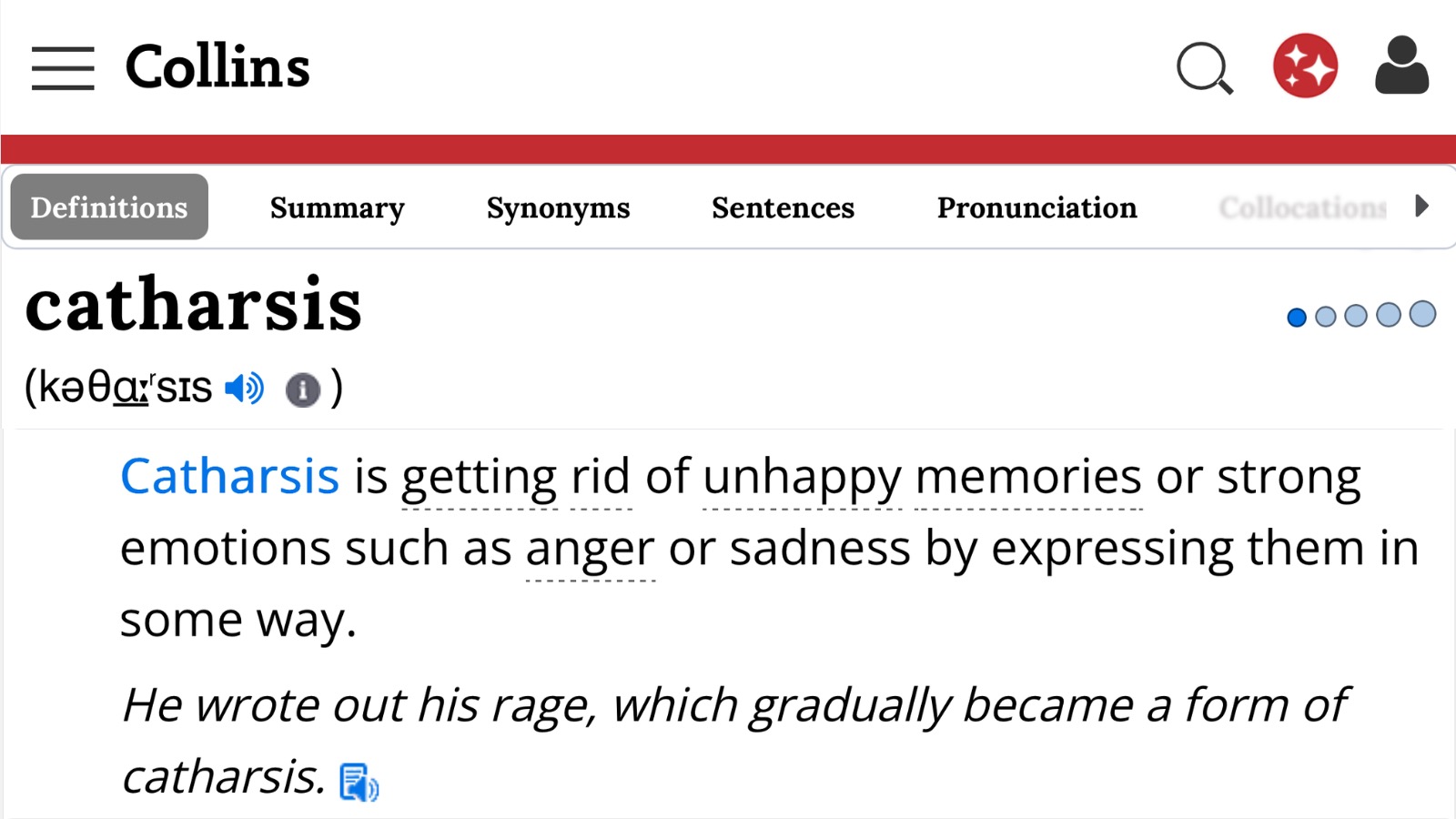
Psychologists tell us that the sharing of strong, otherwise hidden emotions, which is called catharsis, can give us a deep sense of relief, bring clarity to our mind, and set us on the path toward renewal. Catharsis is part of what happens when Psalm 88 becomes personal. But there is more. The silence from God and the lack of change in our circumstances can lead us to conclude that God isn’t with us, he doesn’t hear us, and he no longer loves us. None of those things are true. The depth of our brokenness has a good and godly purpose that we can never otherwise see or experience. Even in the silence, even in the darkness, even when our greatest fears come true, God has something beautiful for us. He is with us.
Jesus Also Prayed and Heard Silence (Matthew 26:36-46)
Centuries after Psalm 88 was composed, a man was fervently praying in a garden outside Jerusalem. He was Jesus of Nazareth, and he knew that great suffering lay before him. He knew that those closest to him would deny, betray and abandon him. He knew that he would be nailed to a cross to suffer the most excruciating pain possible. And he knew that, in the end, he would be dead. He deserved none of this. He was the only perfect human being who ever lived. He was a completely loyal Son to his Father. And yet he would soon suffer more than what even the worst of sinners could ever deserve.
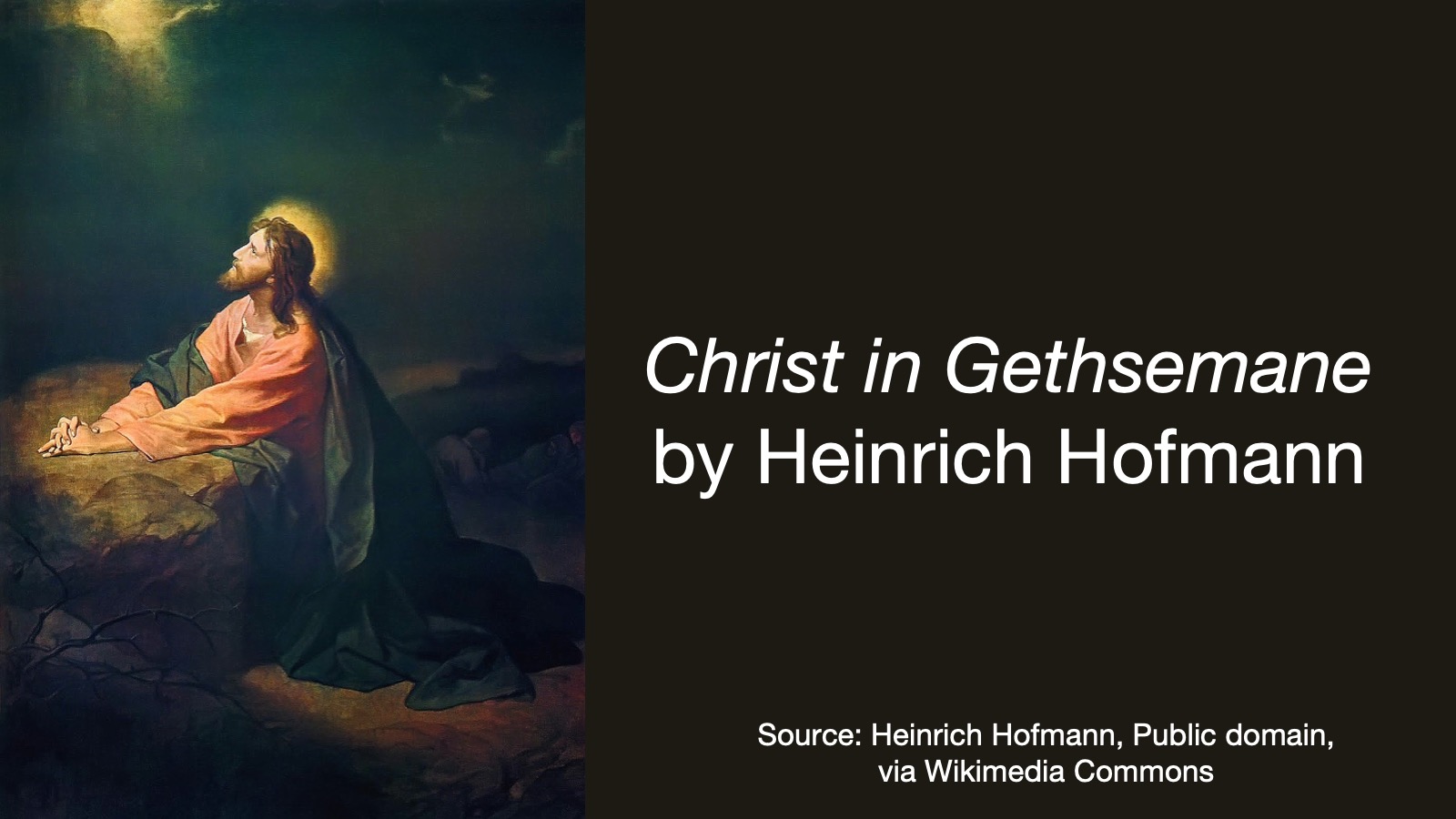
So, Jesus led his followers to an olive grove, the Garden of Gethsemane, and invited the others to sit and wait while he took Peter, James and John further into the garden to pray. At some point, Jesus turned and said to them, “My soul is overwhelmed with sorrow to the point of death. Stay here and keep watch with me.” (Matthew 26:38) You can hear the depth of Jesus’ pain in his words. Matthew tells us what happened next. Going a little farther, he fell with his face to the ground and prayed, “My Father, if it is possible, may this cup be taken from me. Yet not as I will, but as you will.” (Matthew 26:38-39) During the darkness of that lonely night, Jesus prayed that prayer three times. And each time, the response was… silence.
Jesus’ circumstances did not change. The hours unfolded just as he feared. He was arrested in that garden, beaten, falsely accused, flogged, stripped naked and nailed to a cross to die.
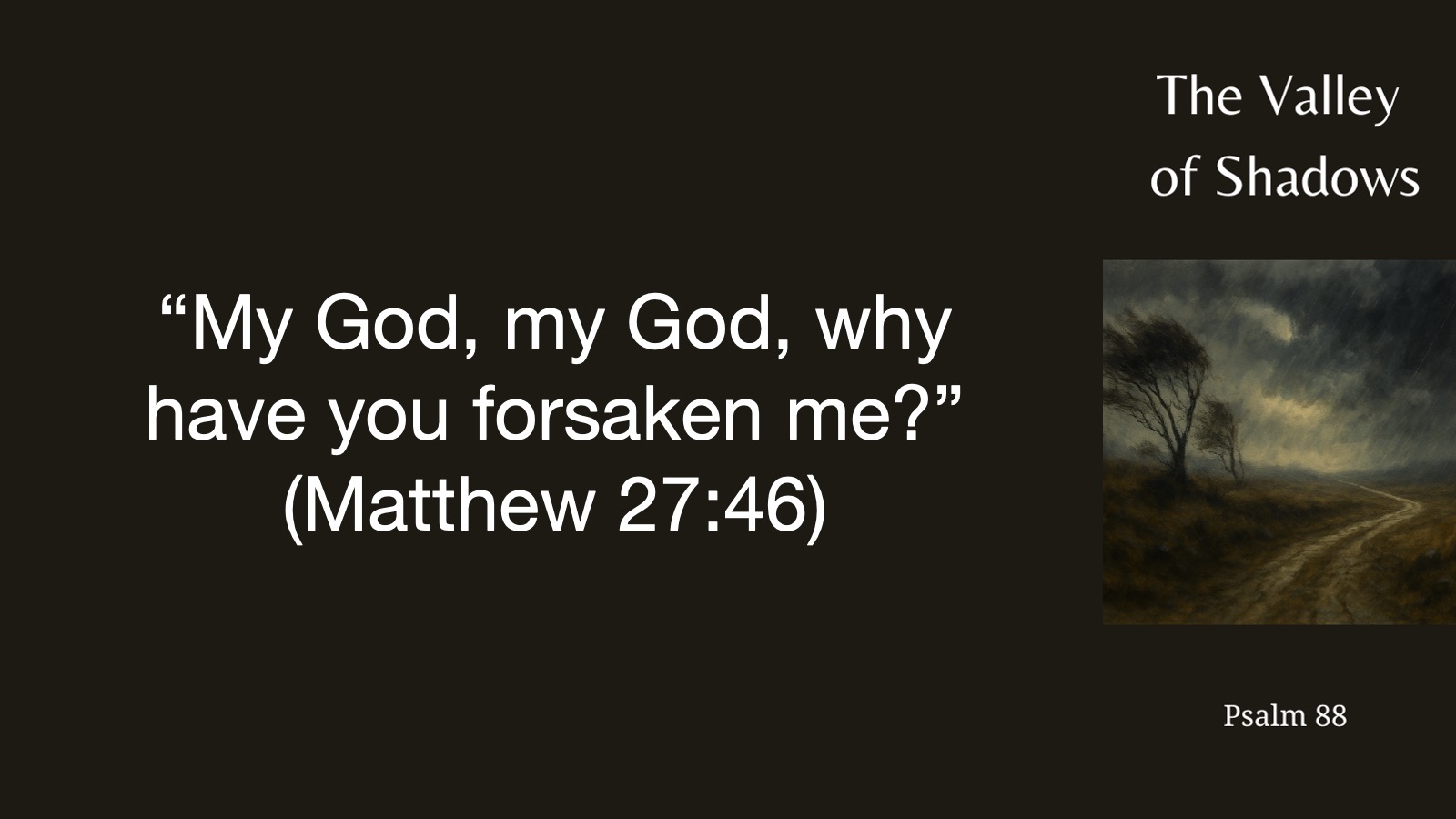
Yet the worst pain Jesus experienced was abandonment by his Father. On top of the physical suffering of crucifixion, Jesus also wore the sins of all humanity and suffered the punishment those sins deserved. The Father’s holiness compelled him to turn away from the horror of his sin-covered Son. Feeling the pain of his Father’s absence, Jesus cried out, “My God, my God, why have you forsaken me?” (Matthew 27:46) Separation from his Father was a pain that Jesus had never experienced throughout all time and eternity, and it was horrific for him.
And then, when the suffering for all sin was complete, Father and Son were reconciled. Jesus called out with a loud voice, “Father, into your hands I commit my spirit.” When he had said this, he breathed his last. (Luke 23:46)
Jesus is God’s answer when we suffer and God seems silent.
Jesus is God’s answer when we suffer and God seems silent. On the third day after his death, God the Father raised Jesus from the dead. Jesus is alive and he rules over all creation at the right hand of his Father in heaven. His death and resurrection is our guarantee that he will never leave us or abandon us, and he will never stop loving us. Because he went through death for us, we can know that should the worst happen and we die, the quality of life we will have with him on the other side of death will far outweigh all the suffering and sorrow we experience here and now.
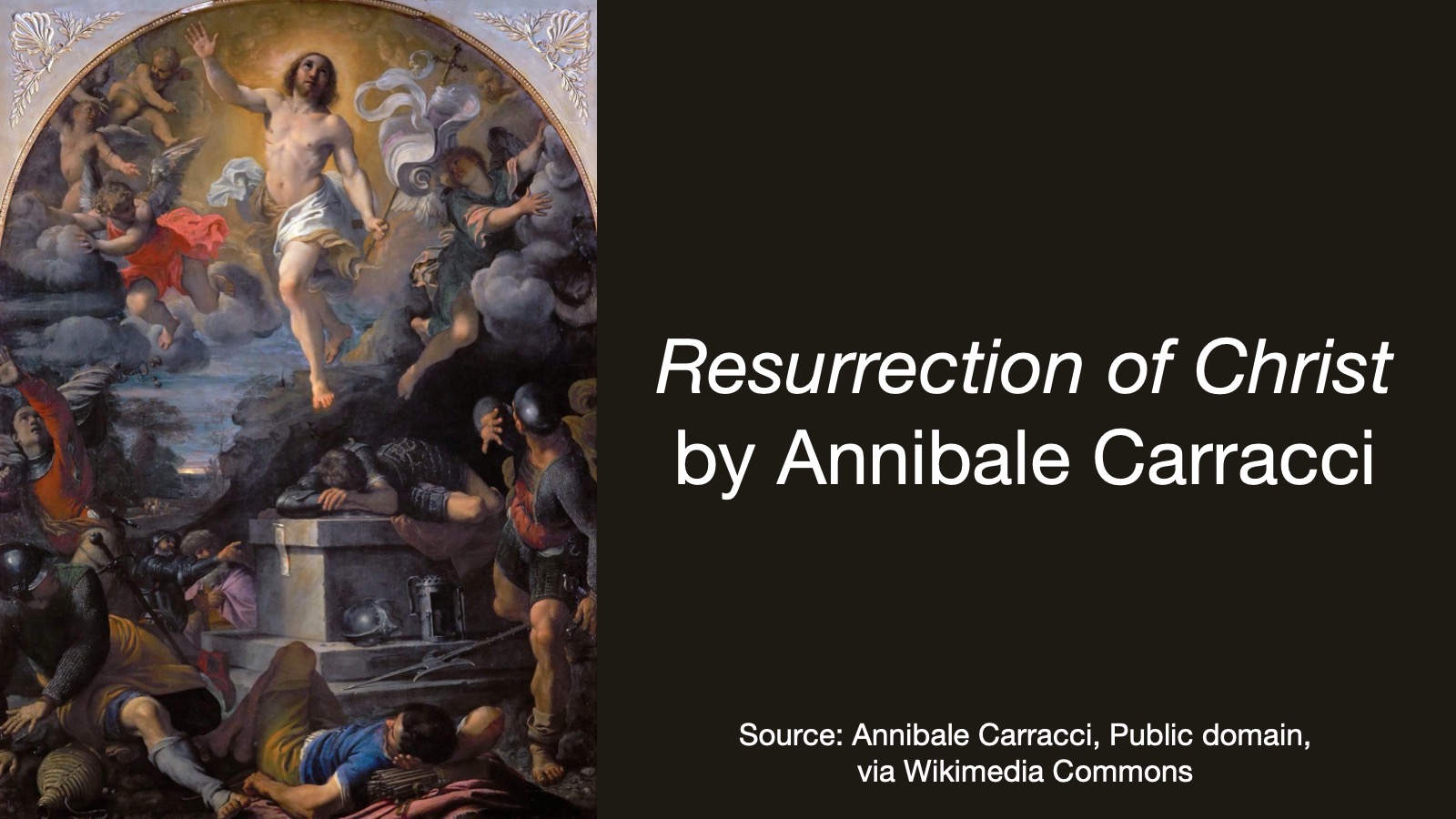
God’s silence never means that we are unloved or alone, or that things are hopeless. You see, God has something good for us in the silence. But receiving that gift will require an unformed part of our soul to grow. Like a seed planted in the ground, that part will only grow in the darkness as we yearn for and reach toward God. And then we find that he is already there with us.
A Story of Loss, And God’s Presence in It
In chapter six of his book Walking with God through Pain and Suffering, Timothy Keller shares Kendra’s story. During her first pregnancy, Kendra experienced a rare condition called hyperemesis gravidarum which causes severe nausea and vomiting. With significant medical interventions, she was able to deliver a healthy baby girl, and Kendra’s symptoms disappeared the day her daughter was born. Naively thinking they had things all figured out, Kendra and her husband tried to conceive again. When Kendra became pregnant, the condition returned and this time, the symptoms were far more severe. During an ultrasound halfway through the pregnancy, Kendra and her husband’s hearts were broken when the technician could not find the baby’s heartbeat. Their son, John Wilson, was born, lifeless, the next morning.
Describing the days that followed, Kendra writes:
There were moments of anger, but more often I felt anguish, despair, jealousy, bitterness, and profound sorrow. But somehow in the midst of the range of emotions I felt daily, a strong and powerful peace found its way into my heart and brought comfort. I felt God’s presence deeply, and slowly began the process of learning that, although He allows tragedies to befall us, he will not abandon us, nor deny us in an intimate and life-giving relationship with Him. My relationship with him was growing in new ways and becoming more real. He was drawing me closer to him through each painful question and doubt. He was truly IN this dark place with us.[ii]

Later, Kendra describes life after the darkness:
In the days after losing our son, a friend told me that we would always “walk with a limp” from then on. Although our scars are not physical, the pain has left a mark on our hearts. But I like to think of these scars as unique marks of beauty and depth….[iii]
Kendra shared how God had blessed her and her family since their tragedy, even giving them another son, a miracle baby, several years later. She continues,
We look forward to the day when we will be reunited with our first son in heaven, but until then, it is gratitude we feel for experiencing God in a very real and dynamic way, and we rejoice in the life he has given us.[iv]

Encouragement for Dark Times
Dear reader, should you ever find yourself in a dark pit of despair, the encouragement I want to give you is this: Direct all your pain, emotions, questions and accusations toward God. Even though he seems silent, he hears you. He loves you and he will use your pain and suffering to draw you closer to him in a way that could never happen otherwise. Jesus shows us that God does some of his greatest work through suffering, and he always has something better for us on the other side of it. Amen.
[i] “2010 Copiapó mining accident,” Wikipedia: The Free Encyclopedia (https://en.wikipedia.org/wiki/2010_Copiap%C3%B3_mining_accident; accessed July 29, 2026).
[ii] Timothy Keller, Walking with God through Pain and Suffering (Penguin, 2013), 80-83.
[iii] Keller, 84.
[iv] Keller, 84.


